NanaZip 7.0, Version 2609.1 Launches with Rolling Release Model and 7-Zip 26.03 Core
The popular Windows archive tool abandons traditional versioning, ships with hardened security, and syncs to Igor Pavlov’s latest mainline build.
NanaZip 7.0, version 2609.1 is here, and it’s doing away with the version numbers you’ve grown used to. Released by maintainer Kenji Mouri under the M2Team organization, the new build introduces a rolling release model where preview and stable branches share a single codebase.
For years, NanaZip followed a predictable cadence. Mouri says that approach hit a natural ceiling. Life, other commitments, and the sheer scale of the codebase make about one major stable release per year the sustainable pace. That’s exactly why the team is switching to a YYMM.N versioning scheme starting with this build. If you see 2609.1, it just means September 2026, first release of the month. Preview and stable tracks will share the same identifier, with Preview builds carrying an explicit tag. No more jumping from 6.x to 7.x to mark a milestone.
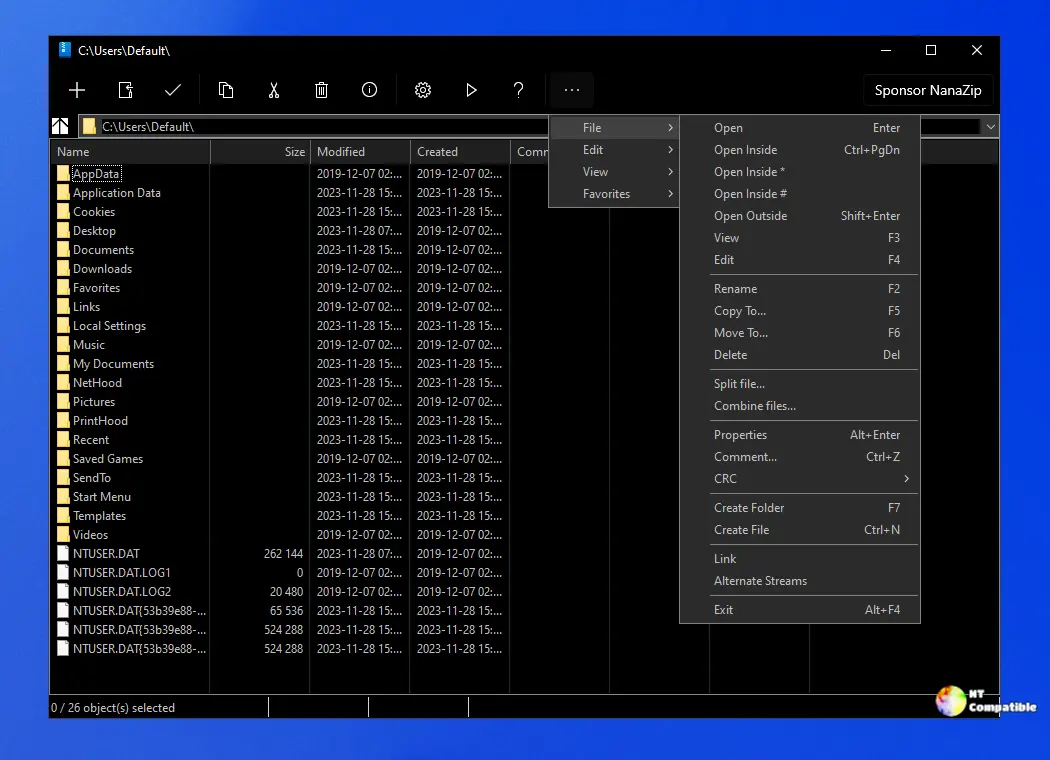
The core engine has been synced to 7-Zip mainline 26.03. That brings the latest codec tweaks, archive format updates, and security patches straight from Igor Pavlov. The Zstandard branch, which adds Brotli, LZ4, LZ5, and Lizard support, also got bumped. On the security side, NanaZip pulled in BLAKE3 1.8.7, which specifically addresses a supply-chain scare after a crates.io maintainer account got compromised. The release notes were blunt about it: "Remove the arrayref dependency. Unfortunately the crates.io owner was compromised." Keeping users off compromised dependency trees is exactly why power users trust this utility in the first place.
What Actually Changed
The changelog includes a handful of practical fixes. WinZip AES extraction now handles UTF-8 passwords correctly, the XAML info window no longer drops clipboard text on close, and an "Extract all" button made it into the copy dialog. Under the hood, the project runs on a C++ core with a C#/XAML Islands UI layer, packaged primarily as MSIX and targeting Windows SDK Build 26100+ on .NET 10. The build ships with an aggressive security posture. Control Flow Guard, CET shadow stack markers, remote DLL blocking, and Mark-of-the-Web propagation for extracted files are all enabled out of the box.
You’ll get two flavors starting with this release. The Modern edition runs as an MSIX package with context menus and file associations, targeting Windows 10 and 11. A Classic port is in the works for Win32, portable setups, and headless environments like Server Core or WinPE. Minimum requirements sit at Windows 10 version 2004 and x64 or ARM64 hardware. Keep in mind that the portable zip distribution is technically for debugging and testing right now, so those context menu hooks and file associations won’t work without the full MSIX install.
Mouri outlined the long-term direction in a dedicated engineering issue this spring, and the plan is to keep pushing upstream syncs while cleaning up technical debt. The project is also eyeing read-only extraction for developer formats like .NET Single File bundles, Electron ASAR archives, and ROMFS images. There’s a longer-term research track called K7FS for a custom archive format focused on corruption recovery and system image distribution. Mouri is direct about the scope. "NanaZip is not intended to become a general disk image editor, file-system repair tool, or forensic suite." The work is community-driven, with UI polish, fuzzing, and root-cause analysis delegated to contributors while Mouri focuses on architecture and core codec work.
It’s a heavy lift to flip an archive tool to a rolling model, but the YYMM.N scheme actually makes sense for a utility that needs to track upstream 7-Zip changes without bogging down in semantic versioning politics. The security hardening and upstream sync keep it firmly in the trustworthy column for power users. If you need to grab it, the MSIX bundle, portable zip, and store links are all live on GitHub and SourceForge. WinGet is the recommended install path, and Mouri provides SHA-256 hashes for verification if you want to double-check the binaries.
Head here to the GitHub releases page to get started.


