Open-Shell Menu 4.4.199 Lands as a Digitally Signed Pre-Release
The community-maintained successor to Classic Shell just pushed its latest nightly build to GitHub, and it brings a long-overdue security milestone alongside some targeted fixes. Open-Shell Menu 4.4.199 dropped today, July 15, 2026, primarily to address ExplorerPatcher compatibility and a nagging context menu bug. But the real headline here is simpler. It is finally getting proper code signing.
Classic Shell ran for nearly eight years before its original creator, Ivo Beltchev, called it quits back in 2017. The source code stayed open under the MIT license, and a cadre of volunteers quickly stepped up to keep the project alive. Now, more than a decade later, that same patchwork crew is keeping the software relevant for Windows 7 through 11. The utility has quietly become a staple for anyone who missed the traditional Start menu long before Microsoft tried to bury it under layers of modern UI.
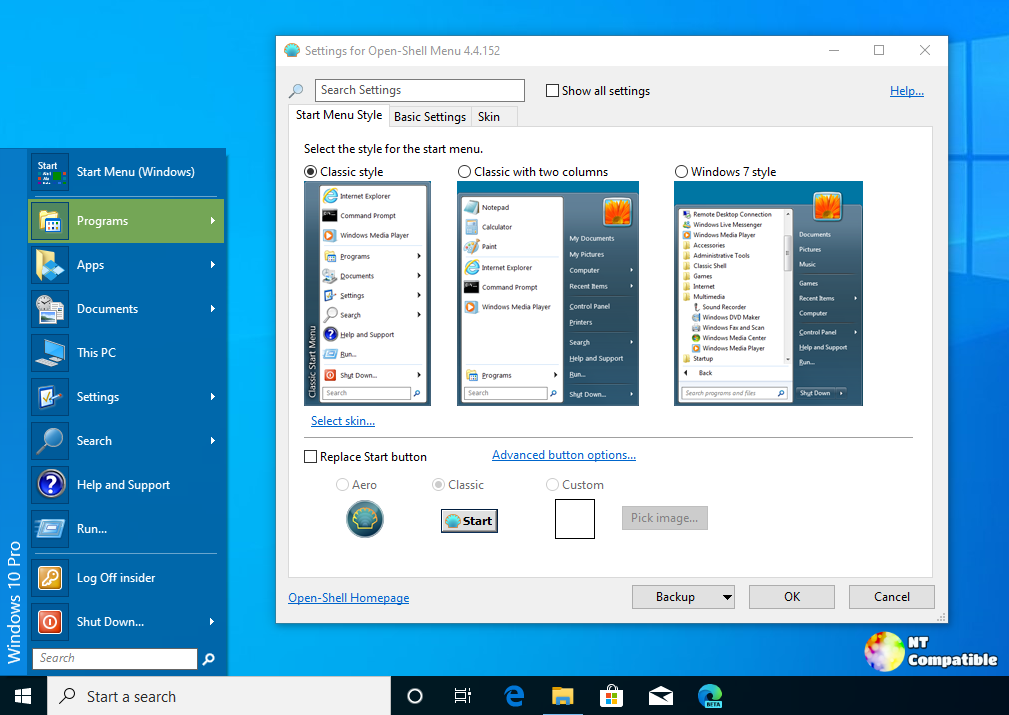
The Signing Milestone
This release marks the first time Open-Shell binaries are digitally signed via SignPath.io and the SignPath Foundation. Enterprise IT admins and security-conscious power users have been begging for this for years. Bypassing Windows SmartScreen warnings has been a recurring headache when deploying custom shell utilities. Head here to grab the installer if you are curious.
You can download the pre-release directly from the official GitHub releases page. The commit 8713a69 is built out of AppVeyor and pushed to the nightly channel. Keep in mind that this is a pre-release build, so it won't auto-update on stable installations. You will need to manually pull it if you want to test the new signature chain.
What Is Actually New
Version 4.4.199 points to two specific pull requests in the changelog. PR #2493 tightens up the taskbar detection logic when you run ExplorerPatcher side-by-side. You know how finicky those dual-shell setups can get. Windows tries to draw over itself and Open-Shell ends up fighting for control. PR #2494 patches the "Open file location" context menu command, which apparently broke when Microsoft shifted some Explorer internals in recent updates.
It is not exactly a revolution. But for daily drivers running older Windows installations or fighting modern taskbar bloat, those patches matter. The project has survived three major OS generations, a licensing transition, and the slow migration to ARM64 architecture. Speaking of which, if you are on Windows on ARM, you absolutely need version 4.4.196 or newer. Earlier builds will brick your login screen after a reboot. That warning has been circulating for months, but it bears repeating.
Where to Go From Here
The GitHub repository sits at roughly 9,200 stars now, with contributions flowing from ge0rdi, Mattiwatti, and others keeping the C++ core and localization pipelines humming. The codebase is mostly C++, with a healthy chunk of HTML for the UI layer and RTF for certain rendering tasks. You can check the full pull request history over on GitHub Discussions or jump into their Discord server if you want to report a regression.
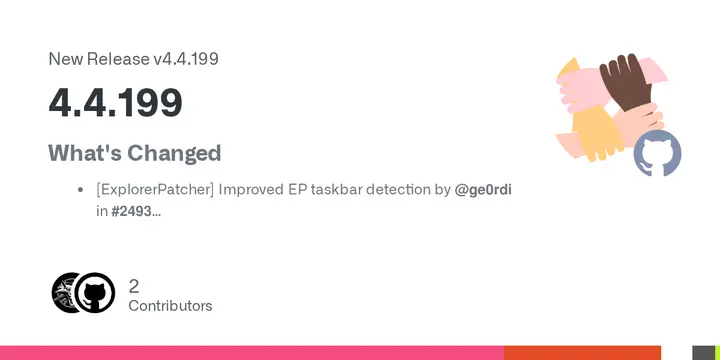
Open-Shell-Menu Release 4.4.199
What's Changed [ExplorerPatcher] Improved EP taskbar detection by @ge0rdi in #2493 Open file location fix by @ge0rdi in #2494 NoteWe have now digitally signed binaries thanks to SignPath.io Full...
The long wait for enterprise-grade signing is over. The source code stays MIT-licensed, meaning you can audit it yourself or submit patches if something breaks. It is a rather quiet update on paper, but for anyone running custom shell layouts, it is the kind of incremental maintenance that keeps legacy tools from rotting away. Stable releases are tagged separately, so monitor the repo if you want to know when this build graduates to the main branch.


