A Retro Mini PC, a Fanless Edge Box, and a Cheaper Office Chair
Here's what showed up in my inbox today, and it's a nicely spread-out bunch. We've got a console-faced mini PC running an AMD AI chip, a fanless Supermicro appliance built for the edge, a 360mm liquid cooler that beats its weight class, and a premium office chair that just got a lot cheaper.
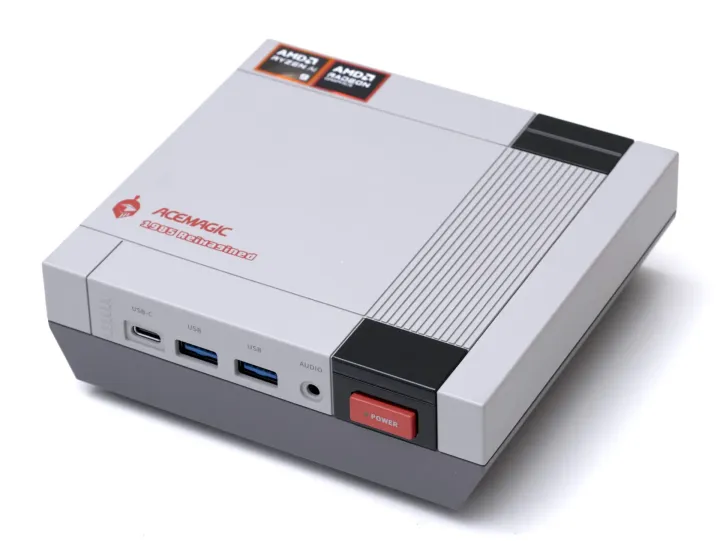
ACEMAGIC is going for the nostalgia angle hard with its Retro X5. The chassis is a gray cartridge, NES-flavored enough that you'll want to show it off on your desk. Inside sits the AMD Ryzen AI 9 365, a chip with 10 cores and 20 threads, a Radeon 880M, and an NPU claiming 50 TOPS.
Note the name. Despite the "Ryzen AI 9" badge, this is not an HX part. It sits below the HX 370 and HX 375. The 365 trades two cores and four GPU compute units versus the HX 370, and it comes with 32GB of soldered memory that isn't upgradeable. Storage is where it opens up: a 1TB PCIe 4.0 drive plus two empty M.2 2280 slots.
Honestly, the styling is the hook. The hardware itself handles everyday desktop work comfortably, from multitasking and emulation to light competitive gaming at sensible settings. It's arguably competing with far more expensive mini PCs for pure office duty.
The Guru of 3D: ACEMAGIC Retro X5 AMD Ryzen AI 9 HX 365 Mini PC review
ACEMAGIC’s Retro X5 combines a console-inspired design with the compact footprint of a modern mini PC. For this version, the familiar retro-styled chassis is paired with AMD’s Ryzen AI 9 HX 365, a 10-core, 20-thread processor with integrated Radeon 880M graphics and an XDNA 2 NPU rated at up to 50 TOPS.
The memory math
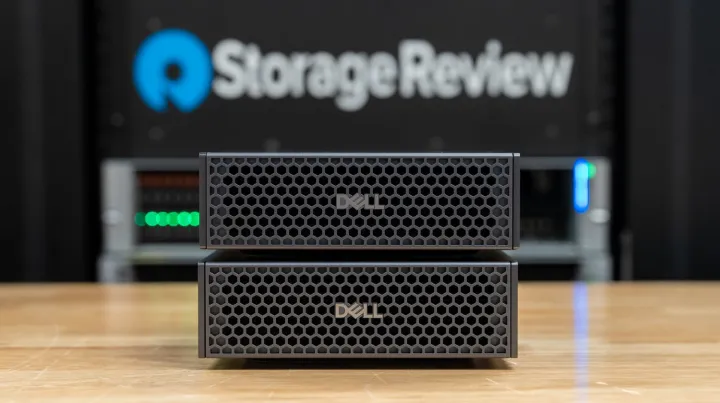
Dell's new Pro Precision desktop runs on NVIDIA's GB10 Grace Blackwell superchip, and it comes in two flavors: 64GB and 128GB of unified memory. That gap is a $2,150 decision. StorageReview built two units side by side, threw identical Linux workloads at both, and found they were, essentially, the same computer everywhere a workload actually fit.
The numbers barely move. STREAM Triad hit 120.6 GB/s on the 64GB unit versus 121.9 on the 128GB version. A 27B Qwen model served 35.3 tokens per second against 35.6. Image generation ran at roughly ten images a minute on both. Those gaps sit well inside normal measurement noise.
The memory only becomes a wall once a task simply won't fit. The 128GB box runs gpt-oss 120B straight from one chassis; the 64GB one can't even boot it. A 20B image model needs about 60GB, so the cheaper unit stops just short. StorageReview found the real lever is elsewhere: the storage choice matters more than the memory choice for sustained writes.
Keep in mind that both units use soldered memory, so bandwidth is identical either way. Dell stuffed a 2TB drive in the 64GB model and a 4TB drive in the pricier one, and that storage difference outpaced the memory split on sustained writes, with read tail latency reaching 83ms on the smaller drive.
If you're running 27B to 35B models, or 4B to 20B image models at quantized precision, the 64GB unit at $5,751 is plenty. You'll want the 128GB version, $10,351 with the 4TB TLC drive, for 100B-plus models or a long 128K context. Both held similar temperatures, with CPU peaks around 94 to 97 degrees.
StorageReview: Dell Pro Precision with GB10 Review: 64GB Matches 128GB on Every Test That Fits
Dell Pro Precision with GB10 review: the 64GB unit ties the 128GB on every test that fits, and we measure where the memory ceiling lands.
Dell Pro Precision with GB10 Review: 64GB Matches 128GB on Every Test That Fits
A fanless edge box that looks nothing like a home PC
Supermicro's SYS-E103-14P-H is built for places that don't tolerate fans. It runs completely passive, with a heavily finned metal chassis doing all the heat dissipation, and it can snap onto a DIN rail or sit behind an edge display.
The guts are Intel's new Panther Lake Core Ultra X7 368H, 16 cores pushing to 5.0 GHz, paired with an Arc B390 GPU that drives up to four displays. You get 32GB of replaceable SODIMM RAM and a 256GB drive, with an empty M.2 slot waiting for more.
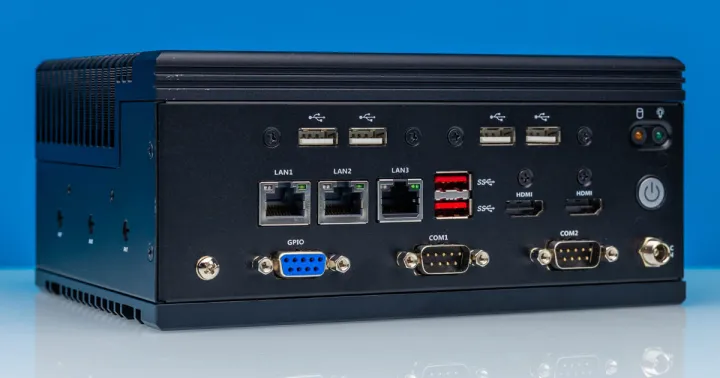
What makes this box is the face. Two 2.5GbE ports, a 1GbE port with vPro management, twin COM serial ports, a GPIO header, USB 2.0 alongside USB 3.2, and a locking wide-range DC input rated for 12 to 36 volts. There's no IPMI, and the wireless slot is empty out of the box, but this is a gateway for digital signage or assembly-line automation, not a consumer PC playing at being rugged.
You can tell exactly who it was made for. The split between slow USB 2.0 for accessories and fast USB 3.2 for storage, the serial ports, the triple Ethernet, the locked DC feed. It's all there, on one face.
ServeTheHome: Supermicro SYS-E103-14P-H Review: A Fanless Panther Lake Edge Appliance
The Supermicro SYS-E103-14P-H is an interesting little fanless appliance that pairs Intel's new Panther Lake Core Ultra X7 368H processor with a dense industrial I/O layout
Supermicro SYS-E103-14P-H Review: A Fanless Panther Lake Edge Appliance
A budget cooler with a loud quirk (and an existing fix)
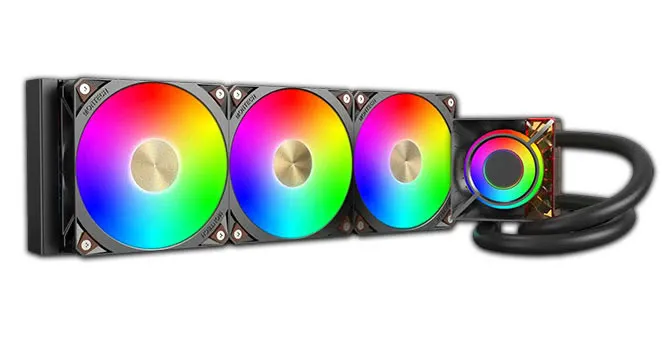
The Montech CyberFlow ARGB 360 costs $119.99, and TechPowerUp handed it a Recommended award. It's a 360mm AIO with a magnetic pump-mounted VRM fan, a thick radiator, and no pump display, which is presumably how they got the price down.
It cools well. Across the whole test suite it lands in the top five, trailing the best coolers by only one or two degrees at max RPM. Six years of warranty comes standard, and no software is needed to run it.
There's a catch. At max RPM it's one of the loudest coolers tested, near 65 decibels, and the trouble is the VRM fan. It shares a single PWM signal with the pump, so taming the noise means throttling coolant flow. Pull the VRM fan out entirely and you reclaim a degree or two.
Here's the good news. Montech already revised that fan, dropping max RPM from 3,500 to 2,600, yet TechPowerUp reviewed the older unit. Buyers should check which fan they receive and reach out to Montech if needed. With the fix, noise drops and pump flow improves, so the trade-off becomes far less painful.
TechPowerUp: Montech CyberFlow ARGB 360 Review
Montech's CyberFlow ARGB 360 feels and performs like a heavyweight. It's vibrant, loud, and offers tremendous cooling performance. It also offers daisy-chained fans, a thick radiator, and a magnetic VRM fan alongside a six-year warranty, further improving its standing. Nevertheless, several quirks remain noticeable.
A chair that's most of the flagship for far less
The LiberNovo Omni SE is the manual sibling of the £1,200 Omni Pro, which KitGuru reviewed back in June. It drops the motors, battery, and cooling fans to cut the price by nearly £500, landing at £786 bundled with a footrest. The open question was whether LiberNovo cut the right corners.
Mostly yes. The dynamic ergonomic frame survives intact, with linked armrests, a neck support that reads as gold-standard, and seat foam that keeps you comfortable across long sessions. It reclines to 160 degrees, carries a 300-pound rating, and going fully mechanical means nothing electrical will fail down the line.
The fabric is where it reveals its price. The micro-linen feel is looser and less breathable than the flagship's Danish cloth, and the dark finish grabs skin oils and pet hair. The lumbar dial works but is uncomfortably small, and a single colorway makes it look heavier than it is. KitGuru scored it 8 out of 10 and called the fabrics the one thing holding it back from true greatness.
For what it's worth, if dynamic support matters more than materials, this is hard to beat at the price. If you care how something feels, budget for the Pro.
KitGuru: LiberNovo Omni SE Chair Review
Back in June, I reviewed the LiberNovo Omni Pro and walked away thoroughly impressed by its dynamic ergonomics, but the eye-watering £1,200 price tag was a massive hurdle. Enter the Omni SE, a stripped-down manual version that cuts the price down to just over £700 while keeping the core frame and dynamic support intact. On paper, shedding the motors, battery, and cooling fans to save nearly £500 sounds like the ideal compromise. But did LiberNovo cut the right corners to make this ergonomic design more accessible, or does the loss of premium materials spoil the experience?