Ten fresh reviews land today, including a $170 voice recorder that tells subscription services to take a hike
From a subscription-free transcription puck to OLED-smooth monitors and a flight yoke worth the money, here's what the reviewers actually liked.
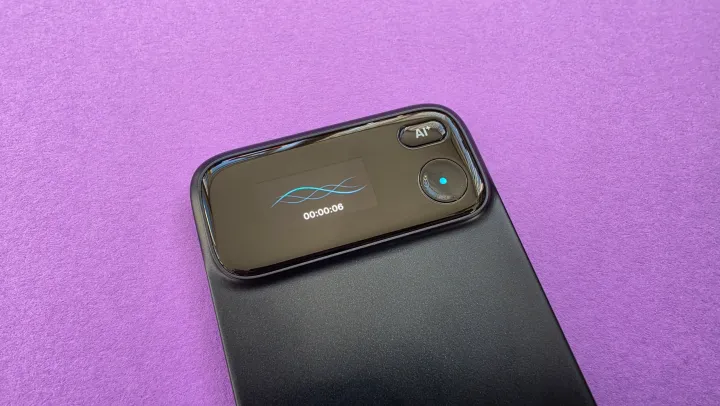
The Comu Action Pro is, at its core, a $169.99 puck of plastic that does roughly what Windows Central's Jennifer Young currently pays $100 a year for. She calls her Otter.ai bill "expensive," then replaces it with a device that transcribes unlimited audio and never asks for a monthly fee. And it held up on a deafening convention floor.
Testing it at Gamescom and Blizzcon 2026 is about as brutal as it gets for a microphone. Yet that six-microphone adaptive array kept the crowd noise in check and delivered transcriptions that barely dropped a word. One physical button handles the whole operation, so you aren't juggling a phone app while sprinting to the next panel.
It's genuinely useful for the people who'd buy it in the first place. Real-time translation spans 113 languages, the battery runs 60-plus hours, and there's a live AMOLED waveform display on the face of it. It also works on files recorded elsewhere, with accuracy that holds up in poor lighting and poor acoustics.
Windows Central: I ditched my expensive audio transcription service for this tiny device
Comu Action Pro review: Free, unlimited AI transcription in a pocket recorder with zero subscription fees.
I ditched my expensive audio transcription service for this tiny device
The catch is that basic. The $169.99 covers unlimited recording and transcription, but the flashier AI tools (auto slide decks, meeting minutes, deep analysis) sit behind a $14.99-a-month premium tier. Young didn't need those for the core job, and that's exactly the point: the hardware earns its keep without a subscription bolted on.
HyperX isn't the only audio play today, and its Cloud Alpha Air is an easy one to recommend at the price. It's the company's first open-back gaming headset, and at roughly $149.99 on Amazon and Best Buy it's budget-friendly by the category's standards, the Corsair Virtuoso Pro runs about $200, and an Audeze option tops $900.
You get 40mm dynamic drivers with a special "HyperX Bass Tube" that keeps the low end from vanishing entirely, which is the usual complaint about open-backs. It's extremely light, so long sessions stay comfortable, and the sound comes out airy and natural.
Tom's Hardware: HyperX Cloud Alpha Air Review: Open-back and budget-friendly
Signature HyperX comfort carries over to the brand’s first open-back gaming headset.
HyperX Cloud Alpha Air Review: Open-back and budget-friendly

There are some rough edges. The mute button lets out a surprisingly loud blip, and the on-wire extension system is described as "not ideal." Worse, it doesn't work with HyperX's Ngenuity software yet, though you don't really need it to enjoy the headset.
Monitors: how smooth does LCD really need to get?
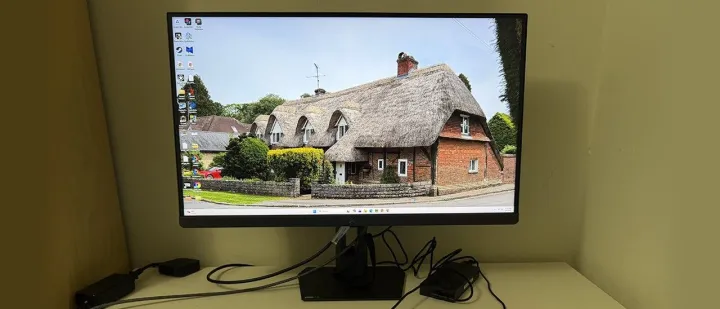
Asus's ROG Strix XG27AQGNV picked up an Editor's Choice from Tom's Hardware, and it's Asus's take on G-Sync Pulsar. That's the company's pitch for pulling OLED-level smoothness and responsiveness out of a normal LCD panel, without the strobing or brightness compromises OLED usually demands.
The reviewer loved the level of control. You get a 400-step variable overdrive for tuning motion blur down to something almost surgical, plus fine gamma and luminance adjustments.
It isn't flawless though. The color gamut runs a little tighter than rival fast monitors, and there's no dynamic dimming, so HDR contrast reads basically the same as SDR. At roughly $484 on Amazon and $499 on Newegg, it lands in the middle of the price range for a 27-inch QHD 240Hz-class display and plays like an OLED in most games aside from contrast and color volume.
Tom's Hardware: Asus ROG Strix XG27AQGNV 27-inch G-Sync Pulsar gaming monitor review: Super smooth with unprecedented control
Asus delivers its take on G-Sync Pulsar with the ROG Strix XG27AQGNV.
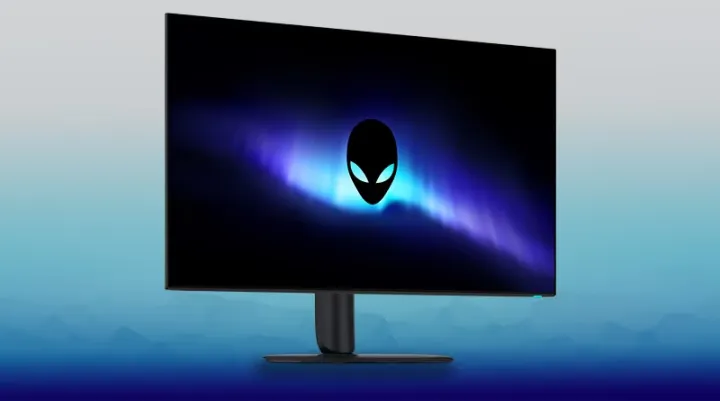
The Alienware AW3226Q tells a different story, but one with the same underlying current. TFTCentral tested Alienware's second 32-inch OLED, this one swapping a Samsung QD-OLED for an LG tandem WOLED panel. It drops refresh rate to 165Hz to keep the price friendlier.
The interesting part is that LG removed the white sub-pixel, which kills the long-standing OLED problem of text fringing. Email and web pages now match an LCD at equivalent pixel density. It's a funny twist that after years of OLED monitors, the thing people actually cared about turned out to be reading without seeing halos around the letters.
The glossy coating delivers zero haze and a genuinely popping image, though. The trade is that it mirrors your window right back at you, so a bright room with glare becomes a problem.
TFTCentral: Alienware AW3226Q Review
The new 32" OLED monitor from Alienware with a 4K resolution, 165Hz refresh rate and a glossy Tandem WOLED panel with RGB stripe layout
There's another caveat worth flagging. Luminance uniformity on TFTCentral's sample was mediocre, and a feature called CPC edge dimming can push the corners down to roughly 52 nits in dynamic content. That's real vignetting. Alienware is looking into it and may add a firmware toggle, but as of right now you can't turn it off.
Input gear bends toward modularity
The big theme across this year's keyboards and mice is customization. Almost every flagship this season lets you rearrange something like plates, screens, switches, buttons, and today's batch is no exception.
Epomaker's HE75 V2 TMR scored a 7.0 of 10 from APH Networks. It's a 75% TMR magnetic board at about $129, running 8000Hz polling and letting you hot-swap both magnetic and mechanical switches. The Creamy Jade switches are pre-lubed and thocky, rapid trigger is toggleable for competitive strafing, and an 8000mAh battery keeps it going long. Silk-print legends will wear eventually, but it's the best value of the three Epomaker boards here.
APH Networks: Epomaker HE75 V2 TMR Review
As some of you may know, I was an avid Final Fantasy XIV player, but have found the latest expansion rather disappointing. Given that, I have not really played a real MMO, as MapleStory is not what I would consider traditional. That being said, a friend of mine has recruited me to play Aion 2, as it has released this month. I gave it a try, and I honestly have not yet found the appeal of the game. I feel I am playing a mere phone game by making my character auto pilot to the next objective that I really have no care for. I probably will keep going in hopes that the game gets better, as I have seen the later content, and it does give me the same feeling as Final Fantasy XIV. I will note the character creation in this game is simply magnificent. There were sliders for parts of the eyes that I swear nobody actually cares about. There was so much detail I would have never considered for a character creation menu, and it leads to some really pretty looking characters. I find it to be the case for a lot of the things where the exterior is beautiful, but the actual thing in question is rather bland. I see this in particularly keyboards where I can find it visually appealing, but be disappointed by their performance. Today, we have the Epomaker HE75 V2 TMR for review. The Epomaker HE75 V2 TMR is an appealing looking keyboard, but will its performance back it up? Keep reading to find out!
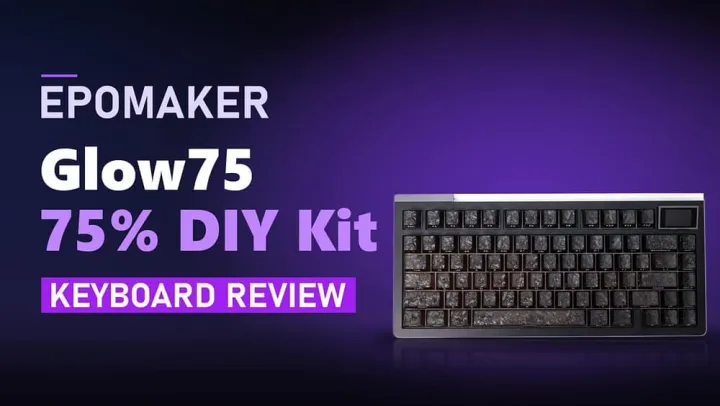
Then there's the Epomaker Glow75, a 9.0 of 10 from Hardware Busters. It's a $299.99 barebones aluminum DIY kit — you buy the case, PCB, and battery and drop in your own switches and keycaps. A swappable 1.14-inch TFT module also takes a knob, so it sits closer to the custom-keyboard hobby than the gaming aisle. Not for anyone who wants a ready-to-play board straight out of the box.
Hardware Busters: Epomaker Glow75 Mechanical Keyboard Review
Epomaker Glow75 review: a 75% aluminum DIY kit with a leaf-spring mount, swappable screen and light bar, tested with Flamingo and Nude Rosa Silent switches.
Epomaker Glow75 Mechanical Keyboard Review - Hardware Busters
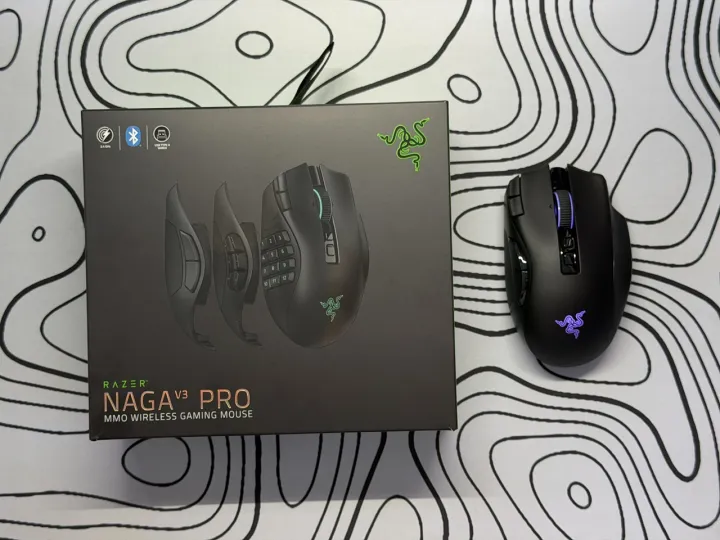
Razer's Naga V3 Pro scored 8.6 of 10 from Funky Kit, and its whole gimmick is now genuinely flexible. Three interchangeable magnetic side plates let you swap between a 12-button MMO grid, a six-button layout, or a clean two-button config in seconds. You've got a Focus Pro 50K sensor, up to 23 programmable buttons, and up to 150 hours of battery. It's versatile, just too heavy for FPS players chasing an ultralight rig.
Funky Kit: Razer Naga V3 Pro MMO Wireless Gaming Mouse Review
The Razer Naga has long been one of the go-to choices for gamers who need more buttons than a traditional gaming mouse can offer, and the Naga V3 Pro takes that concept even further. Rather than being designed exclusively around MMO gaming, Razer has built this latest model to adapt to different genres with three interchangeable magnetic side plates, allowing you to switch between a 12-button MMO setup.
Razer Naga V3 Pro MMO Wireless Gaming Mouse Review - Funky Kit
Most memorable is the Pulsar Feinmann F01 Noctua Edition at $179.95. It's a 73-gram carbon-fiber mouse with an actual Noctua NF-A4x10 fan mounted under the palm, blowing air across your hand to keep things cool during long hot sessions. Flagship 8000Hz polling, top-tier sensor, the whole works. The fan does murder the battery though: about 10 hours at 1000Hz with the fan on, down to roughly 5 hours at 8000Hz on full tilt. Novel idea. Accept the penalty.
TechPowerUp: Pulsar Feinmann F01 Noctua Edition Review
Jointly developed by Pulsar and Noctua, the right-handed ergonomic Feinmann F01 Noctua Edition has active airflow from an integrated 40 mm fan. At 73 g with a 500 mAh battery, this special edition mouse is equipped with Pulsar's latest XS-2 sensor, optical main button switches, and 8000 Hz wired and wireless polling,

Most memorable is the Pulsar Feinmann F01 Noctua Edition at $179.95. It's a 73-gram carbon-fiber mouse with an actual Noctua NF-A4x10 fan mounted under the palm, blowing air across your hand to keep things cool during long hot sessions. Flagship 8000Hz polling, top-tier sensor, the whole works. The fan does murder the battery though: about 10 hours at 1000Hz with the fan on, down to roughly 5 hours at 8000Hz on full tilt. Novel idea. Accept the penalty.
Gaming software and hardware from today round out the picture. Control: Resonant came out with a 4.5 of 5 from Windows Central, and you play Dylan Faden, an ex-villain now hunting his sister Jesse through a paranormal-warping Manhattan. Remedy does Remedy things, X-Files and Twin Peaks writing, a solid voice cast, with a third-act finale being called "one of the most beautiful in gaming this year, if not ever."
Windows Central: Control: Resonant review — Remedy’s latest experiment is mesmerizing, ambitious, and unlike anything else in modern gaming
Control Resonant is the latest action-adventure epic by Remedy Entertainment, and we dive deep into its story and gameplay to see if it's worth your time.

The gameplay opens as a shooter then shifts to a melee focus with RPG mechanics. The open-world Manhattan, with upside-down buildings and gravity-defying traversal, is praised as one of the best level designs the reviewer has played in years. There are three "Aberrant Forms" weapons, but only one can be active at a time, and the melee could run deeper. Still a must-play either way.
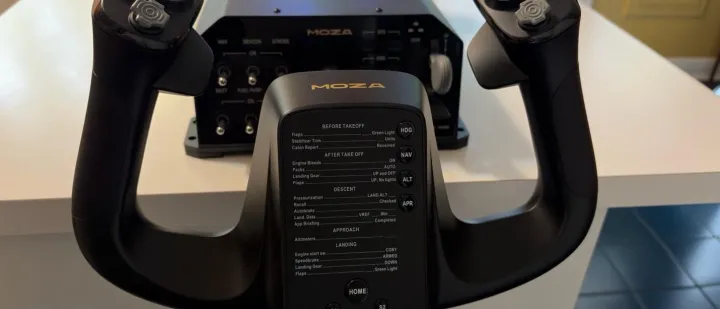
Tom's Hardware handed the MOZA AY210 FF base paired with the MFY Yoke an Editor's Choice. MOZA, founded in 2012 by automotive engineers, mostly builds sim-racing wheels, so this is its flight sim push. It delivers genuine force feedback and exceptional build quality in Microsoft Flight Simulator 2024, though the elevator feels sticky without proper tuning and the price is squarely premium. Not an easy recommendation for casuals or budget buyers.
Tom's Hardware: MOZA AY210 Force Feedback Base and MFY Yoke review: Taking flight sim immersion to the next level
A premium force feedback yoke for serious flight simmers.
MOZA AY210 Force Feedback Base and MFY Yoke review: Taking flight sim immersion to the next level