MSI Claw 8 EX AI+ Delivers Top-Tier Arc Gaming, HyperX Omen 15 Takes On Mainstream Market, and Today's Other Picks
Today's hardware roundup brings you the latest in enthusiast reviews, headlined by the MSI Claw 8 EX AI+ pushing Intel's Arc G3 Extreme APU to new heights and the rebranded HyperX Omen 15 aiming to shake up the budget gaming laptop market. We also break down the 6K touch capabilities of the Acer ProDesigner PE320QXT for Mac creators, the refined ergonomics of the Fractal Design Refine 2, and the specialized appeal of the Razer Naga V3 Pro, alongside deep dives into the Colorful X870E motherboard, Creality's automation-focused 3D printer, and UGREEN's flagship NAS.
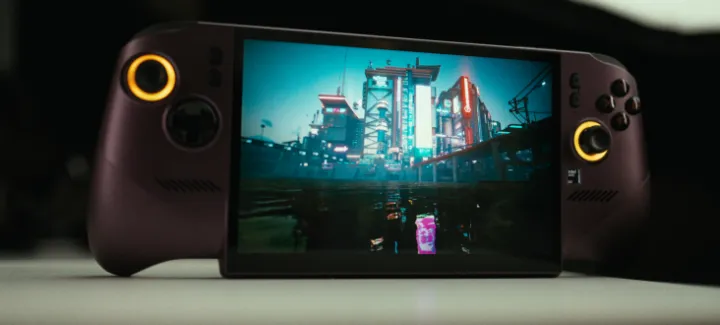
The MSI Claw 8 EX AI+ brings Intel's most aggressive mobile silicon to a handheld form factor. KitGuru landed on a 7.5 out of 10, praising the Arc G3 Extreme APU while noting that Windows 11 remains the software that drags it down. The hardware intelligently balances power between the 2P + 8E + 4LPE cores and the Intel B390 GPU. Cyberpunk 2077 on High preset hits 80 FPS with Performance XeSS, which puts it near the top of the handheld stack. The 80Wh battery keeps full performance all the way down to 10% charge and delivers over six hours on lighter titles. Hall Effect sticks eliminate drift, and the internal speakers are surprisingly punchy.
The trouble starts with the OS. KitGuru documented random sleep wake-ups, including a hotbox incident where the device woke up inside a backpack. Aggressive background updates and conflicting overlays from Xbox, MSI Command Center, and Windows create a convoluted experience. The team even tried CachyOS Handheld Edition to fix the sleep issues, which worked perfectly. Linux did not match Windows gaming performance though, largely because Intel's Arc G3 Extreme platform is simply too fresh for mature open-source drivers. That's impressive silicon hampered by a Windows 11 experience that isn't ready to play nice.
KitGuru: MSI Claw 8 EX AI+ Handheld Review
The MSI Claw 8 EX AI+ arrives with a staggering £1400 price tag and a bold promise to redefine handheld gaming. Powered by Intel's brand-new Arc G3 Extreme APU and backed by a massive 80Wh battery and a 120Hz display, on paper it certainly looks like a portable powerhouse. But with the shadow of Windows 11 looming over the handheld form factor, does this incredible hardware actually deliver a cohesive gaming experience, or is it severely let down by its own operating system?
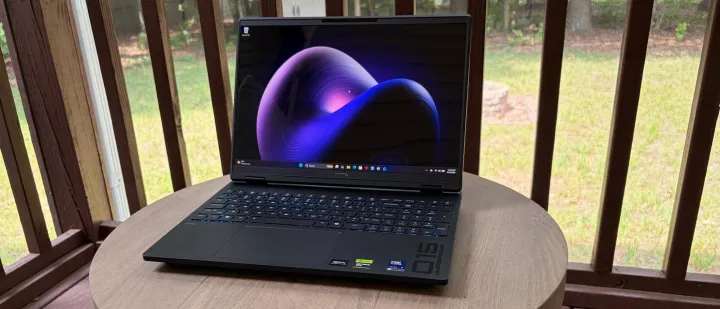
HP has formally repositioned the HyperX Omen brand to replace the Victus line in its mainstream gaming segment. Tom's Hardware put the new Omen 15 through its paces. The starting price is $999.99, though the as-tested configuration runs $2,099.99. Inside, you'll find an Intel Core Ultra 9 386H paired with an NVIDIA GeForce RTX 5070 Laptop GPU drawing 85W. The display is a 15.3-inch OLED with a 2880x1800 resolution and 120Hz refresh rate. Gaming results are class-competitive. Shadow of the Tomb Raider hits 126 FPS at 1080p and 60 FPS at native 1800p on highest settings. Far Cry 6 pulls 69 FPS at 1800p Ultra, the best result in its class. Tom's Hardware's Brandon Hill noted the chassis flexes more than expected for a $2,100 laptop. The upper and lower chassis are fully plastic. An aluminum lid is the only metal. Keep in mind that there are no Thunderbolt ports. You get one USB-C 3.2 Gen 1 port on the back, two USB-A ports, and GbE on the sides. It's a solid gaming system that makes a few feature compromises. However, the lack of Thunderbolt support and the limited 120Hz OLED screen make this considerably more expensive than some rivals.
Tom's Hardware: HyperX Omen 15 review: Strong gaming performance and colorful OLED display, with obvious cost-cutting measures
A solid gaming system that makes a few feature compromises
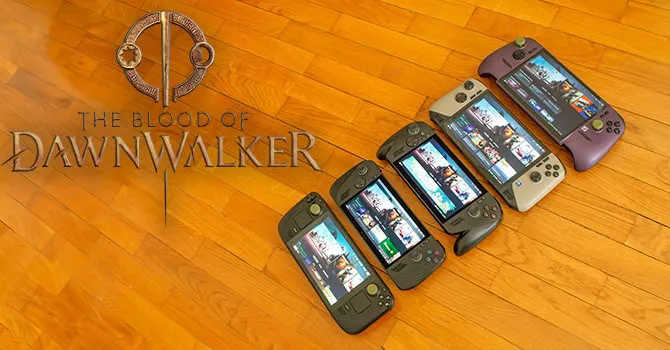
The Blood of Dawnwalker review arrived right on the heels of the MSI Claw 8 launch. TechPowerUp used the Unreal Engine 5 RPG to stress-test handhelds including the Steam Deck OLED, Xbox Ally X, and MSI Claw 8 EX. With Lumen global illumination and Nanite geometry, it's one of the most demanding titles tested on portable PCs. DLSS, FSR, and XeSS upscaling are available, though no TSR or low-latency options exist. TechPowerUp provided optimized presets for each device. At this point, this serves as the best reference point for what current handheld hardware can handle against modern UE5 tech
TechPowerUp: The Blood of Dawnwalker Handheld Performance Review
The Blood of Dawnwalker is a new RPG from Rebel Wolves, a studio built by veteran developers from the Witcher franchise. Powered by Unreal Engine 5 and looking demanding, it is a strong test for some of the most popular handheld PCs on the market.
Components and Peripherals
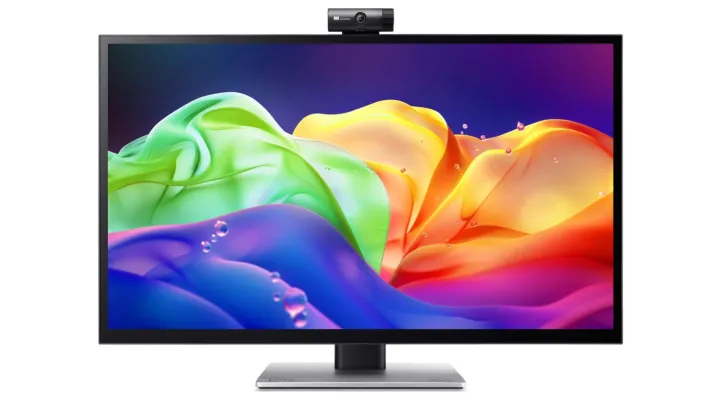
Mac creators finally have a 6K touchscreen option, if they're willing to deal with third-party drivers. MacRumors reviewed the Acer ProDesigner PE320QXT at $1,299.99 from B&H Photo. The 31.5-inch IPS panel hits a crisp 6016x3384 resolution with 99% Adobe RGB and 99% P3 coverage. Touch functionality relies on UPDD drivers from Touch-Base, turning your Mac into a giant iPad of sorts. The review noted that fine-line drawing with the stylus works well, mimicking the Apple Pencil hover experience. However, macOS support feels like an afterthought. There's no native Acer app, and basic gestures require per-app customization. The physical controls are a headache. Five buttons on the bottom right sit next to the power switch, meaning a slip of the finger could shut down your workstation. Brightness hits 400 nits SDR, which felt too dim for bright offices, and HDR maxes at 600 nits without local dimming. One of the most reflective displays tested, despite Acer's anti-glare claims. "This is not the display to get unless you really want touch integration," MacRumors concluded. It's a strong 6K creative display, but the touch integration and macOS quirks limit its appeal unless you have a specific workflow that demands a giant canvas.
MacRumors: Acer's 6K Touchscreen Display Turns Your Mac Into a Giant iPad, Sort Of
Acer recently came out with a new 6K 31.5-inch display, the ProDesigner PE320QXT. It's a touchscreen display that's able to work with a Mac using touch drivers, and it's aimed at professional creators. It's fun to use, but there are some compromises, and this is not the display to get unless you really want touch integration. This is a big, heavy display.
Review: Acer's 6K Touchscreen Display Turns Your Mac Into a Giant iPad, Sort Of
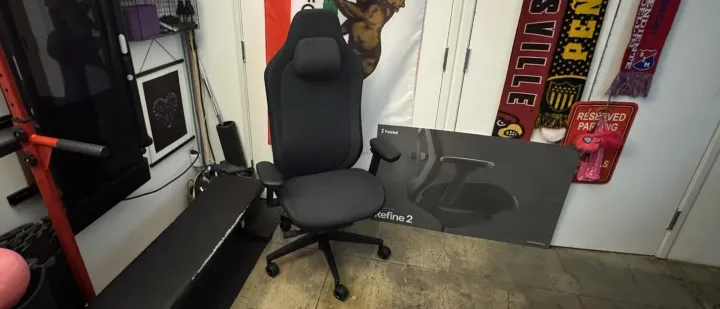
Fractal Design released the second generation of its Refine gaming chair. Tom's Hardware reviewed the $639.99 model. The Refine 2 keeps the minimalist aesthetic while adding incremental improvements. The 4D armrests now lock in place via a depth and angle mechanism. The tilt limiter is significantly toned down from the original, though reviewers still found it just a hair too strong. Assembly takes about 15 minutes solo despite the chair weighing nearly 80 pounds. The backrest is lightweight, so you don't have to wrestle with heavy components while screwing them in. Comfort is excellent, though the chair suits mid-range weight users best. Heavier or lighter users might find alternatives more suitable. "An improvement over the original Refine, even if said improvement isn't really all that significant," Tom's Hardware summarized.
Tom's Hardware: Fractal Design Refine 2 Review: Slightly refined
It's like the first chair, only... refined.
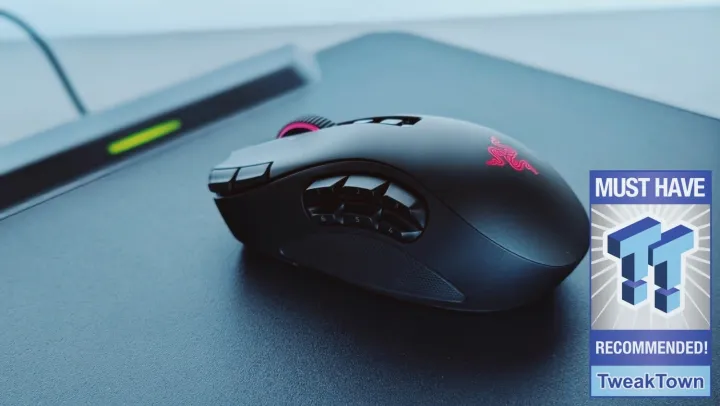
Razer shipped the Naga V3 Pro Wireless MMO mouse at $179.99. TweakTown awarded it 93% with a Recommended badge. The big news is the magnetic side panels. You get a 2-button standard MMO panel, a 6-button MOBA panel mapped to keyboard keys 1 through 6, and a 12-button MMO panel with full numeric keypad layout. Snap them in and Razer Synapse adapts automatically. The Focus Pro 50K Optical sensor is endgame-grade. It tracks at 930 IPS with 90G acceleration and works on clear glass up to 4mm thick. The build quality feels solid at 117 grams, though competitive shooters might find it a bit heavy. Optical switches are rated for 100 million clicks. The scroll wheel offers 4-way tilt and three modes with auto-transition. There are omissions to flag. Razer didn't include 8K polling support. The mouse caps at 1000Hz, which is notable for a premium wireless model. Synapse Web doesn't support the device yet, so you need the desktop app that eats hundreds of megabytes of RAM. No RGB lighting on the 6-button panel either. It's still the ultimate gaming mouse for MMO and MOBA gamers.
TweakTown: Razer Naga V3 Pro Wireless MMO Gaming Mouse Review - Transform and Roll Out
Built for MMO and MOBA gamers, the Razer Naga V3 Pro pairs its impressive hot-swappable side-panel customization with premium hardware and ergonomics.
Razer Naga V3 Pro Wireless MMO Gaming Mouse Review - Transform and Roll Out
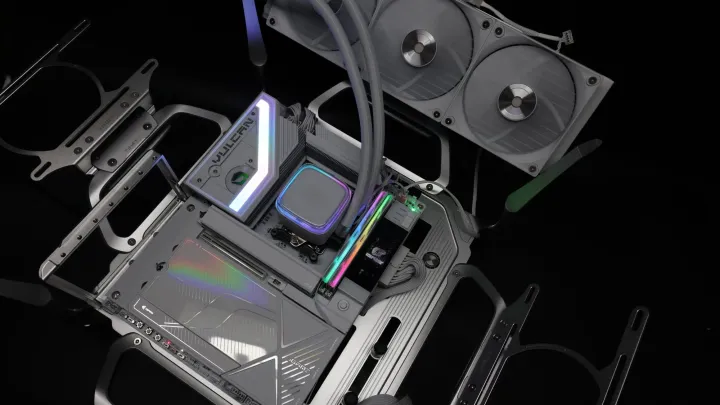
Colorful's iGame X870E Vulcan W OC V14 takes a divergent approach to AM5. Hardware Busters reviewed the ~$590 board. Where most X870E boards offer four DIMM slots, this one uses two. The logic is sound. Fewer slots mean fewer signal stubs. That enables higher data rates. Testing confirmed DDR5-8600+ MT/s overclocks with a Ryzen 9000 series CPU. The tradeoff is reduced expansion. You get five M.2 slots and two SATA ports. The VRM is beefy at 18+2+2 phases with 110A DrMOS. You also get Wi-Fi 7, 5GbE LAN, dual USB4, and a dual BIOS setup. The white variant features an immersion gold finish and full shroud. The black version exposes the PCB and adds two more SATA ports. It undercuts many premium X870E boards at the price point. However, availability outside China remains unconfirmed. It's best suited for enthusiasts who prioritize RAM speed over multi-drive storage setups.
Hardware Busters: Colorful iGame X870E Vulcan W OC V14 Mainboard Review
Colorful's iGame X870E VULCAN W OC V14 pairs a two-DIMM layout with USB4 and Wi-Fi 7. We test PBO, VRM thermals and DDR5-8400 memory overclocking.
Colorful iGame X870E Vulcan W OC V14 Mainboard Review - Hardware Busters
Creality dropped the SPARKX i7 AI Nano Combo 3D printer. NikKTech reviewed the FDM machine paired with the CFS nano filament hub. The printer runs a suite of automated features: air printing detection, run-out detection, tangle detection, and auto refill. The CFS nano is a compact 4-slot hub that communicates with the printer via RS485 and CAN. Spools range from 67mm to 200mm in diameter. Build volume is 200x200x200mm. The extruder handles materials up to 300°C, covering PLA, PETG, ABS, and composites. It's a polished ecosystem designed to minimize user effort. Compact, open-frame chassis weighs 9.5 kg. If you want multi-color printing without the manual fuss, this combo targets that exact niche.
NikKTech: SPARKX i7 AI Nano Combo 3D Printer Review
Creality’s SPARKX i7 AI with the CFS nano kit delivers a sleek, compact multi‑color 3D printing experience, focusing on streamlined operation and a polished overall design that feels both accessible and efficient.
UGREEN released the NASync DXP8800 Ultra, an 8-bay NAS aimed at enthusiasts. Vortez reviewed the $1,779.99 model. The Intel 150U processor packs 10 cores and 8 threads. RAM starts at 8GB DDR5 and expands to 96GB. Storage potential hits 272TB with 8x SATA bays supporting 32TB drives each. Two M.2 NVMe slots can serve as SSD cache or fast workspace. Connectivity includes dual 10GbE ports, two Thunderbolt 4 ports, and an SD 4.0 card reader. HDMI output supports up to 8K@60Hz for direct display connection. A PCIe x4 slot allows for expansion cards. Vortez called it one very capable 8-bay NAS. "Delivering flagship NAS performance with a burly 10-core Intel CPU, dual 10GbE, Thunderbolt 4, Gen4 NVMe and 272TB of storage potential," Vortez wrote. The 10-core CPU provides headroom for transcoding and virtualization. This is flagship performance for users moving large datasets or running complex NAS services.
Vortez: UGREEN NASync DXP8800 Ultra Review
Delivering flagship NAS performance with a burly 10-core Intel CPU, dual 10GbE, Thunderbolt 4, Gen4 NVMe and 272TB of storage potential. This is one very capable 8-bay NAS.
That wraps up today's roundup. From the MSI Claw 8 EX AI+ pushing Arc graphics to new heights, to HP's rebranding reshuffling the budget gaming laptop market, there's plenty of hardware to weigh in on. The lack of Thunderbolt on the HyperX Omen 15 and the Windows 11 quirks on the MSI Claw are the kind of details that matter when you're spending serious cash. For what it's worth, the Linux attempt on the Claw shows Intel's hardware works great on open source. The drivers just aren't there yet. Head here to check out the full reviews for each product.


