TechPowerUp recommends the $1,499 VZMORE AX9 Max as an upgradeable Ryzen AI 9 HX 470 mini PC, though its Performance mode costs more noise than it delivers. ServeTheHome finds the sub-$2,000 ASUS Turbo Radeon AI PRO R9700 a genuine value for local AI inference, costing about a third of an RTX 5090 for similar memory. The roundup rounds out with a silent be quiet! 1000W PSU, a hesitant Cougar 750W unit, a capable but finicky Bambu Lab P3C printer, and two Seagate external drives that reveal the strain of AI-driven storage demand.
Today's hardware reviews: an upgradeable Ryzen AI mini PC, a budget-ish AI inference card, and a tool-changer 3D printer
Seven hardware reviews dropped today, spanning mini PCs, a workstation inference GPU, two power supplies, a tool-changer 3D printer, and a couple of external drives. Some are easy champions. One wants your money and still won't say hello.
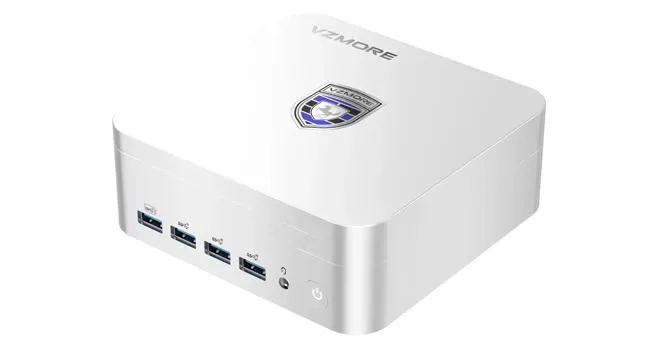
The VZMORE AX9 Max wants to be the do-everything compact desktop, and TechPowerUp's LJay mostly thinks it earned the nod. Priced at $1,499 for the 32 GB RAM and 1 TB SSD build, it pairs AMD's newest mobile APU with a vapor-chamber cooler and genuine upgradeability. That last part is the bit people rarely find in a box this small.
The price of a machine like this has been one of the bigger questions ever since AMD's Ryzen AI 400 APUs hit the compact-builder scene, and $1,499 puts the AX9 Max near the very top of the tier. So how does it justify the number?
Twelve cores and 24 threads ride the Ryzen AI 9 HX 470, with the Radeon 890M handling graphics. You get two replaceable SO-DIMM slots running out to 256 GB, plus a second M.2 2230 slot for another drive. Most mini PCs in this size class solder everything down and leave you staring at a sealed chassis.
Performance is genuinely strong. TechPowerUp notes solid SPECviewperf scores that make this a credible CAD box, while the Radeon 890M holds its own at 1080p. Cyberpunk 2077 landed around 50.8 FPS at Medium with FSR. Baldur's Gate 3 dropped to a more modest 36.7 FPS on Medium.
TechPowerUp: VZMORE AX9 Max Review
The VZMORE AX9 Max combines AMD's Zen 5/5c with RDNA 3.5 integrated graphics, upgradeable DDR5 memory, and extensive connectivity in a very compact desktop. It has a premium price tag, but delivers excellent CPU and workstation performance, solid 1080p gaming, and impressive power efficiency.
Idle draw is remarkably low and Balanced Mode stays quiet and steady. The AX9 Max edges out both the ACEMAGIC Retro X5 and the GEEKOM A9 Max on PCMark overall, even at that premium price. LJay's one real gripe: he'd love a 2 TB SSD option at $1,499. Keep in mind that the BIOS wattages are CPU targets, not total system draw.
A sub-$2,000 card with a sharp value point
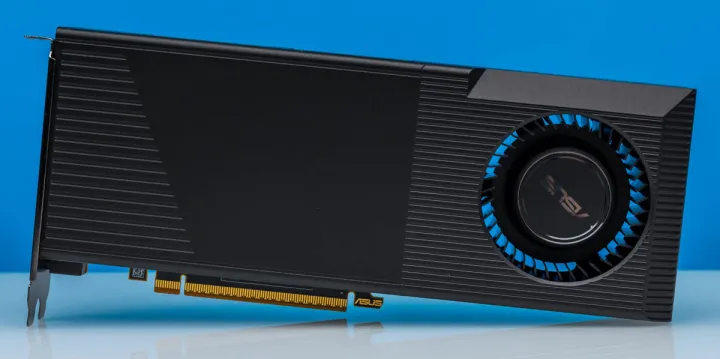
The ASUS Turbo Radeon AI PRO R9700 is AMD's answer to NVIDIA's RTX PRO Blackwell lineup, and ServeTheHome's Ryan Smith has been running it through real inference loads. It's sub-$2,000, can take up to four cards in one system, and costs roughly a third of an RTX 5090 for the same 32 GB of memory.
Sixty-four compute units and 4,096 shading units back the Navi 48 silicon, clocked up to 2.92 GHz. A single 300 W blower does the cooling, dual-slot and open-backed, which is exactly why four of them fit somewhere most gaming cards wouldn't. The 12V-2×6 connector lives on the rear because this card was born for multi-card systems.
ServeTheHome tested with quantized Qwen models at baseline settings, no draft models. The 27B model at 4- to 6-bit got about 22 tok/s to start, and total throughput crept past 50 tok/s under concurrent load. Per-user rates and time-to-first-token degrade hard as that count climbs, with analysis-phase TTFT hitting roughly 70 seconds.
The smaller 35B MoE model ran much faster, starting at 75+ tok/s with code generation near 125 tok/s. Two R9700s start looking like a real play against a single RTX 5090, especially at low concurrency, where the cost-per-token story is genuinely sharp.
ServeTheHome: ASUS Turbo Radeon AI PRO R9700 Review
Today we are taking a look at ASUS's high-end Radeon AI inference card for workstations, the Turbo Radeon AI Pro R9700. With 32GB of RAM and a $2000 price tag, the card is a highly affordable way to fill out a workstation for local AI inference
This is an inference card, not a gaming card, and that distinction is everything. If you're running a local model with a handful of users, it's a reasonable dollar. Stack heavy workloads and the per-user rate still falls about 35% under load. Head here to read the full ServeTheHome writeup if that's your lane.
Two power supplies, one clean, one hesitant
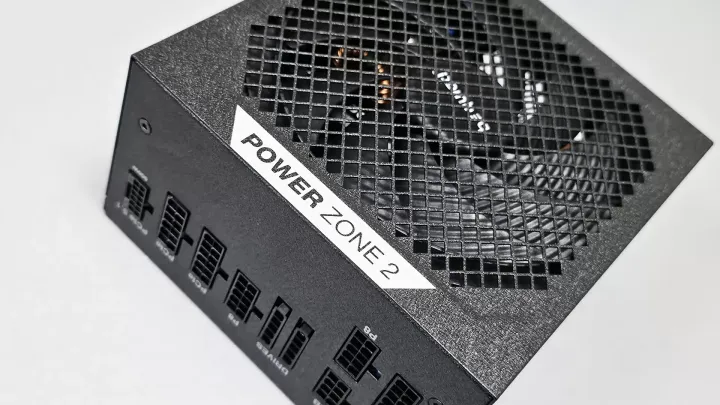
The be quiet! POWER ZONE 2 1000W picked up a strong 8.6 out of 10 from Funky Kit. At $135 to $150, the price makes you double-check the specs before you believe them.
This is be quiet!'s first 140 mm fan PSU, and the brand has spent the last several years building a reputation for quiet everything, so this unit leans all the way into that identity. It pairs a semi-passive zero-RPM mode with post-ventilation that keeps the fan spinning 2 to 5 minutes after light use, which sidesteps the start/stop cycling that drives people up a wall on cheaper units. It's 80 PLUS Platinum and Cybenetics Platinum, peaking near 94% efficiency, which is why it runs cool and quiet. A native 90° angled 12V-2×6 connector, ATX 3.1 readiness, and a 10-year warranty round it out. Funky Kit's split score says it all: a 10 for quality and warranty, a 7 for price.
The knocks are small and specific. No extra protections on the 12V-2×6 cable, and a non-Japanese main capacitor. Neither one is a dealbreaker. It's an exceptionally silent unit that tops its class on warranty alone.
Funky Kit: be quiet! POWER ZONE 2 1000W PSU Review
We have recently begun showcasing products from be quiet!, so it was only natural to include their power supply units, which stand out as highly competitive when compared to other brands. In the first line is the Power Zone 2 power supply, rated at 1000W.
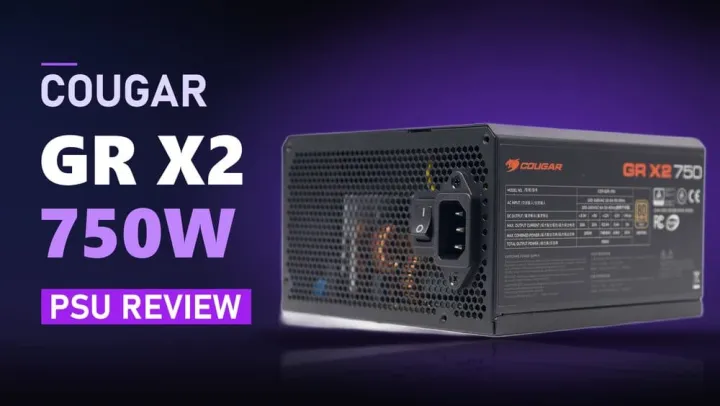
The Cougar GR X2 750W is a slower story. Hardware Busters scored it 7 out of 10, and it isn't even on sale yet. The price is still TBD. Built by RSY on a compact modular chassis, it's efficient (Cybenetics Platinum) and quiet up to about 60% load, but a short hold-up time, high inrush current, and loose minor-rail regulation put it behind most rivals. It's competent, but it's waiting on a price to prove it's worth the shelf space in your case.
Hardware Busters: Cougar GR X2 750W ATX v3.1 PSU Review
Cougar GR X2 750 review: a Cybenetics Platinum 750W ATX 3.1 PSU with a quiet fan, tested against 25 other 750W units in our PSU suite.
A 3D printer that loves its job and hates you
The Bambu Lab P3C is roughly half the price of its bigger sibling, the H3C, and Tom's Hardware's Denise Bertacchi thinks it's a solid entry into tool-changer territory. At $1,149, you get a seven-tool bay, a 256 by 256 by 260 mm build volume, and the revival of 2.85mm filament as soft TPU 75A.
The standout is the TPU process. It handles color changes fast, runs multi-material and multi-nozzle prints in a single job, and works with nearly all spool types. Hardened steel nozzles round it out. But for a machine that does this well, it's a genuinely annoying one to live with day to day.
Tom's Hardware: Bambu Lab P3C Review: A more affordable tool changer
Half the price, but is it as nice?
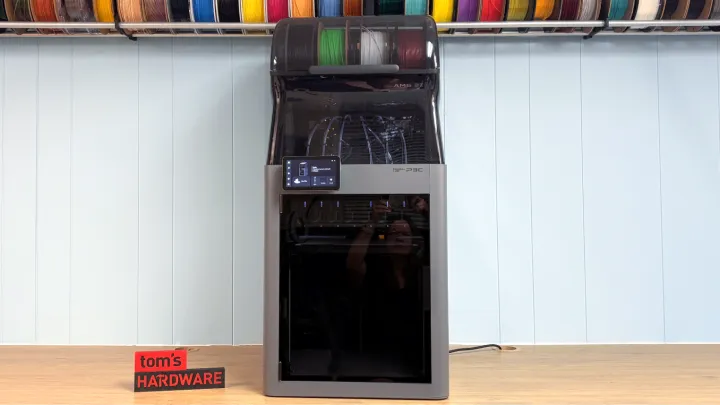
Tom's Hardware's cons read almost like a complaint letter. The printer is really tall. Loading filament is tedious. Tool changing is, quoting directly, "a pain, literally." If you can skip the heated chamber, the built-in dryer, and automatic filament loading, it's a manageable budget upgrade. Otherwise the H3C stays worth the extra spend.
Two Seagate drives, and the market showing through
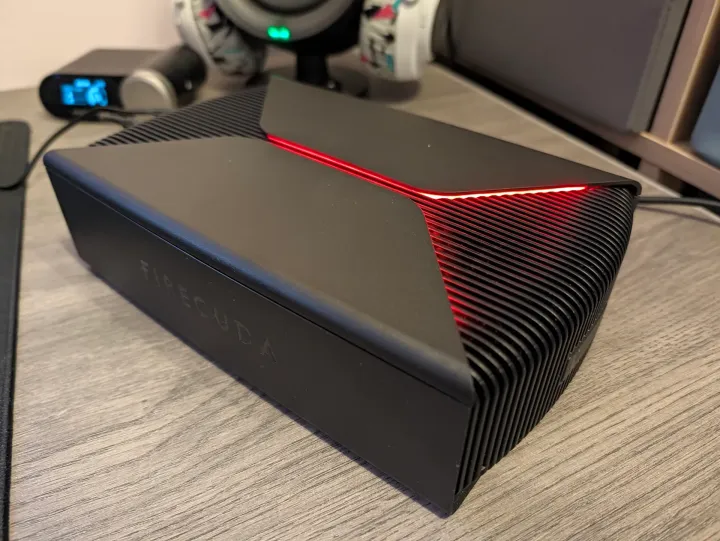
Two external drives landed at the same time, and together they tell you what's happening in storage as of right now. The FireCuda X Vault 20TB earned a Gold Award from NikKTech at around €800, and availability is scarce. That scarcity is a market story in plain sight: AI-infrastructure demand is gobbling high-capacity drives, and it's trickling down to your external storage.
The X Vault is bus-powered over USB-C, needing only a port that delivers 15 W or more. It peaked at 14.6 W with the ARGB bar at full brightness. An aluminum body, IronWolf Pro-class internals, low temps, near-silent operation, and a two-year warranty in the Americas make it a clean fit in a gaming or workstation setup.
NikKTech: Seagate FireCuda X Vault 20TB BUS Powered USB-C Gaming Hard Drive Review
Seagate's FireCuda X Vault 20TB combines massive storage capacity, a single-cable USB-C design and customizable ARGB lighting in a desktop-class external drive built for users who need far more space than mainstream storage solutions can provide.
Seagate FireCuda X Vault 20TB BUS Powered USB-C Gaming Hard Drive Review
The FireCuda Forge 20TB went the other direction entirely. It blends HDD capacity with an addable NVMe SSD tier into a single, dynamically managed volume, which Seagate calls Alkemi Technology. It learns what you access most and shuffles it onto the NVMe tier over time, and Seagate stresses the system doesn't move files against your intent and isn't generative AI. Advertised reads hit 2,500 MB/s and writes up to 2,000 MB/s.
Then comes the catch, which is exactly why eTeknix handed it just 2 out of 5. The NVMe M.2 2280 drive is required to operate and sold separately. You buy the enclosure and then buy the speed yourself. With a premium price on top, that's a friction point worth naming. It's clever work, but clever doesn't help when the core piece isn't in the box.
eTeknix: Seagate FireCuda Forge 20TB External HDD Review
Seagate is one of the biggest names in the storage business, and with the release of their new FireCuda Forge Gaming Hard Drive, it’s easy to see why! From the enterprise market to your average office…