Microsoft releases PowerToys Preview v0.102.2883.0 with offline ZoomIt dictation
Microsoft has published PowerToys Preview v0.102.2883.0 on GitHub. It lands as the latest stop on a fast 0.102 release train, arriving right on the heels of v0.102.2862.0.
The headline feature is opt-in, fully offline snip dictation in ZoomIt. Grab a screenshot and speak a description out loud. Your device transcribes the speech locally, so nothing goes to a cloud service. The image and its typed-up caption then paste together in a single move.
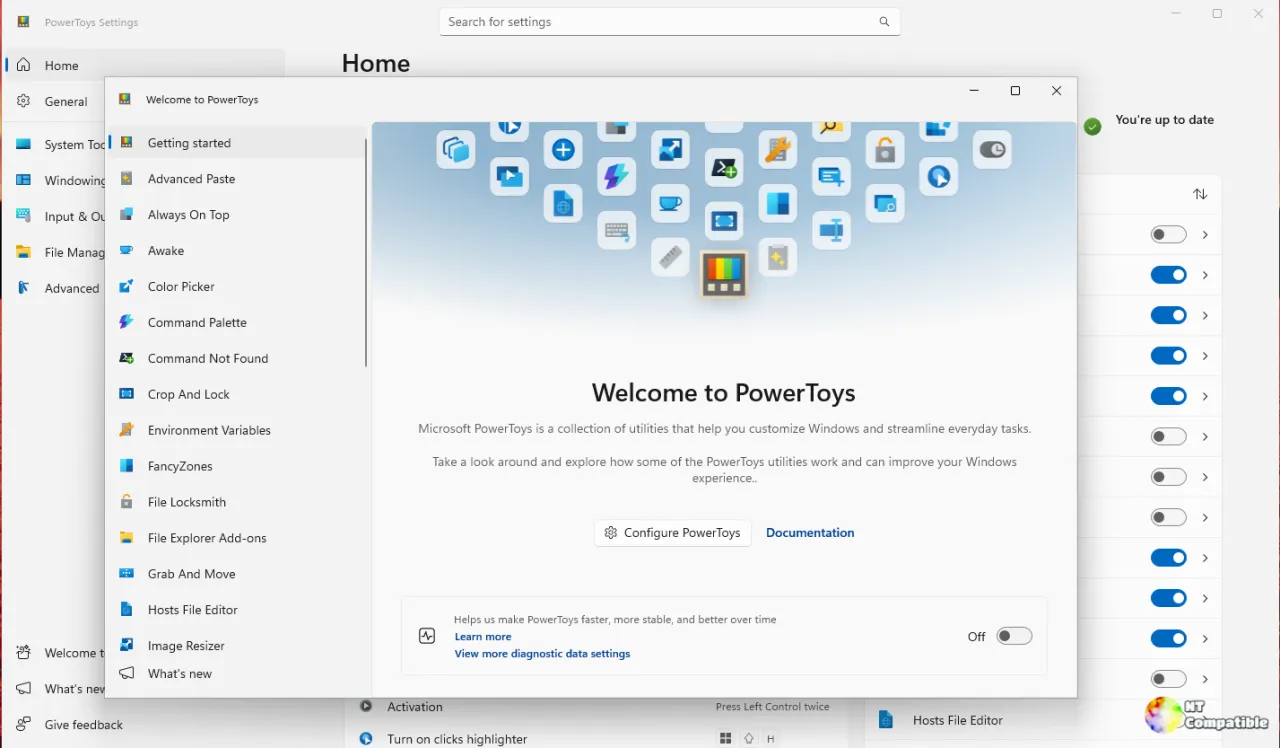
It is a preview pre-release built from the stable branch, not the final 0.102 GA build, so don't read this as a major version bump. It is more of a targeted delta: workflow tweaks, a memory-leak fix, and a fair amount of under-the-hood cleanup.
This October has moved fast, by PowerToys standards. The 0.102 preview builds in this run include v0.102.2803.0 on October 8, then 2814, 2851, 2862, and now 2883. The 2851 build slipped in a Quick Accent character guide and a ZoomIt recording fix, and this newest build keeps the same cadence going.
The build was published by @LegendaryBlair at commit 6b82382, and the notes deliberately cover changes since the last preview rather than the full 0.102-vs-0.101 delta. Keep in mind that Microsoft's notes leave some ZoomIt details blank: no word on exact hardware requirements, supported languages, or how the local model is set up. You will want to open the ZoomIt settings page after install and read them for yourself.
Peek gets text previews and command-line control
The second change lands in Peek, which previews file content straight from File Explorer without opening the underlying app.
A new plain-text fallback (#50020) now renders actual text for files with otherwise-unsupported extensions, instead of shoving you a bare file-info card. That is handy for custom dotfiles, .env variants, and proprietary log formats you would otherwise have to open in a text editor.
A separate change (#49724) lets you launch Peek from the command line to preview multiple files and folders at once, with tighter relative-path handling and stricter argument validation.
The Command Palette, the keyboard-first search hub many treat as a centerpiece of the suite, got a round of fixes too. Results now batch-load, so an underfilled window pulls in more entries without a scrollbar, and it keeps your highlight selection while the next batch finishes loading.
Under the hood, and a help from Copilot and Claude
If you care about how this was built, the development notes are the interesting part.
New platform-compatibility gates now fail builds when they hit unsupported OS API calls, turning what used to be runtime surprises into compile-time errors. UI tests across FancyZones, Peek, PowerRename, and others were also pinned down and made deterministic.
Then there is the AI angle. A fair number of these PRs carry explicit credits to @Copilot and @claude. The ZoomIt dictation pull request (#51286) even pairs GitHub's Copilot with Mark Russinovich, the Sysinternals legend behind Windows Internals, working alongside Microsoft's @foxmsft.
PowerToys is quietly becoming a testing ground for human-AI open-source development, where named engineers pair with AI assistants to ship features. It raises honest questions about how maintainers verify AI-generated changes, but it is also a good sign that the community is adopting the workflow.
One small wrinkle worth flagging: one change (ce7edd480bc6) landed via a direct commit rather than a normal PR, and the notes label it "changes needing final review." Unusual call. Worth knowing.
Two smaller changes
The "Auto Hide Cursor" module has been renamed CursorHide, with a refreshed icon and updated behavior controls. If you hunt for the old name in the sidebar, you will find CursorHide instead.
There is also a long-overdue memory fix (#51060): PowerToys Settings used to eat RAM every time you clicked between the Home and General tabs. It now releases retained pages and view models, which should keep memory honest.
Getting it
Four installer variants are up on the GitHub releases page. Match your architecture (x64 or ARM64) and your deployment scope, picking between per-user and machine-wide installs.
Head here to the GitHub releases page for the download and the full notes.


