Today's reviews are dominated by value, with six of eight new products pitched as more features per dollar. The standouts include a $49 NZXT S5 RGB case that ships with a 360mm fan, the ~$80 Cougar DUOAIR RGB, which cools GPUs better than pricier cases, and the £779 Philips Evnia Penta Tandem QD-OLED monitor that earns a 4.5/5 despite US unavailability. Keyboard makers are pushing silent tactile switches with the be quiet! Light Mount TKL and EPOMAKER RT75 both landing under $120, while the Logitech G Pro X3 mouse is praised as better than its predecessor yet deemed not worth $200. Storage gets an affordable entry into PCIe 5.0 with Kioxia's DRAM-less QLC Exceria G3, though sustained performance and endurance remain the catch.
A $49 case with a 360mm fan, and other value-minded picks
A bundled 360mm fan in a $50 case. That single fact explains most of the reviews coming out this week. Six of the eight products in this roundup are pitched as more features per dollar, and the two premium exceptions arrive framed as good value for their own tiers. The dominant story here is that you don't need to open your wallet very wide to build or play something that actually works.
The NZXT S5 RGB sits at roughly $49, and reviewers keep landing on the same surprise. IgorsLAB praised its low temperatures and generous GPU clearance despite the compact mid-tower design, calling the pre-installed reverse-blade unibody fan bar "an excellent performer."
IgorsLAB: NZXT S5 RGB Review: Compact ATX Tower with 360 mm Fan
The NZXT S5 RGB impresses in testing with low temperatures, 360 mm AIO support and room for long graphics cards despite its compact design.
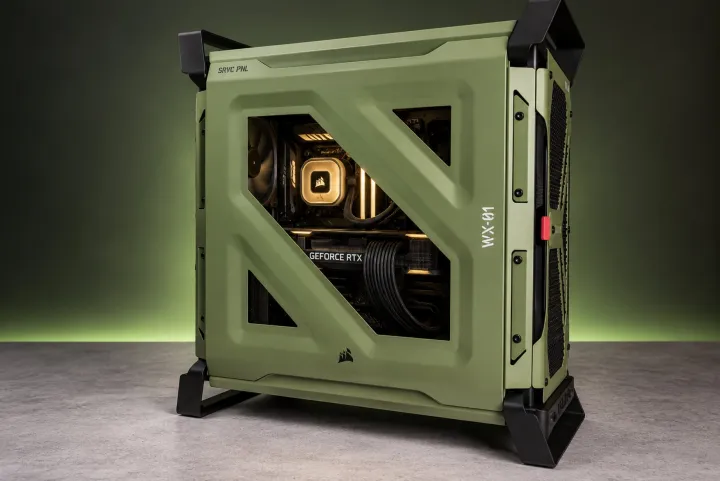
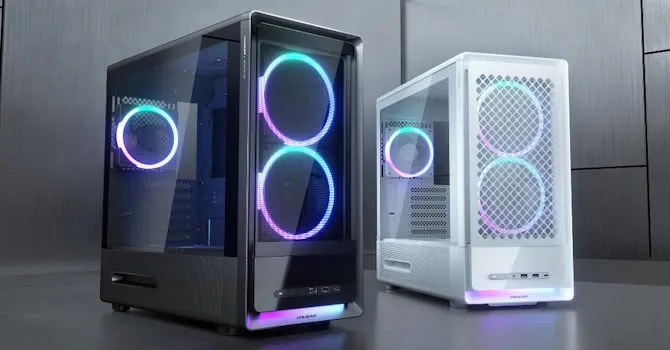
The Cougar DUOAIR RGB lands around $80 and does one thing the S5 can't. It cools GPUs better than anything TechPowerUp has tested so far, shipping five fans with a hub and offering two interchangeable front panels. Tempered glass for looks, mesh for airflow, and it stays quiet through the whole thing.
The catch is a GPU support arm that's too short and cable space that's cramped behind the motherboard tray. It's a case that beats pricier rivals on thermals yet still trips over the basics.
TechPowerUp: Cougar DUOAIR RGB Review
Cougar's DUOAIR RGB packs five fans, a fan hub, alongside both glass and mesh front panel variants into an $80 ATX case that cools GPUs better than anything we've tested so far. It stays quiet, looks sharp, and only gets held back by a too-short GPU support arm, and tight cable space.
A monitor with fifth-generation Penta Tandem tech
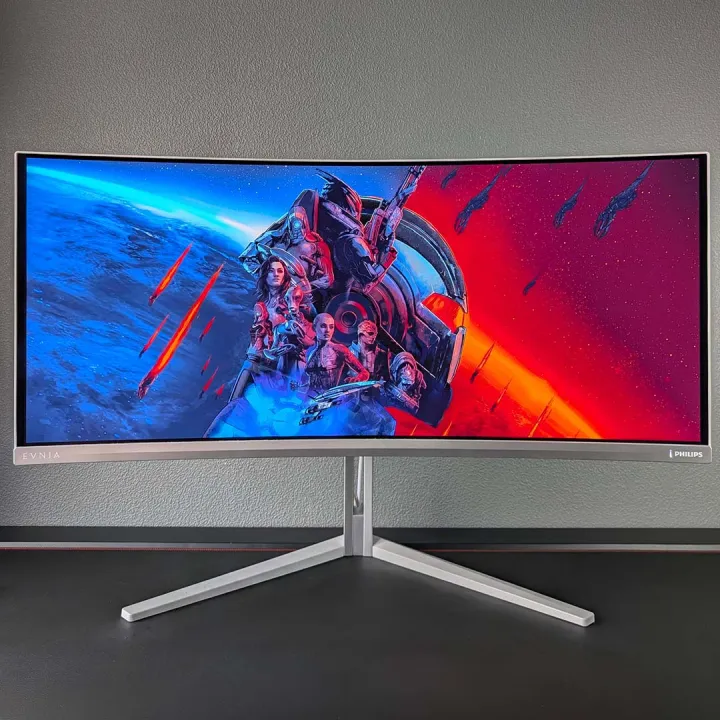
The Philips Evnia 34M2C8600P is a 34-inch UWQHD QD-OLED running fifth-generation Penta Tandem tech, and it asks for £779. It isn't sold in the US, which may or may not matter to you.
Club386 gives it 4.5 out of 5 stars and a "Recommended" stamp. Its lab measured a full-screen SDR brightness of 355 nits, the highest it has ever recorded on a QD-OLED, edging out the MSI MPG 341CQR X36. Color accuracy is strong as well, with out-of-box Delta E as low as 0.46. It caps at 280Hz rather than 360Hz, though that jump usually costs a few hundred more.
Club386: Philips Evnia 34M2C8600P review: an excellent ultrawide QD-OLED gaming monitor
The Evnia 34M2C8600P makes the splendours of ultrawide Penta Tandem QD-OLED more affordable with little compromise.
Philips Evnia 34M2C8600P review: an excellent ultrawide QD-OLED gaming monitor | Club386
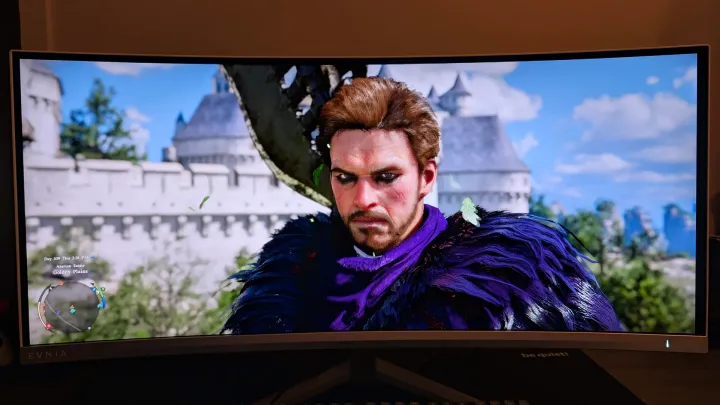
eTeknix reviewed the exact same panel. eTeknix also floats a peak brightness near 1,300 nits and describes the screen as "1800R curved," but find it a little expensive, but not overpriced.
So where does that leave it? It's arguably the best-value ultrawide Penta Tandem QD-OLED available, assuming you live outside America.
eTeknix: Philips Evnia 34M2C8600P 5th Gen QD-OLED 280Hz Monitor Review
It’s always a great day when I get a new Evnia monitor in for review! Philips always deliver a great monitor, but their Evnia series is their top-of-the-line flagship range.
Philips Evnia 34M2C8600P 5th Gen QD-OLED 280Hz Monitor Review
The keyboard crowd is going hard on silent tactile switches this year, and two new picks make the case.
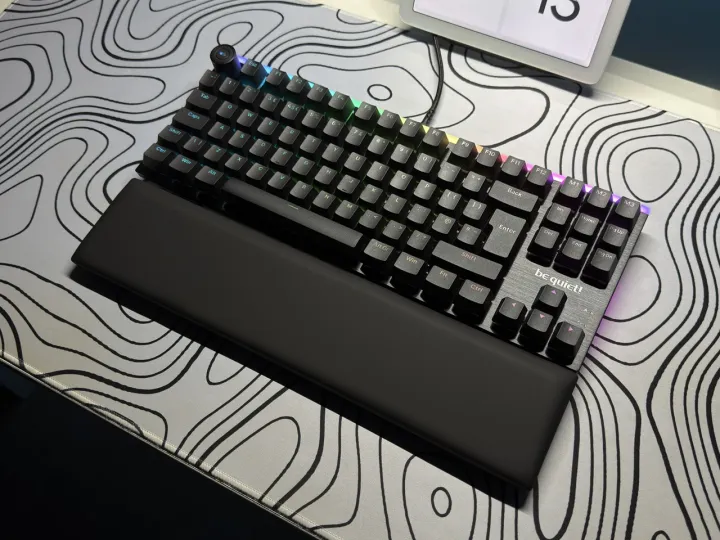
be quiet! Light Mount TKL is an $118 tenkeyless board that Funky Kit scores at 8.8 out of 10, awarding the build quality a perfect 10. The Silent V2 switches give you a tactile bump without the mechanical click. You get a brushed aluminum plate, triple-layer foam, and PBT double-shot keycaps, with a folding stand and magnetic palm rest. The only ding is the price, which Funky Kit docked to 8.
Funky Kit: be quiet! Light Mount TKL Mechanical Gaming Keyboard Review
The be quiet! Light Mount TKL is a mechanical gaming keyboard designed for those who want a premium typing and gaming experience without the usual noise associated with mechanical switches. Featuring silent tactile switches, a compact tenkeyless layout and a sleek design, it aims to combine performance, comfort and understated aesthetics into one package.
be quiet! Light Mount TKL Mechanical Gaming Keyboard Review - Funky Kit
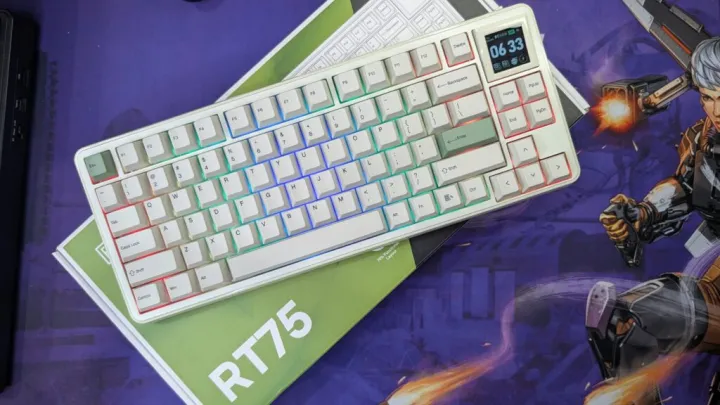
The EPOMAKER RT75 at about $110 takes a different path. It goes retro with a cream case and green accents, adding a detachable 1.54-inch screen that can show the clock, GIFs, or swap out for four extra keys. EnosTech calls it Recommended. Six-layer sound dampening and a gasket mount hide inside a glossy ABS shell that won't suit everyone. It's the most design-forward value pick in the bunch.
EnosTech.com: EPOMAKER RT75 Review: More Than Just a Retro Keyboard
The EPOMAKER RT75 combines a retro look with a detachable TFT screen, silent tactile switches, RGB lighting, and a compact 75% layout.
EPOMAKER RT75 Review: More Than Just a Retro Keyboard - EnosTech.com
Two silent-tactile boards under $120 in the same week. That's a 2026 trend aimed straight at shared apartments and late-night sessions without giving up the mechanical feel.
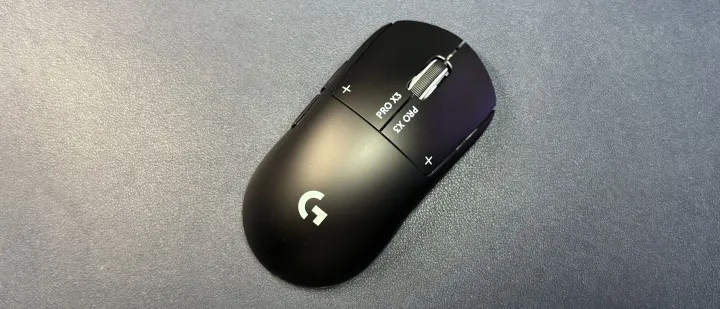
On the mouse side, the Logitech G Pro X3 Superstrike is a genuine generational step over the X2. The new NxLOGI chipset pushes 8,000Hz polling over both wired and wireless connections. It sheds a bit of weight, rebalances to be center-weighted, and nets 135 hours of battery. Tom's Hardware still concludes it's "not worth the price" at $199.99. The haptics are weaker than on the X2. So it's faster, more comfortable, and weaker in one respect, all at the same time. If you own an X2, this is a reasonable nudge. For most people, wait for the price to drop.
Tom's Hardware: Logitech G Pro X3 Superstrike Review: $200 for the illusion of a click
It's somehow better than the X2 Superstrike, and also not worth the price.
Logitech G Pro X3 Superstrike Review: $200 for the illusion of a click
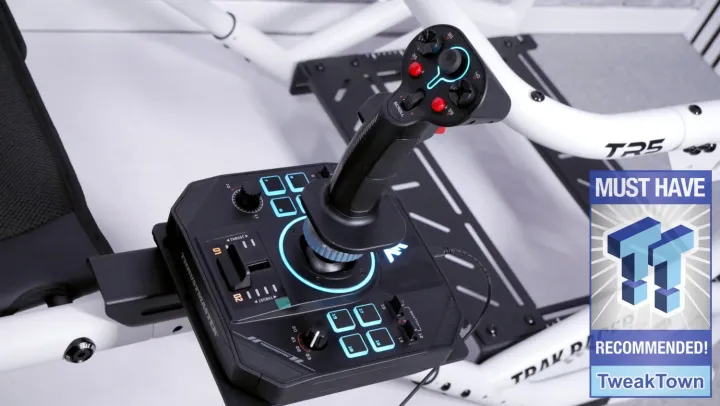
Thrustmaster's Sol-R4 HOTAS is a wholly different animal. At roughly $349.99 it aims for the middle ground between entry-level and premium flight sticks, offering up to 58 assignable inputs, Hall-effect sensors, and an ambidextrous layout spanning MSFS, Elite Dangerous, and DCS. TweakTown scores it 92 percent and Recommended. The single ergonomic gap is the absence of adjustable throttle tension, and the base button pads lack a crisp click.
TweakTown: Thrustmaster Sol-R4 HOTAS Space and Flight Combat Control System Review
The Thrustmaster Sol-R4 HOTAS offers precise controls and plenty of inputs for flight and space sims at $349, but its throttle tension isn't adjustable.
Thrustmaster Sol-R4 HOTAS Space and Flight Combat Control System Review
An affordable Gen 5 drive with a trade-off baked in
The Kioxia Exceria G3 is a 4TB PCIe 5.0 NVMe drive that wants to be the value entry to Gen 5 storage. The headline numbers are loud: up to 10,000 MB/s read, 9,600 MB/s write, 1.45M IOPS, and 2,400 TBW of endurance across a five-year warranty.
But Kioxia, the former Toshiba Memory company that invented flash in 1987, has made a deliberate choice. It uses eighth-gen BiCS8 QLC NAND paired with a DRAM-less Phison E31T controller. That keeps the cost down, though QLC stores four bits per cell instead of three, which typically means lower endurance and slower sustained writes once the SLC cache empties. The Guru of 3D is going to test what happens after that region fills, but the point stands. Memory prices are elevated anyway thanks to AI and datacenter demand, so real value hinges on the retail price, which was still unconfirmed at review time.
The Guru of 3D: Kioxia Exceria G3 (PCIe Gen 5.0 NVMe SSD 4TB) review
The Kioxia Exceria G3 4TB brings PCIe 5.0 NVMe storage to the more affordable end of the SSD market. Rated for sequential read speeds of up to 10,000 MB/s and writes of up to 9,600 MB/s.
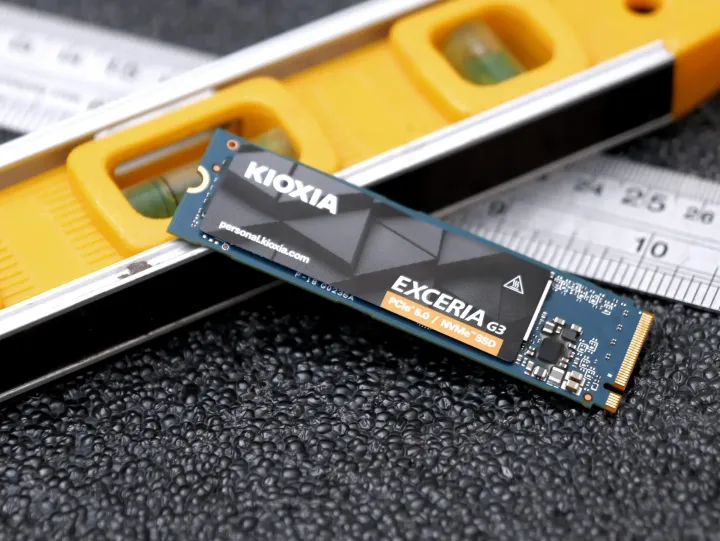
Not cheap for a drive, but positioned as affordable for Gen 5. If you routinely ship massive files, weigh the sustained-write trade-offs against a TLC or flagship model. If you just want fast PCIe 5.0 capacity without flagship pricing, it deserves a look.
What it all means
Value is the entire theme. Six of eight products lean "more per dollar," and the two exceptions earn their premium tags by being strong within their own tiers. Cooling versus capacity keeps resurfacing, from cases optimizing airflow on a budget to a storage drive trading TLC for QLC. And one smaller trend to remember: the climb of silent tactile switches, now showing up in two boards in a single week.


