Seven reviews, one recurring theme: great headline specs, cut corners everywhere else
From a self-build-beating prebuilt to a Platinum power supply that ranks last, the fine print is where today's hardware makes or breaks.
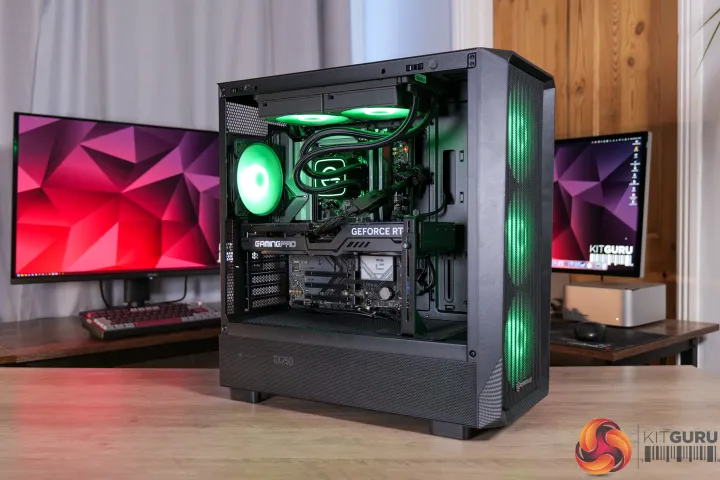
The PCSpecialist Vortex BF 26 might be the cleanest example. It's a Black Friday prebuilt priced at £2,499, and PCSpecialist insists you'd spend over £350 more building the same rig yourself. You get a Ryzen 7 9800X3D and an RTX 5070 Ti, two of the fastest chips currently shipping. Everything else gets quietly pared back.
KitGuru scored it 8.5 out of 10, and it's easy to see why. The 9800X3D paired with the 5070 Ti handles 1440p and 4K with real authority, runs cool, and the case actually breathes. But look under the hood and the corners appear. The power supply is a 750W 80+ Bronze, non-modular unit. The RAM sits at loose CL38 timings. The SSD is QLC. The case feels cheap and skips even cable grommets.
KitGuru: PCSpecialist Vortex Black Friday 2026 Review (9800X3D/5070 Ti)
Today we are checking out a Black Friday promo prebuilt from PCSpecialist. This is the Vortex BF 26, a system packing in Nvidia’s RTX 5070 Ti, AMD’s Ryzen 7 9800X3D, plus 32GB DDR5 and a 2TB Gen4 SSD. At its £2499 asking price, PCSpecialist reckons this is a saving of over £350 compared to standard pricing – so let’s dig a little deeper and see if it’s worth the cash!
PCSpecialist Vortex Black Friday 2026 Review (9800X3D/5070 Ti) - KitGuru
"Cheaper to get it from PCSpecialist than building it yourself," KitGuru concluded. The promo runs until November 29th. It's a rather compelling math problem, though a missing grommet might give you pause.
The budget cooling crowd is having its moment
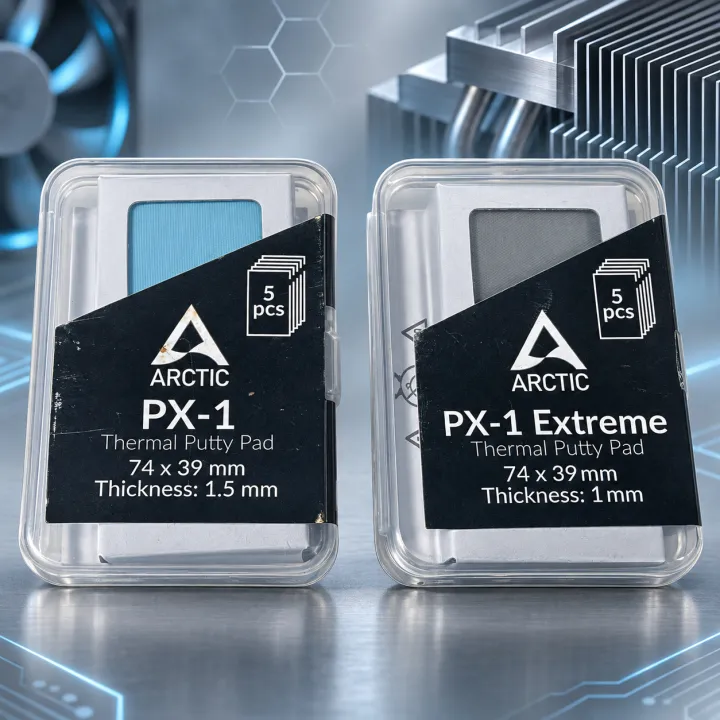
ARCTIC's first thermal putties are the subject of an igor'sLAB head-to-head. The standard PX-1 and the firmer PX-1 Extreme both come as pre-portioned pads rather than a tube of compound, meant to fill the larger gaps on GDDR stacks and VRMs.
The numbers lean heavily toward the Extreme. In pad mode it posts an effective thermal conductivity of 11.087 W/(m·K) versus 7.510 for the standard, and area-normalized thermal resistance drops by roughly a third. On the larger-gap multilayer test the Extreme peaks at a 2mm thickness, a touch tighter than the PX-1's 2.25mm.
But hardness bites during installation. The Extreme sits at 40 Shore OO, stiff enough to lift a cooler slightly and miss its neighbours, while the soft PX-1 at 15 Shore OO yields easily. igor'sLAB calls the standard the sensible pick. Not expensive. The verdict on whether the Extreme earns its roughly tripled price, €102.99 against €34.99, is deliberately left open.
IgorsLAB: ARCTIC PX-1 Extreme: Thermal Putty Review
In testing, the PX-1 Extreme clearly outperforms the PX-1 thermally. The standard model stands out for its adaptability and moderate price.
"Cheaper to get it from PCSpecialist than building it yourself," KitGuru concluded. The promo runs until November 29th. It's a rather compelling math problem, though a missing grommet might give you pause.
The budget cooling crowd is having its moment
ARCTIC's first thermal putties are the subject of an igor'sLAB head-to-head. The standard PX-1 and the firmer PX-1 Extreme both come as pre-portioned pads rather than a tube of compound, meant to fill the larger gaps on GDDR stacks and VRMs.
The numbers lean heavily toward the Extreme. In pad mode it posts an effective thermal conductivity of 11.087 W/(m·K) versus 7.510 for the standard, and area-normalized thermal resistance drops by roughly a third. On the larger-gap multilayer test the Extreme peaks at a 2mm thickness, a touch tighter than the PX-1's 2.25mm.
But hardness bites during installation. The Extreme sits at 40 Shore OO, stiff enough to lift a cooler slightly and miss its neighbors, while the soft PX-1 at 15 Shore OO yields easily. igor'sLAB calls the standard the sensible pick. Not expensive. The verdict on whether the Extreme earns its roughly tripled price, €102.99 against €34.99, is deliberately left open.
EnosTech.com: Ocypus Delta L36 Elite WH ARGB Digital Review
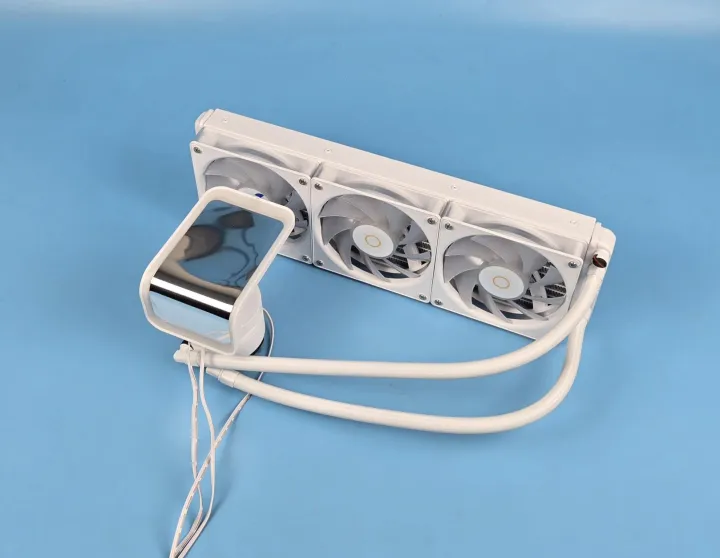
The Ocypus Delta L36 offers great thermal performance, a curved screen and easy installation at an affordable price
Ocypus Delta L36 Elite WH ARGB Digital Review - EnosTech.com
The rest of the roundup
AOC's AGON AGP346UCSD is a 34-inch curved QD-OLED aimed at both competitive gaming and productivity. eTeknix scored it 3.5 out of 5, with heat as the sticking point. The panel is fifth-generation QD-OLED with a 1.5 million to one contrast ratio, and there's a built-in KVM plus USB-C with DP Alt Mode for a multi-device desk.
The catch list is short but real. USB-C power delivery tops out at 15W, which limits laptop charging. Curved panels are awkward to wall-mount, and this thing isn't cheap. Otherwise it's a serious ultrawide, blending a 360Hz refresh rate with a 0.03ms response time. It's arguably competing with monitors costing a good deal more.
eTeknix: AOC AGP346UCSD 34″ Ultrawide 360Hz QD-OLED Gaming Monitor Review
AOC is the biggest name in the business, with their incredible and extentisve range of monitors spanning budget friendly models for the office, to the extreme high-end gaming focused flagship models…
AOC AGP346UCSD 34″ Ultrawide 360Hz QD-OLED Gaming Monitor Review

Phantom Blade Zero is where things get interesting visually. The FPS Review benchmarked a spread of RTX 50-series cards alongside an AMD Radeon RX 9070 XT. Path Tracing with ReSTIR GI adds only about six to seven percent on top of Ray Tracing, which is a surprisingly modest toll.
The reviewer called it transformative, though it still wants an RTX 5080 or better for comfortable 1% lows at 1440p. A notable structural wrinkle: the game has no support for AMD Ray Reconstruction, so both Ray Tracing and Path Tracing scenes look grainy on Radeon cards. NVIDIA walks away with a genuine edge on this one, its DLSS Ray Reconstruction running by default.
Keep in mind that the biggest practical graphics scaling jump lands at the "High" preset, not the low end. Drop below High and the settings start looking flat.
The FPS Review: Phantom Blade Zero Performance & IQ Review
Introduction Phantom Blade Zero was recently released on October 29th, 2026, powered by the Unreal Engine 5 game engine; it is a single-player action role-playing style game developed and published by S-GAME. It features modern, technical graphics features to improve image quality, including: Path Tracing, ReSTIR Global Illumination, Ray Tracing Reflections, Shadows and Water Caustics.

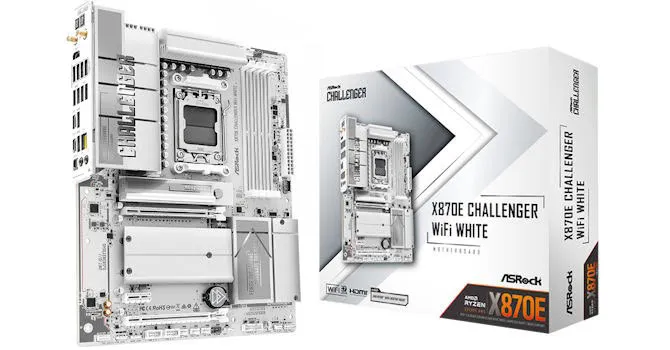
The ASRock X870E Challenger Wi-Fi White wants to be a flagship for under $300. Twenty power phases, USB4, Wi-Fi 7, 5Gbps LAN. TechPowerUp calls it decent, though the value gets muddied fast. The white paint costs about $60 over the identical black board, and the EFI plus board software feel dated.
Competition here is stiff. ASRock's own Phantom Gaming X870 Riptide Wi-Fi runs a hundred dollars cheaper and is the smarter buy if you can tolerate slower I/O. The MSI MAG X870E Tomahawk Wi-Fi cools its VRMs better and adds a second PCIe 5.0 M.2 slot. Gigabyte's X870E Aorus Elite X3D Ice throws in 65W USB-C delivery and tool-less heatsinks for roughly $50 more.
"There isn't really enough here to justify the significant extra outlay," TechPowerUp concluded. The white premium is what hurts.
TechPowerUp: ASRock X870E Challenger Wi-Fi White Review
Available in black or white, the ASRock X870E Challenger Wi-Fi manages to leave you with plenty of change from $300 despite offering many perks of AMD's flagship X870E chipset. Coupled with excellent performance, this should be a recipe for a bargain, but there is some very stiff competition to contend with.
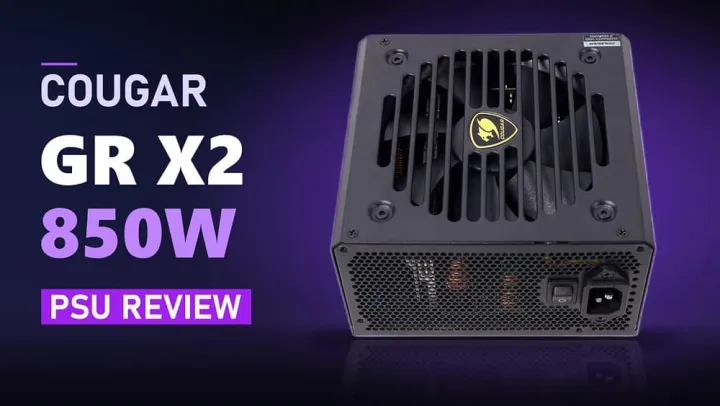
The Cougar GR X2 850W is an ATX v3.1 supply with Platinum efficiency and genuinely quiet operation. Hardware Basters handed it 6.8 out of 10, and it lands last among compared 850W units at 230V.
The efficiency alone is strong: 91.76% at 230V, Cybenetics A on noise. But short hold-up time and loose minor-rail regulation undercut the whole package. Inrush current runs high, and the OCP thresholds on the 5V and 5VSB rails are set a touch aggressive. It still earns a spot in Hardware Basters' best-ATX-v3.x picks list, though the reviewer admitted he wished the hold-up time had improved too. Platinum efficiency is now table stakes at 850W. It no longer wins a review on its own.
Hardware Busters: Cougar GR X2 850W ATX v3.1 PSU Review
Cougar GR X2 850W review: an ATX 3.1 PSU with Cybenetics Platinum efficiency, tested against 13 other 850W PSUs at 115V and 230V.