Eight hardware and software reviews hit the web together painting a picture of a PC market caught between old and new sockets. Standouts include a pocket-sized Ninkear L20 mini-PC with class-ready integrated graphics, and The Witcher 3 Remaster earning a flawless 5/5 for a facelift that's free for existing owners. Power supplies and storage split the week neatly: a thoroughly tested Cooler Master 1000W PSU against a €89.90 budget Sharkoon, and a fast-read Fanxiang SSD whose writes collapse after 240 GB of cache. The bottom line is that midrange value comes down to knowing which socket, link, or cache technology you're actually buying into.
Ninkear L20 Mini-PC, a PSU dips toward €90, and The Witcher 3 is back
A Lunar Lake mini-PC, a Witcher 3 remaster, end-of-life motherboards, and a QLC SSD that stalls after 240 GB.
Let's start with the Ninkear L20, which TechPowerUp calls Recommended. It's a 0.66-liter box running Intel's Core Ultra 5 226V, and it costs roughly US$795 in the 16 GB / 512 GB config. A small chassis alone wouldn't earn a review, but the L20 packs USB4, a 2.5 GbE port, three display outputs, and six USB-A connectors into something you could toss in a backpack.
The rear USB-C power input is the bit I actually like. It uses a standard 100 W USB-PD connection rather than a proprietary barrel plug, so when it inevitably goes missing you can grab a replacement from any drawer. Power draw stays low across the board and the active blower peaks at a manageable 41.7 dBA.
The Arc 130V graphics can genuinely play modern games if you drop the settings. CS2 and Dota 2 ran very well at 720p, Dota 2 held over 70 FPS at 1080p, and Baldur's Gate 3 averaged 35–40 FPS at 720p. Cyberpunk 2077 stayed playable at 720p Medium with XeSS switched on.
Not the most versatile machine, though. The 16 GB of on-package LPDDR5X can't be upgraded, and the factory RAYSMEM SSD is a basic PCIe 3.0 drive hitting about 1.8 GB/s. Storage is simple to expand thanks to a second open M.2 slot, which softens the blow nicely.
TechPowerUp: Ninkear L20 Review
The Ninkear L20 is a Lunar Lake Mini-PC with quiet cooling, USB-C power, 2.5 GbE, USB4, and Arc 130V graphics, sporting 16 GB of fast LPDDR5X on-package memory. Storage can be easily upgraded and the tiny system works great as a particularly efficient PC for work, with surprisingly respectable gaming performance.
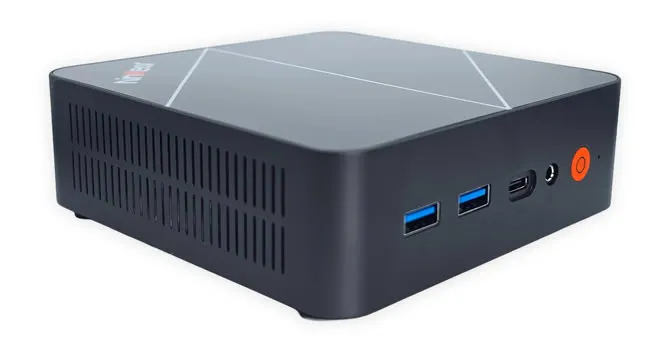
Keep in mind that this is a productivity-first box. The fixed memory is inherent to Lunar Lake, so Ninkear would need to switch to the Core Ultra 5 228V if you want 32 GB. For everyone else the trade-offs feel honest.
The Witcher 3 gets a facelift
If hardware isn't your mood today, Windows Central had something friendlier. Jennifer Young gave The Witcher 3: Wild Hunt Remastered a full 5 out of 5 on Xbox Series X, and she's not going to apologize for it. She says she'd rate it "6 out of 5" if the scale permitted.
It's Version 5.0, timed ahead of the third expansion, Songs of the Past. The visual overhaul uses path tracing, ray reconstruction, and rebuilt distant mountains so thoroughly that Velen and Novigrad feel almost like new zones. Combat got a rework too, with a dynamic camera that swings more naturally and Sign-integrated execution moves like explosive Aard finishers.
It's free for existing owners, with a standalone copy running ~$59.99. That's a hard ask to argue with for a decade-old title that helped a reviewer through a rough patch. Personal connections to games are rare in reviews, which is partly why the score lands the way it does.
Windows Central: The Witcher 3 Remastered: Worth another run?
Witcher 3 is still the king of RPGs and worth a 100th look during a packed release season

There are rough edges. Performance on handhelds like the ROG Ally X is worse than the earlier 4.04 build, and some floor textures fail to load, both reading as patchable. Roach still handles awkwardly on sharp turns, though the reviewer just embraces the quirk.
The boards that aren't worth the price
Here's where the market gets interesting. Two motherboards landed around the same $230 price point, and they tell two different stories.
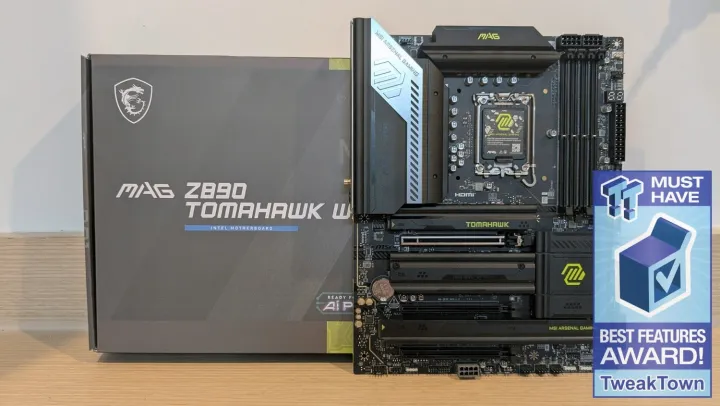
MSI's MAG Z890 Tomahawk WiFi II scored 89% from TweakTown for Features, but the reviewer keeps coming back to one complaint: the price. At $229 it's a capable board with a strong VRM, three simultaneous PCIe x16 slots, four M.2 slots, and a refreshed UEFI. It's just sitting on the waning LGA 1851 socket ahead of Nova Lake, and value erodes from there. TweakTown says a ~$20 drop would meaningfully improve it. The primary M.2 cooling could also be better, with a thin plate and no underside thermal pad.
TweakTown: MSI MAG Z890 Tomahawk WiFi II Review - A v2 that's a little bit cheaper
MSI's Z890 Tomahawk WiFi II is an appealing mid-range option with a strong core feature set, but the competition is strong at this price.
MSI MAG Z890 Tomahawk WiFi II Review - A v2 that's a little bit cheaper
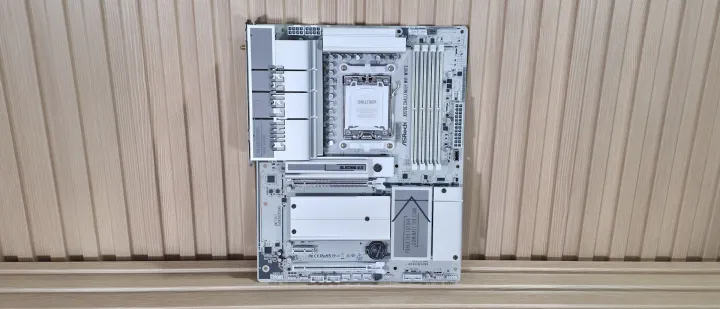
The ASRock X870E Challenger Wifi White, meanwhile, won Tom's Hardware's Editor's Choice at $230. It's AM5, so it has more CPU headroom, and it ships with two full-speed USB4 (40 Gbps) ports plus a flagship-class audio codec. Overbuilt VRMs and fast USB are exactly what you want in a sub-$230 board.
Tom's Hardware: ASRock X870E Challenger Wifi Motherboard Review: A value X870E board packed with features
One of the best-equipped sub-$230 X870E motherboards you can buy
ASRock X870E Challenger Wifi Motherboard Review: A value X870E board packed with features
Both cap Wi-Fi 7 at 160 MHz rather than the 320 MHz some competitors offer. The ASRock is your future-proof pick; the MSI is the overclocker's board with DDR5-9200+ ratings. Base the decision on which socket outlives the other.
Both boards did hit a testing wrinkle: Tom's Hardware had to fall back to a secondary RAM kit because the primary wasn't on the QVL. Real-world performance should be tighter with QVL-supported memory offering tighter timings.
The PSU gap, in dollars and decibels
Power supplies landed at opposite ends of the value curve this week.
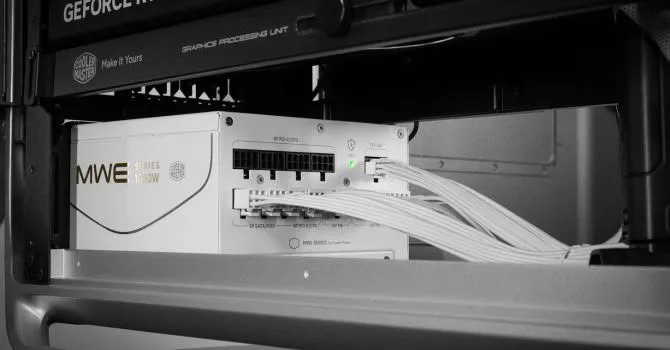
The Cooler Master MWE Gold 1000 V4 is the thorough one. TechPowerUp found excellent efficiency at every measured point (90.07% at 20%, 92.15% at 50%, 91.19% at 100%), tight voltage regulation, and ripple well within spec. It's ATX 12 V 3.1 and PCIe 5.1 ready, ships with white modular cables, and comes with a 10-year warranty. That's the kind of in-house engineering you'd usually pay more for.
TechPowerUp: Cooler Master MWE Gold 1000 V4 Review
The Cooler Master MWE Gold 1000 V4 pairs solid in-house engineering with tight voltage regulation, low ripple, and a conformal-coated PCB usually reserved for pricier PSUs. Its white modular cables, ATX 3.1 support and PCIe 5.1 readiness make for a strong 1000 W contender for serious builds.
The Sharkoon Rebel P20 Gen 2 850W is the budget one. At €89.90 it's a full €42 cheaper than its first-gen sibling, earns Cybenetics Gold at 230 V, and is the only white option in its line. Hardware Busters scored it 7.5 out of 10, and the one concession is noise: the rating slipped from A to Standard++ at ~33.5 dBA. If quiet matters more than price, look higher.
Hardware Busters: Sharkoon Rebel P20 Gen 2 850W ATX v3.1 PSU Review
Sharkoon Rebel P20 Gen 2 850W review: the cheaper, black or white second generation of the Andyson-built Rebel P20, tested against 20 other 850W PSUs.
Sharkoon Rebel P20 Gen 2 850W ATX v3.1 PSU Review - Hardware Busters
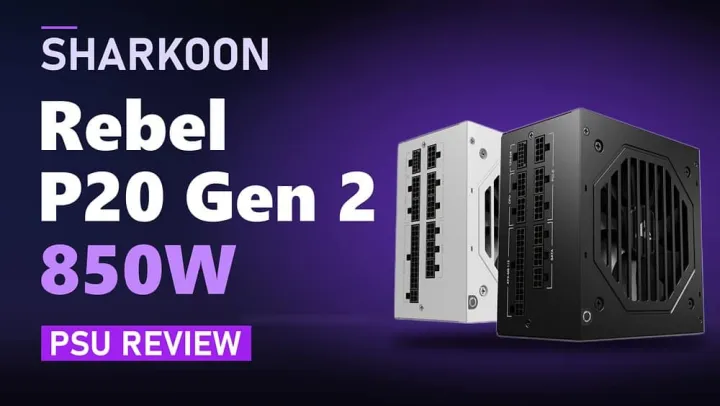
That gap between "thoroughly tested" and "cheap enough to compromise" is basically the whole story of the PSU section.
Storage reality checks
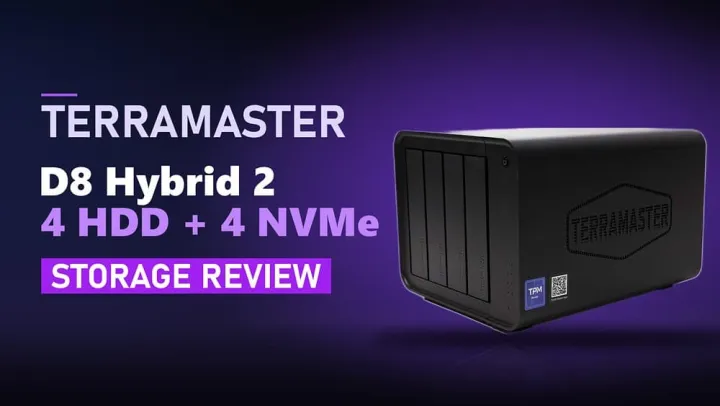
TerraMaster's D8 Hybrid 2 earned a strong 9 out of 10 from Hardware Busters, but it's worth knowing what it is and isn't. It's a USB DAS, not a NAS. No network port, no OS. You plug it into one host at a time, and that host decides whether the four SATA bays and four M.2 NVMe slots stay independent or form an array.
The catch is a single 10 Gbps link shared across all eight positions, plus the absence of onboard RAID since the original D8 Hybrid. Still, for simple high-capacity plug-and-play expansion at $299.99, it's a winner.
Hardware Busters: TerraMaster D8 Hybrid 2 DAS Review
TerraMaster D8 Hybrid 2 review: four SATA bays and four M.2 NVMe positions on one 10 Gbps USB-C link, tested with SSDs, hard drives and host RAID.
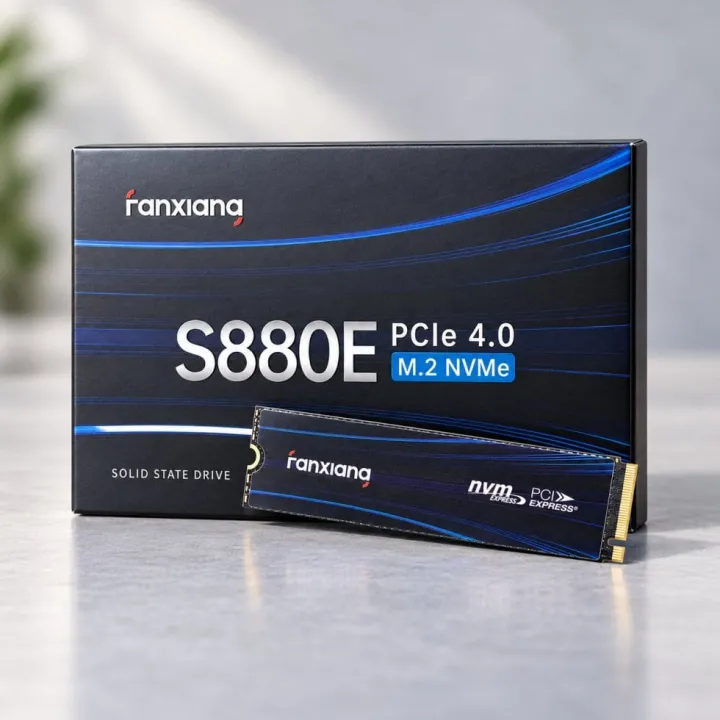
Then there's the Fanxiang S880E 1 TB NVMe. igor'sLAB gave it 399 points but flagged it "complete with confounders." Sequential reads hit 6,979 MB/s, which sounds great, but the teardown revealed a DRAM-less QLC design using HMB. After about 240 GB of fast pSLC cache is spent, write speed collapses to ~150 MB/s.
An 8K30 Apple ProRes 4444 write test produced thousands of deadline misses once that cache ran dry. Great for reads, useless for big scratch files. Its price has to sit meaningfully below a good TLC drive of the same capacity to justify the trade-off.
IgorsLAB: Fanxiang S880E 1 TB Review: 7 GB/s Read, 150 MB/s Sustained
The Fanxiang S880E reaches 6,979.84 MB/s read, but its QLC-based write speed falls to about 150 MB/s after roughly 240 GB of pSLC cache.
If I had to pull one theme from the day, it's transition. The motherboards reflect a market moving toward new sockets. The PSUs show budget engineering getting more aggressive. The storage picks reward people who know what a shared link or a QLC chip actually means. And the Witcher 3 Remaster reminds us that software can still set the bar a decade later.


