VS Code 1.132.1 Drops as a Security Patch, Wrapping Up a Massive Agent Overhaul
Microsoft shipped Visual Studio Code 1.132.1 on Tuesday night, and it is strictly a security patch. Released six days after the base 1.132 update, the new build locks down seven vulnerabilities across Chat, Terminal, the Electron browser, and the network layer. If you have not updated yet, force a check now.
The patch does not arrive in a vacuum. Last week's feature release spent its headline slot on a major architectural shift: the Agent Host Protocol. VS Code now runs AI agent harnesses like Copilot and Claude in a completely isolated process. It is a clean break from how the editor previously handled background services, though the expanded attack surface clearly caught someone's attention.
Microsoft's security team closed out the week with a coordinated push. Dmitriy Vasyura and Megan Rogge handled the two critical remote code execution vectors, including one triggered by Electron's OS protocol handler during an integrated browser fetch and another through crafted web URLs when running VS Code for the Web. Four of the seven patches target AI agent subsystems. Network filtering can also be circumvented using standard IPv4-mapped IPv6 notation. Six days. No feature drops. Just hardening.
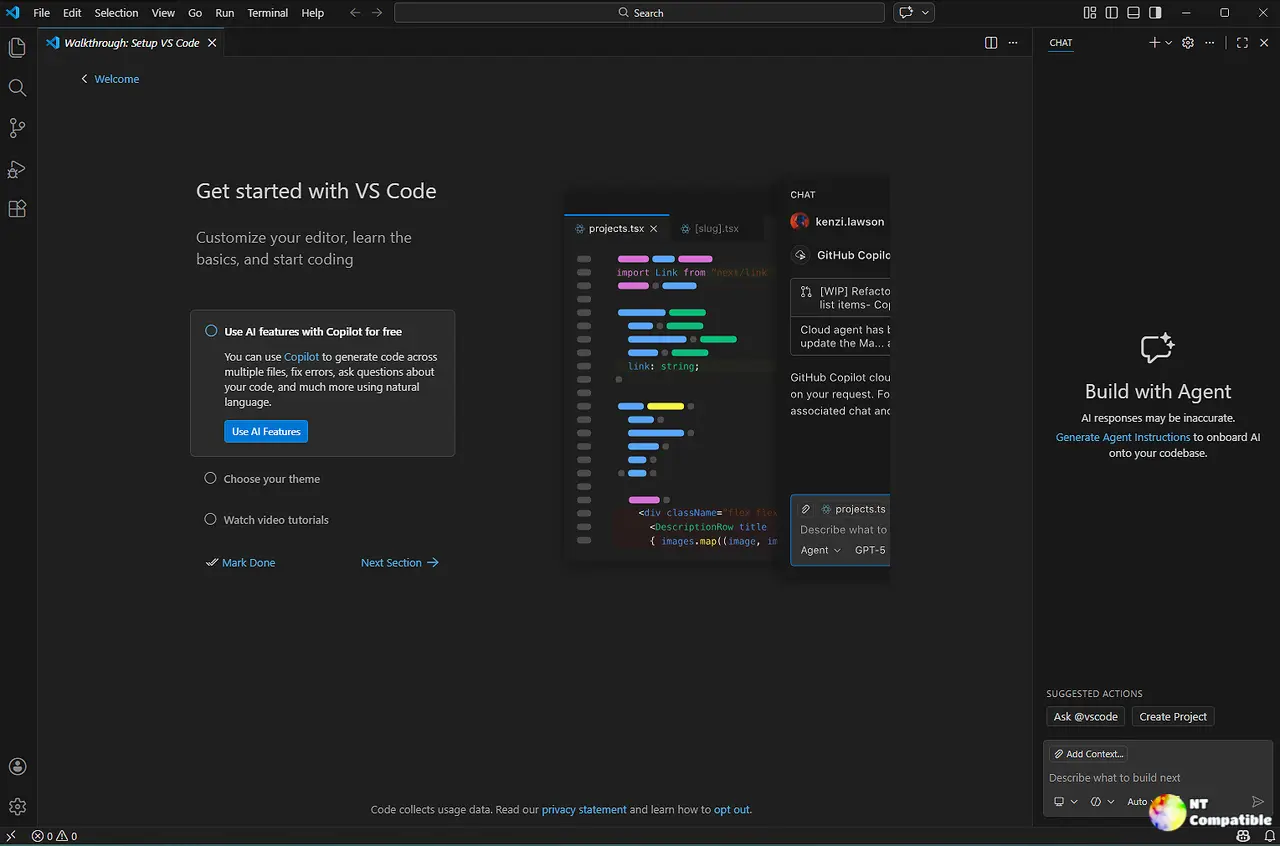
What Actually Changed in 1.132
The base release was dense. Beyond the agent host overhaul, Microsoft introduced a dedicated Agents Window that tracks live session status with pills for changes, previews, subagents, and browsers. You can also spin up side conversations with /btw, which shares context with your main chat without killing an active agent turn. I spent a few minutes poking at the side chat yesterday, and it actually passes the prompt cache correctly. That is more than I expected from a first pass at the feature.
Voice dictation got a meaningful upgrade, too. The built-in engine now runs Microsoft's Nemotron 3.5 locally, meaning your audio never hits a cloud server. Shell-aware parsing turns spoken commands like "git commit dash m hello world" into actual working terminal input. It is not perfect, but it is a long way from literal text insertion.
Keep in mind that the ChatAgentHostEnabled policy was quietly stripped in this release. If you need to control agent host behavior centrally, you will have to rely on the chat.agentHost.enabled setting instead. Microsoft notes that "the ongoing expansion of AI agent capabilities introduces new security considerations that require proactive guarding." The rapid patch cadence suggests the team is watching the attack surface closely.
However, at the same time, routing the Copilot harness through a shared SDK across the CLI and standalone app clearly consolidates the maintenance burden. VS Code is treating the Agent Host Protocol as an open standard for IDE-agent communication, which positions Microsoft to compete directly with cloud-dependent editors.
VS Code 1.132.1 is rolling out through the built-in update mechanism right now. Head here to download the full release, or check the official notes if you are tracking specific CVE details. The Insiders build is also available if you want to test the proposed API changes before they stabilize.


