TechPowerUp's review of AMD's Ryzen AI Max+ 395 Strix Halo mini-PC argues it's a local-AI workstation built to run frontier models a 32 GB RTX 5090 physically cannot hold. MSI's MEG CoreLiquid E15 360 pairs a 6.67-inch curved AMOLED with flagship cooling, though its performance verdict is still pending. The rest of the batch is mixed: the IQUNIX EC75 earns a strong 90% Recommended, but the Sennheiser Profile USB carries an unresolved boot-blocking issue while the Cooler Master Elite Gold 850W hides a warranty discrepancy. Taken together, the reviews suggest capacity, real-world compatibility, and fine-print details now matter more than raw spec-sheet numbers.
AMD's 128 GB AI mini-PC leads a packed October, and the patterns are getting clearer
Six reviews span local-AI machines, an OLED liquid cooler, magnetic keyboards, a boot-blocking microphone, and a budget PSU with a warranty trap. The patterns are the real story.
The most argument in today's batch comes from TechPowerUp's W1zzard, who says nearly everyone reviews AMD's Ryzen AI Max+ 395 Strix Halo mini-PC as a compact gaming rig. That misses the point. This 128 GB unit was built to run frontier AI models on a desk, no cloud login required. And it does something a top-tier RTX 5090 simply cannot: hold the whole model in memory.
For context, that 5090 is the fastest consumer GPU on the market today, and it carries just 32 GB of GDDR7. Push past that and the 5090 stops cold. The little AMD box keeps churning. That gap is the entire pitch.
The internals back it up. You're looking at 16 Zen 5 cores on 32 threads, boosting to 5.1 GHz on TSMC's N4P node, plus a Radeon 8060S RDNA 3.5 with 40 compute units. The XDNA 2 NPU tops out at 50 TOPS, and the 128 GB of unified LPDDR5X-8000 hands out roughly 256 GB/s. Storage is a 2 TB Gen 4 NVMe, and the whole box draws 120 W.
W1zzard groups the models into four tiers to make the point. Small 1 to 8B models run fast even on a phone. Mid-size 14 to 32B models still fit a single high-end card. But the large 70 to 120B set, and the frontier class at 200B and up, is where capacity stops being a flex and starts being a requirement. Worth keeping in mind: dense models lean on every parameter per token, while Mixture-of-Experts variants like gpt-oss-120b activate only a fraction of their weights. That's why a 235B MoE model can beat a dense 70B one despite the smaller number printed on the box.
Head to the review below for W1zzard's full write-up if you want the per-token speed numbers. The short version against NVIDIA's DGX Spark: generation speed is fairly tied, but time-to-first-token leans on raw compute, which is exactly where the Halo trails.
TechPowerUp: AMD Ryzen AI Halo Review - Local-AI Powerhouse with 128 GB of Memory
The AMD Ryzen AI Halo is great at running local AI workloads, featuring a Ryzen AI Max+ 395 APU with 128 GB of unified memory in a compact form factor. It excels at handling large models, enabling tasks that most consumer GPUs struggle with. With AMD AI Playbooks, getting started is simple, allowing you to explore the frontier of AI at home.
AMD Ryzen AI Halo Review - Local-AI Powerhouse with 128 GB of Memory
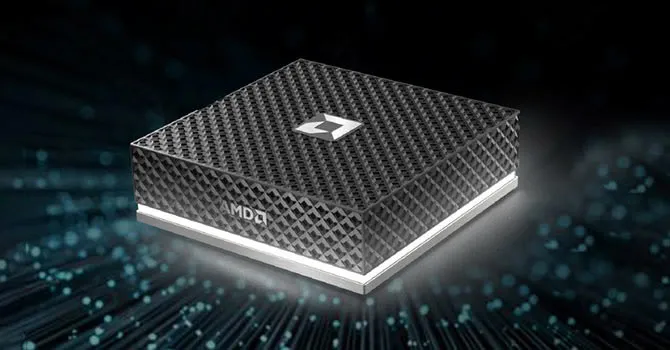
The successor is already here, too. AMD announced the Gorgon Halo, Ryzen AI 495, shipping over the coming weeks with up to 192 GB of faster LPDDR5X-8533. Same silicon, clocks nudged about 100 MHz.
One nitpick. AMD lists the box at under 1.2 kg. TechPowerUp measured 1,016 grams. AMD's spec sheet is just wrong on this one.
The $4,000 price tag keeps it out of most desks anyway. Compare it to NVIDIA's 128 GB DGX Spark at roughly $7,000, and the Halo looks almost reasonable. It's a capable local-AI workstation in a near-1 kg shell, even if its soft spot is raw prefill compute.
The rest of the roundup
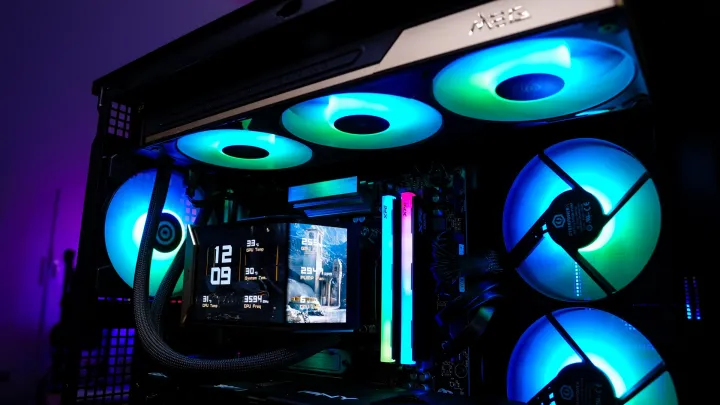
While AMD's box proves capacity matters, MSI's latest AIO makes the opposite case about a different kind of premium. The MEG CoreLiquid E15 360 is MSI's most ambitious cooler yet, and its headline feature is a 6.67-inch curved AMOLED display on the water block. Full-res is 2240 by 1080, and it will show system readouts, play media, and throw a glasses-free 3D effect at you.
The rest of the package is flagship-grade as well. A three-phase pump spins to about 3,000 RPM with a 50,000-hour life estimate, a 360 mm radiator runs 30 mm thick, and three fans push 217.91 CFM against 3.84 mm-H2O. MSI added magnetic EZ Conn cabling, an integrated fan hub, a universal bracket, and something it calls Laminar Focus Technology, which reverses the center fan to cut airflow turbulence across the fin stack.
So does the cooling match the spectacle? ThinkComputers' Bob Buskirk doesn't fully answer that yet. The verdict lands on later pages of the piece. What he does make clear is that this is a feature-dense machine with a genuinely eye-catching display, the same big-screen-as-differentiator trend we're now seeing on premium cases and coolers. Whether the numbers justify the flagship MSRP is the open question.
ThinkComputers.org: MSI MEG CoreLiquid E15 360 Liquid CPU Cooler Review
Our MSI MEG CORELIQUID E15 360 review examines its cooling performance, 6.67-inch AMOLED display, installation, software, and overall value.
MSI MEG CoreLiquid E15 360 Liquid CPU Cooler Review | ThinkComputers.org
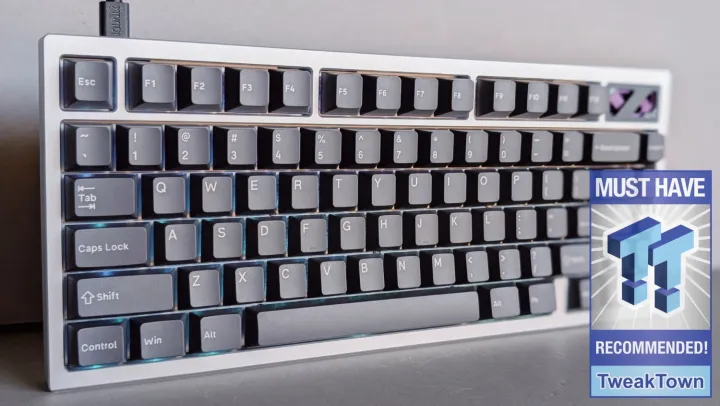
TweakTown's Kosta Andreadis gives the IQUNIX EC75 90 percent and a Recommended stamp, and it's easy to see why. This 75-percent Hall Effect board hits 8,000 Hz polling with 0.01 mm actuation accuracy, and its magnetic switches feel as good as anything mechanical. Build quality scores 93, performance 94. The web-based EV software is genuinely clever, letting you copy pro-player presets instead of only reprogramming triggers. Value scores 82, though, and at roughly $160 wired it isn't cheap. The design is plain, and the south-facing RGB without shine-through keycaps looks unremarkable. Solid for gamers, underwhelming for everyone else.
TweakTown: IQUNIX EC75 Hall Effect Gaming Keyboard Review - Peak Gaming Performance
The new IQUNIX EC75 is a premium Hall Effect gaming keyboard that delivers flawless 8K performance, a great type-feel, and deep customization.
IQUNIX EC75 Hall Effect Gaming Keyboard Review - Peak Gaming Performance
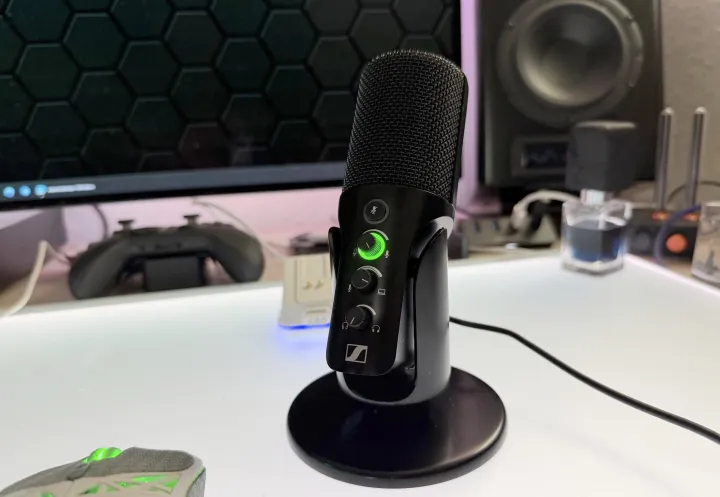
The Sennheiser Profile USB is better built than it has a right to be at its price, and it still stumbles on a technicality. Igor Wallossek's review lands on good speech sound, direct hardware controls, and no software required, with a KE-10 capsule that earns its badge. But plug it into an MSI MEG X870E GODLIKE board at power-on and the system won't boot. Debug code 90 doesn't directly point at USB init, and no UEFI versions were tested, so the cause is genuinely unclear. Sennheiser owns great materials and a clean design here, but Igor withholds an unreserved recommendation until the boot issue is explained. Sound is fine. That boot problem is not.
IgorsLAB: Sennheiser Profile USB Review: Sound and USB Issue
The Profile USB offers direct controls and good sound, but a USB compatibility issue can prevent the system from starting.
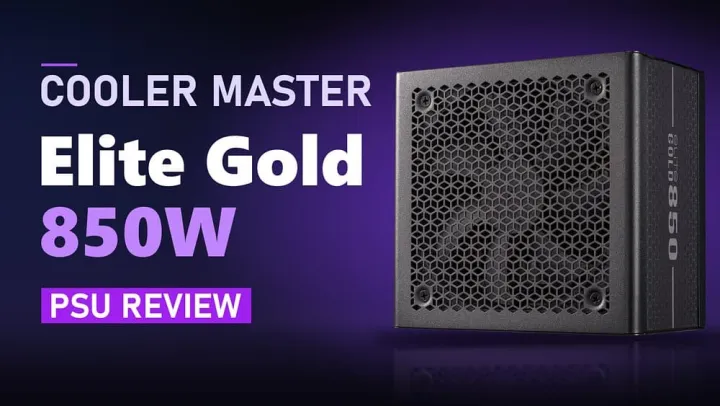
If you're keeping score on the value end, the Cooler Master Elite Gold 850W ATX 3.1 draws the most attention for the wrong reasons. Hardware Busters rates it 7.7 out of 10. Regulation on the 12V rail is tight, at roughly 849.6 W, and at $104.26 on Amazon it undercuts most rivals. It sits dead middle of a 23-unit group comparison, though. The fan never stops running, and the over-current protection tuning runs hot. There's also a wrinkle worth flagging: the product page advertises a 10-year warranty, but the sample's box prints 5 years.
Hardware Busters: Cooler Master Elite Gold 850W ATX v3.1 PSU Review
Cooler Master Elite Gold 850W review: a fully modular ATX 3.1 PSU with ETA Gold efficiency and tight 12V regulation, tested against 22 other PSUs.
Cooler Master Elite Gold 850W ATX v3.1 PSU Review - Hardware Busters
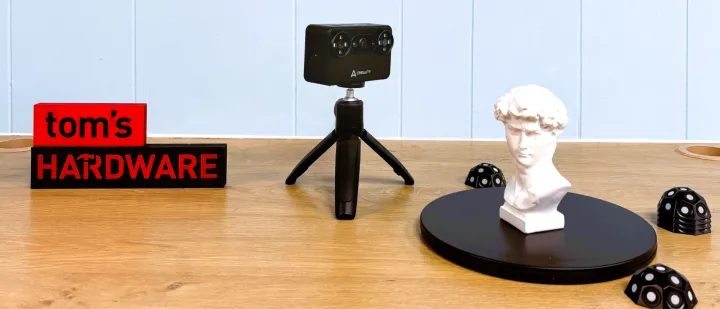
Tom's Hardware's Denise Bertacchi finds real merit in portability. The Creality Pika is a point-and-shoot-shaped 3D scanner that tethers wirelessly to an iPhone 15 or Android 10+ phone, running on included AA rechargeables. Her quote says it best: truly portable with excellent software, impressive working cordlessly. Marker-free NIR scanning does need a computer in the loop, and NIR tracking is the weak spot on shiny or dark objects. At $629 to $699 it lowers the barrier to digitizing real-world things.
Tom's Hardware: Creality Pika 3D scanner review: Good things come in small packages
Creality’s Pika is lightweight and pretty easy to use.
Creality Pika 3D scanner review: Good things come in small packages
Put the six together and a few lessons surface. Memory bandwidth and raw compute keep fighting for the local-AI crown, capacity clearly winning where it counts. A big display sells, but only if the substance follows. Magnetic-keyboard quality has matured into premium form, value aside. And across the board, real-world compatibility, fine-print warranties, and host quirks keep edging past raw spec-sheet numbers. The hardware is good. The fine print is where the story actually lives.


