An NVIDIA AI box the size of a shoebox, an 8K controller, and the moment ATX 3.1 became expected
Eight reviews from today spanning mini workstations, cooling, mice, keyboards, controllers and power supplies. Here's what survived contact with a reviewer's standards.
NVIDIA's RTX Spark N1X has quietly become harder to dismiss. Guru3D just finished its look at the ASUS ProArt GR1X, a 1.1-liter desktop roughly the size of a shoebox built to run local AI models without gobbling your main PC. It walked away with a Guru3D Award, though the reviewer had a single, repeated piece of advice: spend the extra money on the 128GB version.
That's the whole story of the machine in one sentence. Memory capacity is what decides which models you can actually load into memory, not speed. The 64GB sample topped out at roughly 30.5GB of usable GPU memory, which pretty much caps the ceiling. Thermals look fine, too. Guru3D says it edges out both the RTX Spark laptops and the DGX Spark systems it's examined before, though the gap is modest rather than dramatic.
Here's a tangent only tangentially worth mentioning: the GR1X ships with a 240W external power brick and weighs 1.48kg. For what it's worth, the entire premise is that it's an always-on box. Keep the main PC free for everything else and let this thing handle inference quietly in the corner.
The Guru of 3D: ASUS ProArt GR1X Review – RTX Spark Unleashed: The Windows AI Desktop
The ASUS ProArt GR1X is a compact Windows ARM based AI workstation powered by the NVIDIA RTX Spark N1X Superchip, combining a 20-core Grace CPU with a Blackwell RTX GPU featuring 6,144 CUDA cores.
ASUS ProArt GR1X Review – RTX Spark Unleashed: The Windows AI Desktop
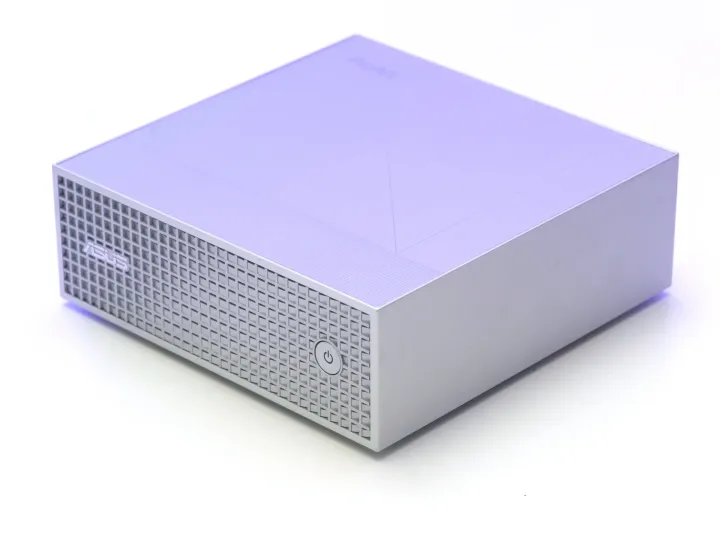
Keep in mind that Windows on Arm is the real risk. Guru3D flags compatibility as the sticking point for specialist software and drivers, so test first if your workflow leans on niche tools. Otherwise the dual M.2 storage (roughly 7,239 MB/s read on the primary) and 10GbE networking make it a genuinely capable small-form-factor workstation.
The input gear and the PSU cluster
If AI is the headline today, the input hardware is where a quieter story unfolds: polling rate. The SCUF Nemesis Pro 8K pushes to 8,000Hz on both wired and 2.4GHz wireless, and Funky Kit scored it 9.2 out of 10 with near-universal praise. Build and performance both landed perfect 10s.
Here's the rub, though. The only score below 10 is price. Funky Kit puts it plainly, noting that many of those features are aimed at an enthusiast-level audience and "casual players may not necessarily get the same value." That's fair. At roughly $199 you're paying for magnetic TMR sticks, four rear paddles, dual-mode triggers and mechanical ABXY buttons. It's serious hardware. It's a rather ambitious mouse for anyone who isn't chasing an edge.
Funky Kit: SCUF Nemesis Pro 8K PC Controller Review
Today, we’ll be taking a look at the SCUF Nemesis Pro 8K PC Controller. If you’re serious about competitive gaming on PC and looking for a controller that can give you every possible advantage, the SCUF Nemesis Pro 8K is definitely one worth paying attention to.

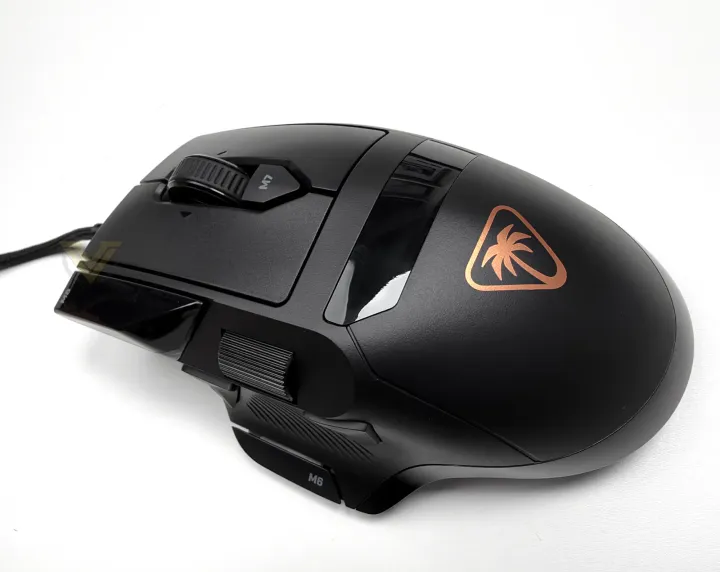
Turtle Beach's MC3 mouse is almost the opposite play. Vortez found it a strong value pick at around $80, with a genuinely useful control layout. Up to 29 programmable functions, a side-scroll barrel and a 4D wheel make it a productivity-meets-gaming device rather than a pure competitive tool. The Owl-Eye sensor tracks well, and the chassis is a light 85g despite all those buttons. But three flaws stick out: lateral wobble on the central scroll wheel, no free-spinning mode, and a polling cap of 1,000Hz that feels deliberately conservative at a time when the enthusiast market is already racing past it. It's comfortable with an abundance of inputs. Just not an ultra-high-polling-rate contender.
Vortez: Turtle Beach Command Series MC3 Review
A review of the Turtle Beach Command Series MC3 gaming mouse, exploring its 30K DPI sensor, programmable controls, performance, features and value.
Power supplies make up the bulk of today's roundup, and both entries confirm the same thing: ATX 3.1 with a native 12V-2x6 connector is now the minimum you should expect at this point. No separate adapter required.
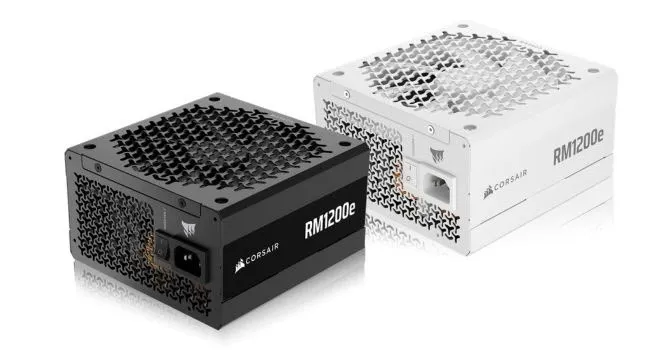
The Corsair RM1200e (second generation) earns a recommended award from TechPowerUp at roughly $199.99. Voltage regulation is "spot on," the cables run cool at about 29 degrees, and it squeezes 1200W into a 150mm chassis. The cost cuts are the usual suspects: a rifle-bearing fan rather than a true FDB, ripple a touch looser than premium units, and poor efficiency at very low loads. It beats the Chieftec SPX-1200 overall. The FSP MEGA PM1200 offers slightly better ripple and a quieter fan, for more money.
TechPowerUp: Corsair RM1200e (Second Generation) Review
Corsair RM1200e (Second Generation) packs 1200 W, ATX 3.1 support, and PinProtect into a compact 150 mm chassis, making it a smart fit for modern high-end builds. It delivers excellent voltage regulation, high quality cables, and quiet everyday operation, with a ten-year warranty inspiring confidence.
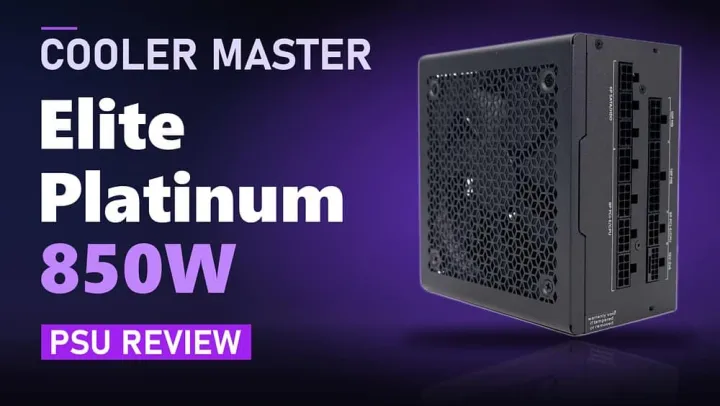
Closer on price but still top-tier on efficiency is Cooler Master's Elite Platinum 850W at $129.99. It picks up an ETA Platinum and a LAMBDA A+ rating, backed by Japanese capacitors and a 12-year warranty. Hardware Busters found only minor-rail issues, OCP set points and transient response on the lower rails, which a mainstream dual-GPU build won't notice.
Hardware Busters: Cooler Master Elite Platinum 850W ATX 3.1 PSU Review
Cooler Master Elite Platinum 850W review: a compact modular ATX 3.1 PSU with ETA Platinum efficiency and quiet cooling, tested against 23 other PSUs.
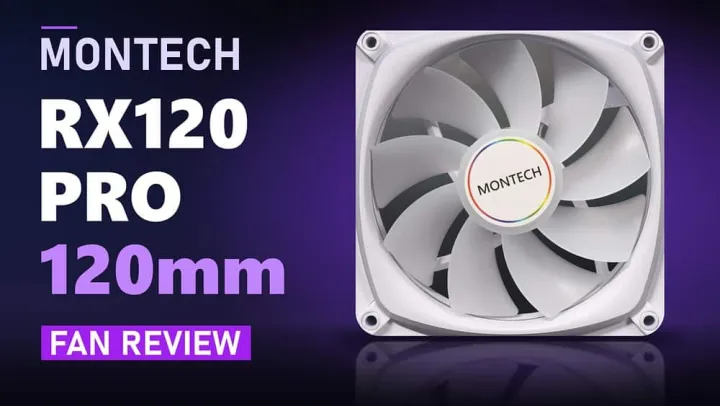
The clear outlier is the Montech RX120 PRO fan. Hardware Busters scored it 6.5 out of 10, praising airflow (Gold) while finding static pressure underwhelming (Bronze). Their sample was also unbalanced, so noise didn't rise smoothly with speed. crmaris frames it honestly: "Montech rates it at 72.3 CFM, 1.63 mmH₂O and 27.8 dBA. My tests say it falls short on all three." At $15.99 single or about $15 per fan in the 3-pack it's budget-friendly, but don't expect the advertised numbers or a perfectly balanced unit.
Hardware Busters: Montech RX120 PRO 120mm Fan Review: Reverse Blade, Tested
Montech RX120 PRO reverse-blade 120mm fan review: Gold airflow, Bronze static pressure, noise, power and the 3-in-1 pack tested against thirteen similar fans.
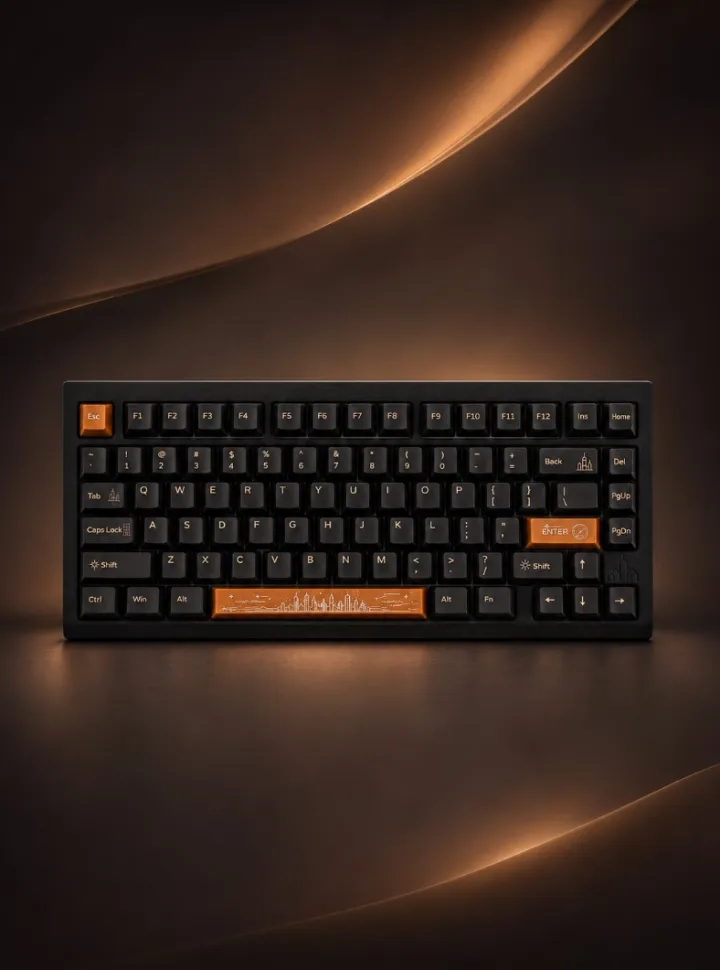
The EPOMAKER Galaxy75 rounded out the input gear at roughly $109. igor'sLAB gave it a 97.9 with lab-style testing, and the standout figure is that USB-C latency (6.8ms average) beat the 2.4GHz dongle (8.2ms). A finding competitive players can actually act on. The aluminum gasket-mount case and five damping layers produce a pleasant typing feel, so long as the factory tuning running on the lighter end suits your fingers. Note that the battery-capacity labels contradict each other (4,000mAh versus 8,000mAh), and igor'sLAB flags its sound-recording setup is specific to its own desk.
IgorsLAB: EPOMAKER Galaxy75 Review: Aluminum, Sound and Latency
In our review, the Galaxy75 impresses with its aluminum case, good feature set and solid sound. At 109 US dollars, it offers a strong overall package.
What today adds up to
The through-lines are plain enough. Local AI is shrinking into unobtrusive desktops, memory-bound more than compute-bound. High polling rate is splitting the input market in two between 8K enthusiast gear and 1kHz value picks. Budget-tier products hit their headline specs while quietly compromising on one or two details, and the reviewers in today's batch were at least honest about where.
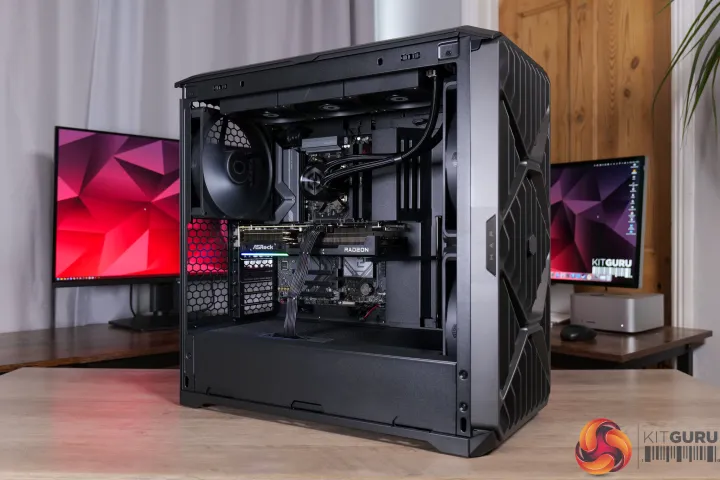
CyberPowerPC's Ultra RXT brings the prebuilt argument full circle. At £2,499 it pairs a Ryzen 7 9800X3D with an RX 9070 XT, and KitGuru scored it 8.5 out of 10 by leaning on a balanced spec plus a five-year labour warranty to answer the "you could build it cheaper" objection. The RAM timings aren't the tightest and the QLC SSD isn't blazing fast, but those two caveats are invisible in real gaming. KitGuru calls it a "well-balanced spec with no obvious weaknesses."
KitGuru: CyberPowerPC Ultra RXT Prebuilt Review (9800X3D + 9070 XT)
Today we are back with another prebuilt PC review, as we’re checking out the CyberPowerPC Ultra RXT.
CyberPowerPC Ultra RXT Prebuilt Review (9800X3D + 9070 XT) - KitGuru