Gears of War: E-Day launches October 6, 2026, and early reviews praise its stunning Unreal Engine 5 visuals while flagging a punishing hardware appetite, with only seven GPUs clear 60 FPS at 1080p on Ludicrous settings. TechPowerUp's 35-GPU benchmark shows upscaling and frame generation are effectively required, and NVIDIA's RTX Mega Geometry option excludes much of the installed base by needing 12 GB of VRAM. On the hardware side, the ASRock Challenger 360 Digital AIO earns an 8.9/10 as a standout $89.99 value that tops pricier coolers at moderate noise levels. Finally, the Thrustmaster HOTAS WARTHOG MKII scores a 96% Editor's Award as a polished evolutionary upgrade, though it drops force feedback and twist rudder support.
Today's review roundup: Gears of War: E-Day runs hot, a $90 cooler bites back, and a HOTAS gets a tidy upgrade
New hardware, a refreshed peripheral, and a much-anticipated sequel all hit the reviewer's desk today. If you're shopping for CPU cooling, flying virtual aircraft, or picking up Gears of War: E-Day on launch day, there's a fair amount to get through. The big one first.
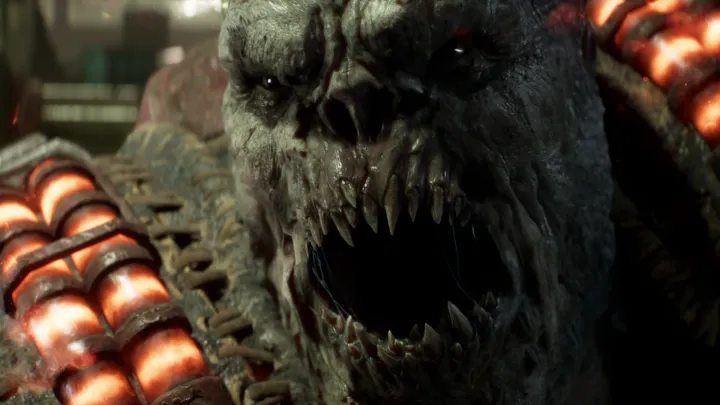
The game launches October 6, 2026, and the reviews are already out. It's a prequel set 14 years before the original, on Emergence Day, when the Locust Horde first broke surface on Sera. You play a younger Marcus Fenix alongside Dominic Santiago in the city of Kalona. Built on Unreal Engine 5, it's also one of the first titles to support NVIDIA's RTX Mega Geometry.
The short version: it looks like almost nothing you've played, and it will chew through your GPU to prove it.
Gears of War: E-Day is a visual feast with a real hardware tax
TechPowerUp benchmarked it against 35 graphics cards, and the numbers are not comforting. At native "Ludicrous" settings, only seven cards clear 60 FPS even at 1080p. The RTX 5090 tops just 77 FPS at 1440p and falls to 46.5 at 4K. Upscaling and frame generation aren't bonuses here. They're the only way to play it.
NVIDIA is clearly banking on that being acceptable. RTX Mega Geometry needs an RTX card with at least 12 GB of VRAM to unlock, which already excludes a meaningful chunk of the installed base. Even so, the feature barely changes the picture visually. You have to go hunting for the difference. The true cost is VRAM, nudging 4K Ludicrous from roughly 13 GB to 14.6 GB.
There's also the mundane annoyance. TechPowerUp flagged shader-compile waits of 15 minutes or more on nearly every launch, plus crashes when swapping hardware mid-session. The RX 6900 XT was reportedly the worst offender, crashing on repeat. If you were about to upgrade your GPU, this might be a good reason to wait even longer.
TechPowerUp: Gears of War: E-Day Performance Benchmark Review - 35 GPUs Tested
Gears of War: E-Day is a prequel set 14 years before the original game. Built on Unreal Engine 5 with RTX Mega Geometry, DLSS 4.5, FSR 4, XeSS, and ray tracing, we examine graphics quality, VRAM usage, upscaling options, and how it performs across a wide range of modern GPUs.
Gears of War: E-Day Performance Benchmark Review - 35 GPUs Tested
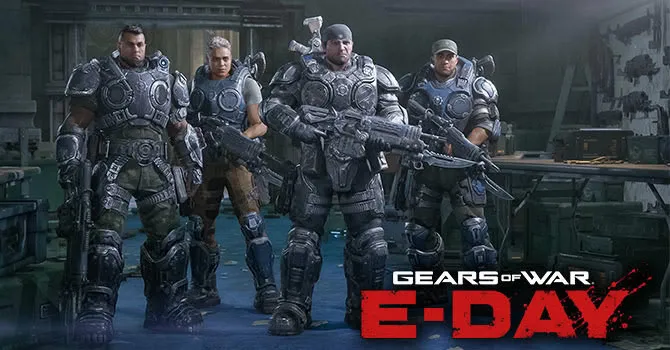
The good news is the co-op is genuinely excellent, and the campaign is fun enough that Windows Central's Jez Corden is leaning toward an 8 out of 10. Keep in mind that score is for the campaign only. The final number waits on siege and versus modes, which go live at launch anyway.
For what it's worth, a small quirk worth noting: the "FSR 4" label shows up on non-RDNA GPUs, but it's actually falling back to an older FSR version. A naming thing, not a performance one.
Windows Central: Gears of War: E-Day review (in progress) — Gorgeous, but messy
Gears of War: E-Day is a spectacular game overall with satisfying combat and immense technical chops, but some aspects stop it from reaching its potential.
Gears of War: E-Day review (in progress) — Gorgeous, but messy
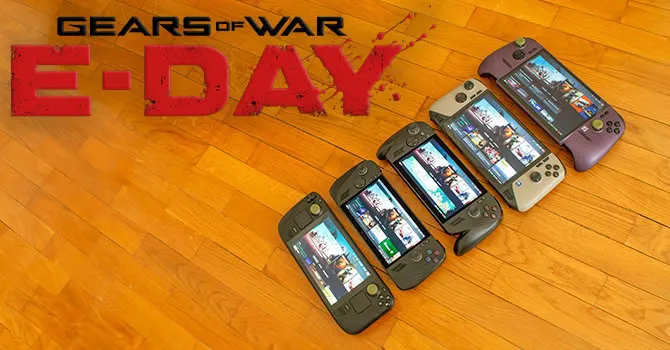
And on handhelds, the picture is uneven. It runs surprisingly well across the Windows machines TechPowerUp tested, but the Steam Deck is not playable. Its GPU could cope, but the CPU is simply too weak for a game this CPU-bound. TPU's advice is blunt: Steam Deck owners should skip it. Every other handheld tested is recommended, ideally streaming from a rig if you want to run the hardware ray tracing.
TechPowerUp: Gears of War: E-Day Handheld Performance Review
Gears of War: E-Day takes us back fourteen years before the original Gears of War, to the night the Locust Horde erupted from the ground across Sera and started the bloody Locust War. The game is developed by The Coalition in Unreal Engine 5, and our handheld performance review evaluates how it performs across the most popular handheld PCs on the market.
The smaller stories: a value AIO and an evolutionary HOTAS
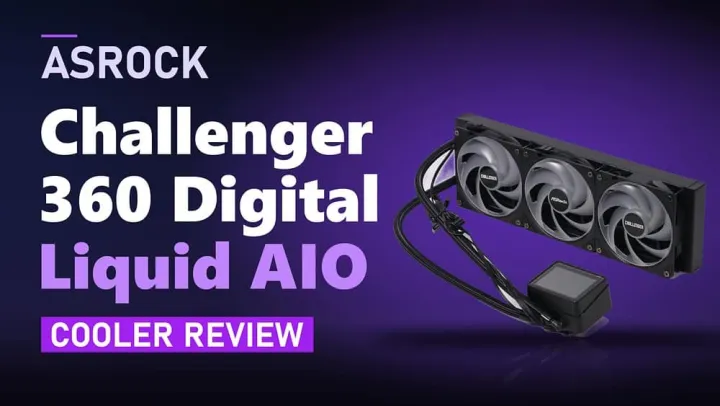
If GPU prices have you down, the ASRock Challenger 360 Digital might lift your spirits. Hardware Busters scored it 8.9 out of 10, and the value proposition is hard to argue with.
It's ASRock's budget sub-brand, and this is the digital-telemetry variant of the Challenger 360. The pump block carries a 3-inch segment LED panel showing CPU temperature, fan speed, and clock speed. Don't expect a touchscreen. It's closer to a car's digital dashboard than a phone screen. No GIFs, no photos, just the numbers you actually want at a glance.
The spec sheet looks strong for the price. A three-phase pump motor, rifle-bearing fans to 2,100 RPM, 450mm sleeved tubes, and a 6-year warranty. At $89.99 it's the seventh cheapest of the 16 coolers tested.
Performance is where it earns the score. Noise-normalized against a Ryzen 9 7900X, it takes first place at 30 and 35 dBA, edging options that cost considerably more, including the Ocypus Sigma L36 and ARCTIC Liquid Freezer III Pro. At quieter levels it slips to second, and at full speed to fourth, where thicker-radiator AIOs pull ahead. That's the honest tradeoff, and it's why the reviewer notes you pay far more for only a little extra headroom. It's a genuinely impressive value play. The display is a bonus, not the point.
Hardware Busters: ASRock Challenger 360 Digital AIO Review
Can an $89.99 AIO keep up with coolers twice its price? I test the ASRock Challenger 360 Digital and its telemetry display on a Ryzen 9 7900X.
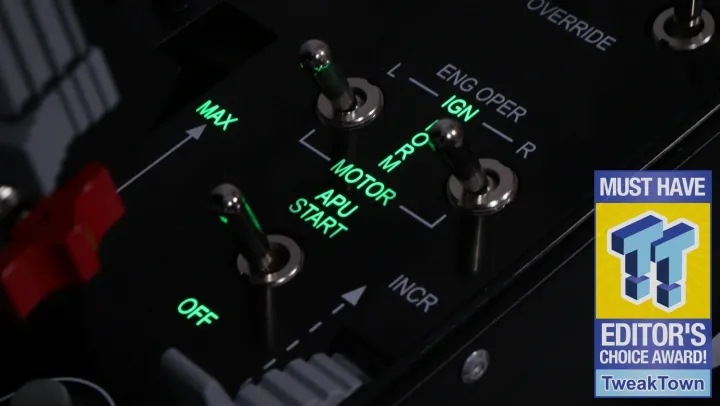
Then there's the Thrustmaster HOTAS WARTHOG MKII. TweakTown handed it 96 percent and an Editor's Award, which sounds bold for a product that's mostly the same one from years ago. That's sort of the whole point.
The throttle is completely unchanged. The joystick base got a redesign with smoother anti-stiction ball bearings and Hall-Effect magnetic sensors, plus a USB-C connector in place of a hard-wired cable. Everything else is the same trusted layout, with 55 action buttons across the bundle.
"If it isn't broke, don't fix it," the reviewer writes. "It also helps keep costs down."
That's fair. The MKII is the obvious move if your original unit is dead or you're coming up from entry-level. It's not worth the upgrade if yours works fine. And if you specifically want force feedback or a twist rudder axis, look elsewhere, since Thrustmaster dropped both this generation.
At $599.99 (around $561 on Amazon) it's a premium price for an evolutionary upgrade, but the build quality is genuinely the best you'll find in a home sim setup.
TweakTown: Thrustmaster HOTAS WARTHOG MKII Review
Thrustmaster's HOTAS WARTHOG MKII keeps the premium A-10C-inspired design while adding smoother controls and a sturdier joystick base.
Three very different products, one recurring theme: value depends on context, not just specs. The budget AIO is a steal if you need a cooler. The HOTAS is a steal only if you need a replacement. And Gears of War: E-Day is a must-play for fans who don't mind riding a demanding UE5 title and a GPU upgrade into late October.


