Today's roundup covers seven hardware reviews, spanning mini PCs, CPU coolers, OLED monitors, a foldable controller, and a flagship PSU. The GEEKOM A9 Max 2026 packs AMD's Ryzen AI 9 HX 470 but ships an overpriced single-channel base config that throttles performance. Meanwhile, value stands out in the ASRock Rock White 360 AIO at ~$89 and the pocketable Razer Prio controller at $99.99. Overall, the best picks for most buyers are the ASRock AIO and Razer Prio, while the GEEKOM and Noctua coolers are worth it only if configured correctly.
Seven reviews hit the desk today, and the common thread is price
Mini PCs, CPU coolers, an OLED monitor, a foldable controller, and a software-controlled PSU all show up in this roundup of hardware reviews from 15–16 September 2026.
Seven reviews landed today, and not a single one is about chasing the biggest number on the spec sheet. Some are value bombs. Others make you wonder who the target customer actually is. Starting with the one that stings the most.
A mini PC that costs twice what its predecessor did
GEEKOM's latest mini PC wraps AMD's new Ryzen AI 9 HX 470 ("Gorgon Point") in a premium aluminum shell, and it's meant to handle productivity, local AI workloads, and light gaming. The catch? It's barely an upgrade over the 2025 model. Guru3D calls the change "welcome but modest." Same enclosure, same ports, same dimensions, same Radeon 890M. You're paying more for a 0.1 GHz boost clock, a slightly faster iGPU, and a 5 TOPS bump in the NPU.
The real problem is how it ships. Guru3D's central gripe is that the base config uses single-channel memory, which throttles exactly the part that's supposed to be the selling point. Since the Radeon 890M shares system memory, single-channel hurts both CPU and gaming performance. A 2x16GB dual-channel kit fixes most of it, but the default 1x32GB leaves the HX 470 limping.
The pricing is where it really stings. The review unit ran about $1,499 off a $1,799 list price. The 2025 HX 370 model used to regularly sell near $999. Guru3D credits part of the jump to a rough DRAM and NAND market, but a refresh this modest isn't exactly a reason to pay 50% more.
The Guru of 3D: Geekom A9 Max 2026 Mini PC Review (Ryzen AI 9 HX 470)
The GEEKOM A9 Max 2026 squeezes AMD’s Ryzen AI 9 HX 470 into a compact premium mini PC aimed at demanding productivity, content creation, local AI workloads, and light gaming.
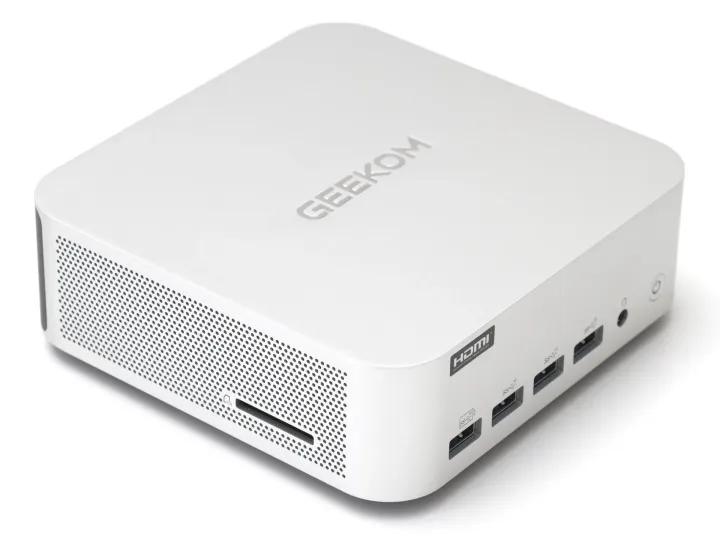
It's a fine machine when properly specced. It's a hard sell at base configuration, especially with no front USB-C port or OCuLink leaving USB4 as the only eGPU route. Keep in mind that you can still max this out at 128 GB across two SO-DIMMs if you're willing to do the work yourself.
Cooling where the value actually is
Then came the stuff that makes sense at the register.
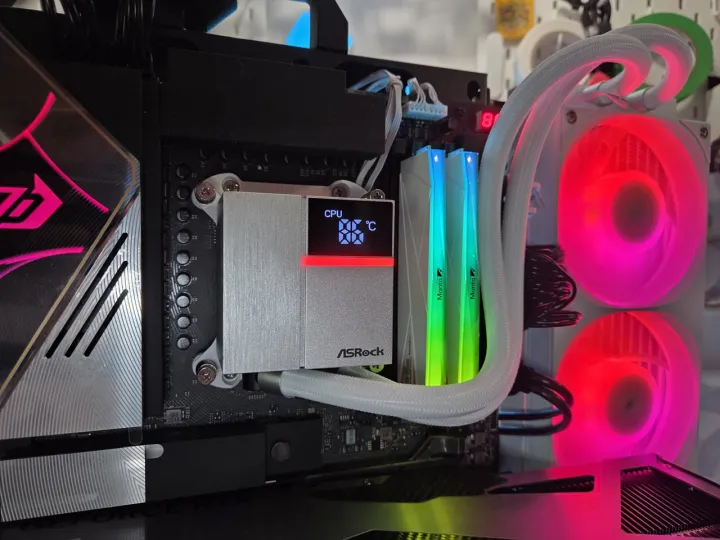
ASRock's Rock White 360 Digital AIO is its first real dive into the budget market, and Funky Kit scored it 8 out of 10 with a near-perfect 9 for price and value. For roughly $89 you get a 360mm radiator, a small digital readout to watch a 9950X cool off in real time, and a 400mm braided tube. When Funky Kit lists the downsides, it literally writes "none for the price." That's rare, and you're getting a credible $150+ LCD AIO experience without the premium. It also stops the fans entirely under light load.
Funky Kit: ASRock Rock White 360 Digital AIO CPU Cooler Review
The Rock series of AIO liquid coolers are built for users who's after simplicity, reliability, hassle-free installation and affordability. It's compatible for both AMD and Intel processors, and features a digital display with a discreet, minimalist design that provides an instant CPU temperature readout.
ASRock Rock White 360 Digital AIO CPU Cooler Review - Funky Kit
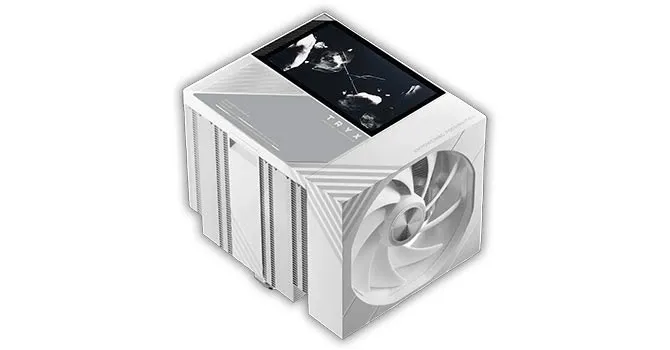
The TRYX TURRIS 620 White is the opposite story, and TRYX was only founded in 2024, so this newcomer is still earning its keep. TechPowerUp likes it for strong cooling, low noise, a 6-year warranty, and easy software. The differentiators are a 5-inch 720p IPS display bolted onto the cooler and a rail-mount system that skips fan clips. At $129.99 though, the question is whether those flourishes beat established brands offering more cooling for less. TechPowerUp calls it "compelling if you're willing to pay the price," which is polite for "you decide."
TechPowerUp: TRYX TURRIS 620 White Review
The TRYX TURRIS 620 pairs a sharp 5-inch IPS display with a clean white finish and rail-mounted fans, plus numerous quality-of-life features. It delivers strong cooling performance and low noise. With a great warranty and intuitive software, it's a compelling option if you're willing to pay the price.
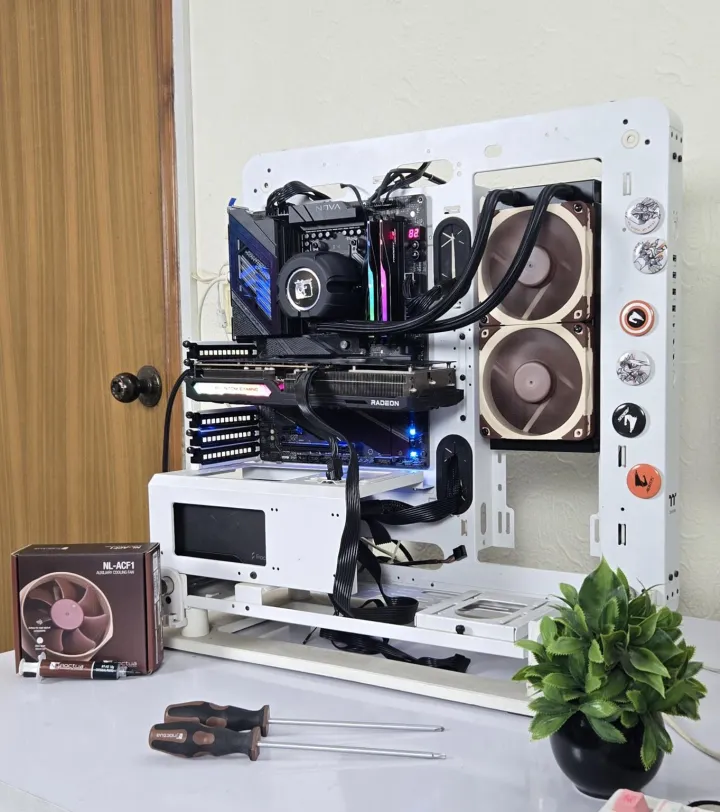
Noctua's NL-LC1-24 sits in a similar bind, just with a bigger tag. It uses Asetek's Emma V2 Gen 8 pump wrapped in a three-layer acoustic foam housing, and ships with Noctua's own NF-A12x25 G2 fans. EnosTech found it beat the ARCTIC Liquid Freezer III 240 by 1.6 degrees on a 9900X stress test while running silent at 100% PWM. That's a lot of AIO for a 240mm block. However, at the same time, the $219.95 price pushes it into 360mm territory on cost alone. EnosTech handed out three awards: performance, silent cooling, and an "expensive" award. Good cooler that costs like a premium one.
EnosTech.com: Noctua NL-LC1-24 Liquid Cooler Review
In our last take, we tested Noctua NL-LC1-36 and NL-LC1-42 liquid coolers. This time we are testing the ML-LC1-24, which is a 240 mm liquid cooler. As already mentioned, Noctua has employed the high-performance, flagship pump Emma V2 Gen 8 from Asetek, along with Noctua’s customization of the pump housing design to absorb maximum sound coming using three layers of acoustic foam.
On the display side, Gigabyte's MO32U24 has the goods. It's built on Samsung's newest Penta Tandem QD-OLED panel, a five-layer stack that spreads drive current to improve efficiency and slow degradation. You get 4K at 240 Hz, a 0.03 ms response, and a pivot stand that swings it into portrait. TechPowerUp says the panel itself "hits its stride."
But Gigabyte cut corners on the connectivity. 4K at 240 Hz always runs through Display Stream Compression over a single DP 1.4, and the USB-C port tops out at 18 watts, which is "enough for a phone and nothing more." At $1,000 that interface package trails rivals. Great panel, mediocre port selection.
TechPowerUp: Gigabyte MO32U24 Review - Penta Tandem Hits Its Stride
Gigabyte MO32U24 pairs Samsung's 31.5-inch Penta Tandem QD-OLED with 4K 240 Hz, near-perfect uniformity, and motion so fast it keeps up with the best. It also tunes up beautifully with a couple OSD tweaks, while pivot, KVM, and silent cooling add real desktop appeal.

Gamers and builders get the last word
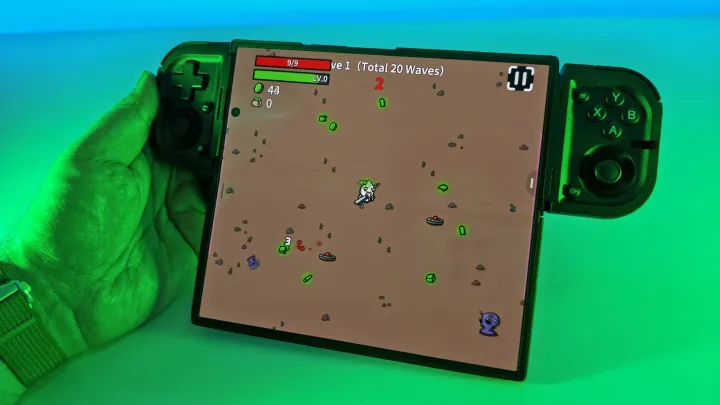
The Razer Prio is probably the most fun entry here. It folds to about credit-card dimensions, weighs just 101 grams, and Windows Central calls it the first mobile controller that genuinely vanishes into a pocket. Touchscreens are fine until you actually try to play something, and the Prio beats on-screen controls decisively. It plugs into plain USB-C with zero Bluetooth lag, works on both Android and USB-C iPhones, and mirrors Xbox Cloud Gaming, Steam Link, and PlayStation Remote Play. The thumbsticks are small and the triggers a bit clickier, but if you game on a train or in bed, this is your daily driver. $99.99 is fair, even if Windows Central thinks $79.99 would've been the sweet spot.
Windows Central: Razer Prio review: A credit‑card‑sized controller that actually plays well
The Razer Prio isn't trying to be the biggest, most comfortable mobile controller on the market. Instead, it focuses on something far more practical: portability. With a unique foldable design that collapses to nearly credit-card dimensions, the Prio is one of the few mobile controllers you'll actually carry every day.
Razer Prio review: A credit‑card‑sized controller that actually plays well
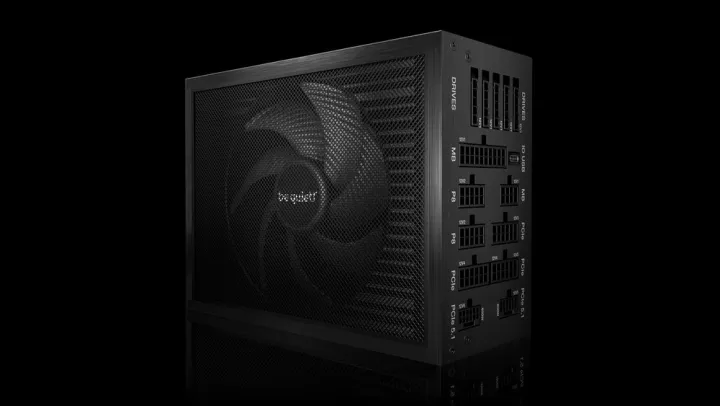
Last up, be quiet!'s Dark Power Pro 14 IO 1600W. This is the company's flagship PSU, and for the first time it ships with actual software control. Hardware Busters tested it and found Titanium efficiency at 115V (91.193%) alongside a LAMBDA A noise rating, while the new IO Center app lets you monitor real-time efficiency, switch between six rails and a single rail, and tune fan modes from your desktop. Built on CWT's platform with Japanese capacitors and backed by a 10-year warranty, it lands among the strongest 1500W–1700W units Hardware Busters has evaluated. At $499.90 it isn't cheap, but it's built for RTX 5090-class rigs that want monitoring and rail flexibility.
Hardware Busters: be quiet! Dark Power Pro 14 IO 1600W ATX v3.1 PSU Review
be quiet! Dark Power Pro 14 IO 1600W review: we test its CWT platform, IO Center software, efficiency, noise, transient response and ATX 3.1 compliance.
be quiet! Dark Power Pro 14 IO 1600W ATX v3.1 PSU Review - Hardware Busters
If you're picking from this batch, the ASRock Rock White AIO and the Razer Prio are the easy calls. The GEEKOM and Noctua options are worth it only if you configure them right, and the Gigabyte monitor is a fantastic panel dragged down by its connectivity. Head here to read any of the full reviews if you want to dig in.


