Today's roundup of PC-hardware reviews found only two easy recommendations, with most items overpriced for their gains. The clear standouts are the LAMZU Thorn V2 and VAXEE NP-01S V3 wireless mice, along with the pocket-sized ADATA SC735 external SSD. Skip-worthy picks include the Geekom A9 Max mini PC, Corsair Titan II AIO cooler, GIGABYTE X870 AORUS Infinity motherboard, and ZIMA ZimaBoard 2, all of which miss the mark on price or performance. A re-test of AMD's Zen 4 versus Zen 5 CPUs confirms that generational gaming gains are small, meaning most users should hold off on upgrading.
Eight hardware reviews, two clear wins, and a lot of caution
A roundup of eight recent PC-hardware reviews makes the pattern obvious: premium prices, modest gains, and only two standouts.
If you're planning an upgrade, this week's reviews are a mixed bag. Eight products recently across mini PCs, cooling, motherboards, storage, and input gear. Two are outright winners. Most are not, at least not at the prices being asked.
Where premium prices outran the gains
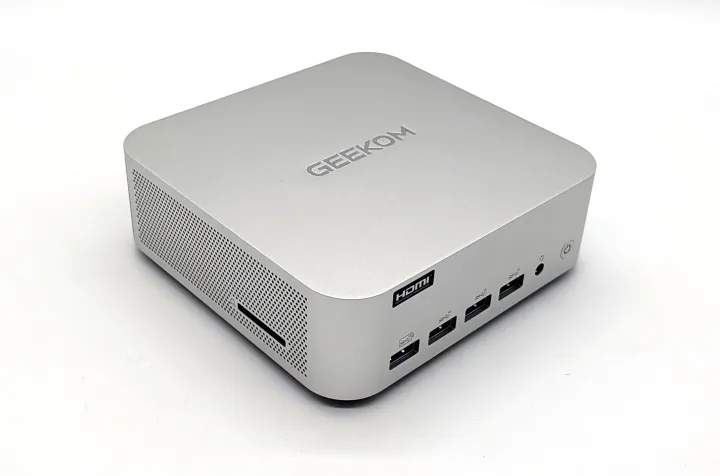
The Geekom A9 Max 2026 is a refresh, not a redesign. Geekom dropped the HX 470 chip into the same machined-aluminum chassis that previously held the HX 370. You get a 100 MHz CPU boost and a 200 MHz GPU bump. That's all. igor'sLAB ran a 32 GB DDR5 paired with a 2 TB SSD, landed on a price of €1,563, and concluded the real-world gains are marginal. Faster or more memory would do more for you than paying for this particular bump. There's also a wrinkle: gaming FPS came in lower than expected, roughly 93 to 174 across Counter-Strike 2, GTA V, and Rainbow Six Siege. No cause was given, even though a clean Windows install and a comparable second system produced similar numbers. Solid build and a great port selection, for what it's worth. Just not worth the price.
IgorsLAB: Geekom A9 Max 2026 Review: HX 470 with a Small Gain
The review shows that the Geekom A9 Max 2026, with the HX 470, offers only a slight improvement over the HX 370; memory makes a bigger difference in practice.
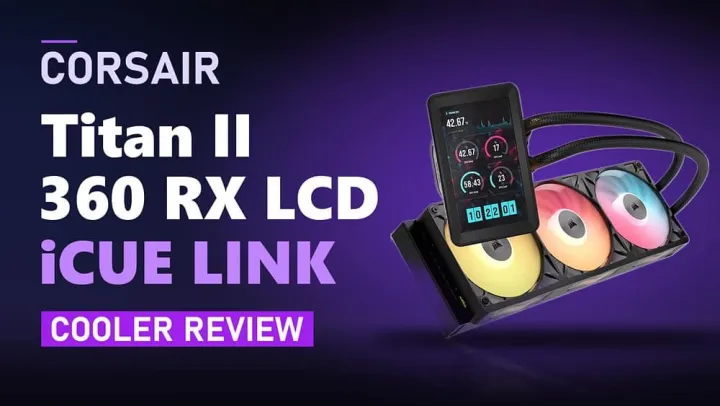
The Corsair iCUE LINK Titan II 360 RX LCD has a similar story. It sits at $239.99 making it one of the most expensive AIOs Hardware Busters has tested, and it trails both its own predecessor and most of the 20-plus coolers on the chart. The 5-inch IPS screen is the whole point. It attaches tool-free via CapSwap and can double as a second monitor over DisplayPort. Throw in a 52-LED RGB array and a 70 mm VRM fan, and it's a feature-rich cooler. Cooling performance is the weak link, though. Hardware Busters hands it 7.5 out of 10. Skip the screen and the Titan II 360 RX RGB drops to $179.99.
Hardware Busters: Corsair iCUE LINK Titan II 360 RX LCD AIO Review
Corsair's $239.99 iCUE LINK Titan II 360 RX LCD adds a 5-inch IPS screen and a VRM fan. I test it on a Ryzen 9 7900X against 20 other AIOs.
Corsair iCUE LINK Titan II 360 RX LCD AIO Review - Hardware Busters
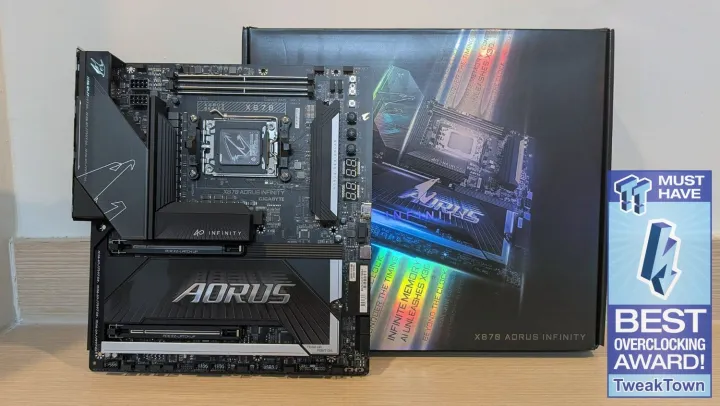
GIGABYTE's X870 AORUS Infinity wants $799 and aims squarely at people who pour liquid nitrogen onto their rigs. TweakTown scores it 88% and hands over its Overclocking award, chasing DDR5 speeds up to 11,400+ MT/s. But hitting those numbers requires LN2, a Ryzen 8000-series chip, and a fair bit of luck. On an everyday 7000- or 9000-class CPU the reviewer settled on DDR5-8200. The board cools beautifully, VRM temps peaking near 54 °C. Yet TweakTown's bottom line is blunt. It's a ridiculous board, full credit to GIGABYTE, but out of stock and not a buy for most. Non-overclockers should look at the AORUS Master X3D, which is $200 cheaper with more expansion, or the ROG Crosshair X870E Apex at $599.
TweakTown: GIGABYTE X870 AORUS Infinity Review - A memory overclocking monster
The GIGABYTE X870 AORUS Infinity is an engineering statement that will take your memory to new extremes, but it's one for hardcore overclockers only.
GIGABYTE X870 AORUS Infinity Review - A memory overclocking monster
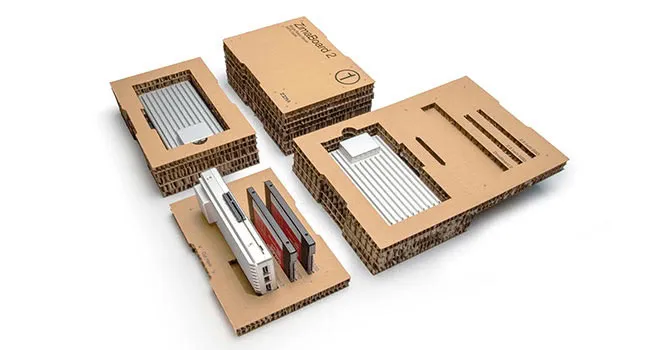
Then there's the ZIMA ZimaBoard 2, a tinkerer's dream and a NAS in name only. TechPowerUp gives it an Innovation award but notes it isn't really a NAS until you buy optional accessories. It's essentially a heatsink with no chassis, running an Intel N150 CPU and 16 GB of soldered RAM. The big problem is networking, which stays unsolved and tanks the benchmarks. At $519 for the kit, it also loses to cheaper, purpose-built NAS units. Keep it for a DIY firewall if anything.
TechPowerUp: ZIMA ZimaBoard 2 Review - Not really a NAS?
This might be the world's smallest NAS, but it's also not strictly a NAS, at least not until you invest in some optional accessories. Unfortunately the result isn't a favorable comparison against even the simplest NAS we've tested. However, if you're looking for something to tinker with, the ZimaBoard 2 might be for you.
The standouts and a debate that won't die
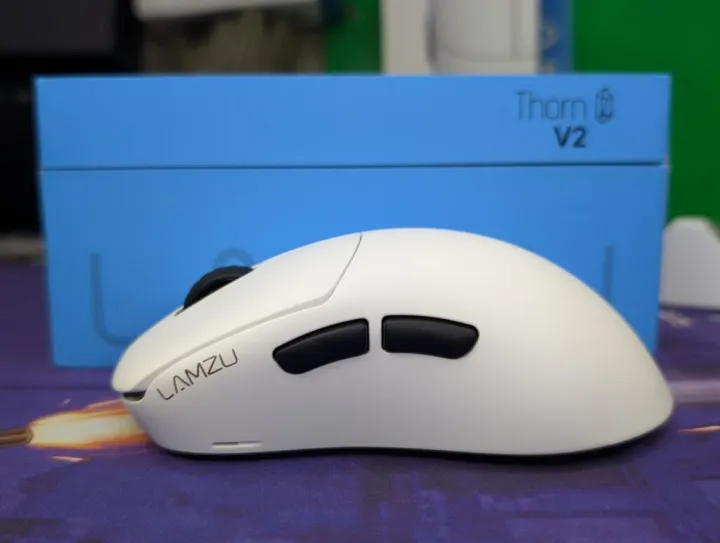
On the input side, two mice stand clear. The LAMZU Thorn V2 tips the scales at just 55 g and measures 124 by 66.5 by 42 mm. EnosTech awards it a Recommended call, describing it as fast, comfortable, and highly tunable through the browser-based AURORA driver. It tops out at 8,000 Hz polling over both wireless and wired, and the PAW NEXT I sensor is among the best you'll find. Only real caveat: it can feel large for hands under 17.5 cm.
EnosTech.com: LAMZU Thorn V2 Review: A 55g Wireless Gaming Mouse
LAMZU Thorn V2 review covering its 55g design, ergonomic shape, 8K polling, sensor, clicks, battery life, wireless performance, and gaming experience.
LAMZU Thorn V2 Review: A 55g Wireless Gaming Mouse - EnosTech.com
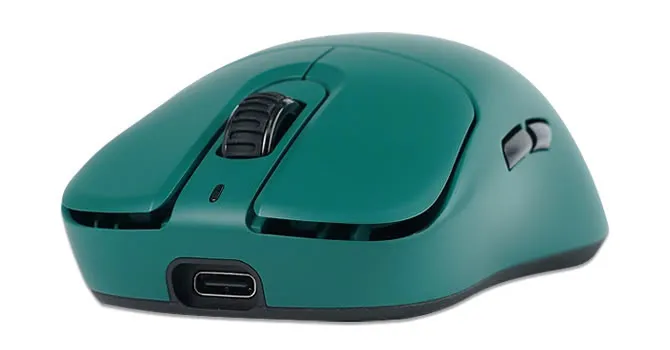
VAXEE's NP-01S V3 Wireless earns the same honor from TechPowerUp. Founded in 2019 by the original Zowie team, this is VAXEE's first true 8,000 Hz wireless mouse, a real jump from the 4,000 Hz ceiling of its predecessors. The sensor is a custom PixArt PAW3955 offering 1-step CPI increments. It's a deserving pick, even if the upgrade over the V2 isn't dramatic. Battery life does drop versus the V2, and polling can get uneven at 1k and 2kHz wireless. Still, $149.99 buys a genuinely fine mouse.
TechPowerUp: VAXEE NP-01S V3 Wireless Review
With the NP-01S V3 Wireless, VAXEE debuts their latest sensor and wireless tech. Weighing 59 g, the NP-01S V3 Wireless comes with the new Core1 sensor and CoreLink wireless technology, allowing for 8000 Hz wireless polling. The shape is unchanged, and configuration is possible both on-device and through a web driver.
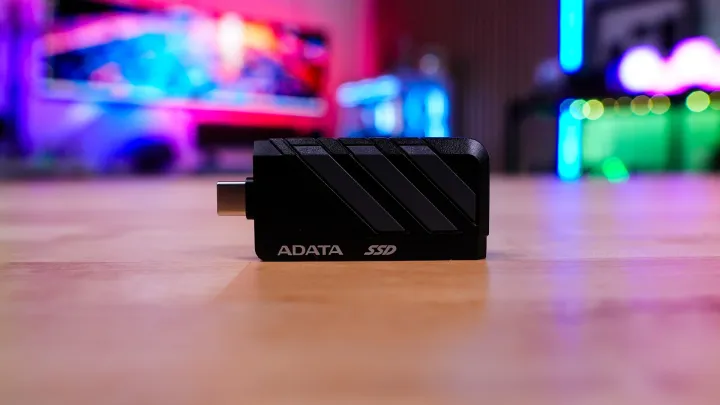
For something plainly sensible, the ADATA SC735 external SSD is a cable-free pocket drive. It weighs just 13.6 grams and uses a built-in retractable Type-C connector, so there's nothing to lose. Advertised speeds sit around 1,050 MB/s read and 1,000 MB/s write over USB 3.2 Gen 2, and it can even record Apple ProRes on supported iPhones. ThinkComputers calls it a strong option for creators and gamers, though detailed benchmarks were absent from the published page.
ThinkComputers.org: ADATA SC735 External SSD Review
Portable storage is most useful when it is fast, compact, and easy to connect, and the ADATA SC735 External SSD aims to deliver all three. This pocket-sized portable solid-state drive features a built-in retractable USB Type-C connector, eliminating the need to carry a separate cable when transferring files between compatible devices.
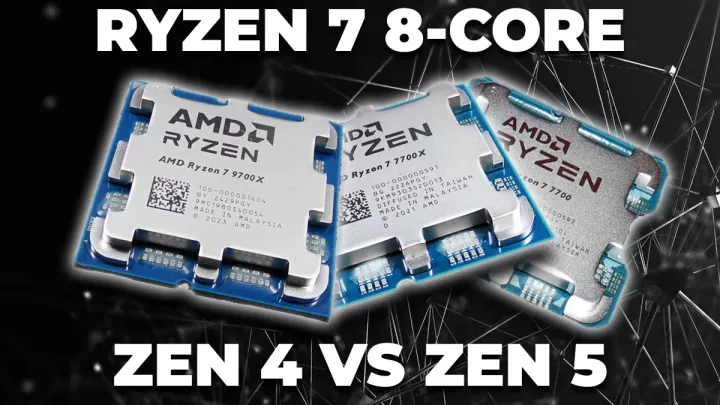
That leaves the long-running "Zen 5%" debate. The FPS Review re-tested it under strict 2026 conditions: same platform, same BIOS, latest games, 12 titles at 1080p on a GeForce RTX 5090. It put the Ryzen 7 9700X (Zen 5) against the 7700X and 7700 (both Zen 4), two years after that meme-sized launch uplift. The conclusion lines up with earlier testing: generational gaming gains are small. Unless you're moving off a much older platform or want Zen 5's non-gaming strengths, the upgrade value is questionable. And the math already favors buying fresh, the 9700X launched at $359 in August 2024, below the 7700X's $399 MSRP.
The FPS Review: AMD Ryzen 7 (Zen 4) vs Ryzen 7 (Zen 5) 8-Core CPUs - 2026 Review
Is “Zen 5%” still a thing in 2026? We are going to run through all Zen 4 and Zen 5 AM5 8-Core NON-X3D CPUs to find out, with all fresh new data tested as of September 2026. Our goal is to see how the standard 8-Core CPUs from Zen 4 and Zen 5 compare in games primarily, but we’ll throw in a few synthetic benchmarks as well. We’ll have average FPS and 1% Lows tested and compared in 12 games on a GeForce RTX 5090 at 1080p. This will include the AMD Ryzen 7 7700, AMD Ryzen 7 7700X, and AMD Ryzen 7 9700X AM5 CPUs going head-to-head in this comparison review.
AMD Ryzen 7 (Zen 4) vs Ryzen 7 (Zen 5) 8-Core CPUs - 2026 Review