Today’s Hardware Roundup: Glass Mousepads, 8K Keyboards, and a $42 KVM
Five new reviews dropped and this batch covers everything from competitive peripherals to server management gear. If you have been wondering whether a glass mousepad actually performs better than cloth, or if a $42 box can really replace a traditional KVM, the answers are waiting inside.
APH Networks just ran its first-ever quantitative mousepad test, and the $34 Epomaker GP1 topped the chart. That might sound surprising, since quantitative mousepad data has historically been scarce at best. APH built a rig to measure glide, grip, noise, and tracking, then faced the glass pad against the SteelSeries SX aluminum, the Func F-Series 10 L plastic, and the XTracGear Ripper XXL cloth. On glide the GP1 needed only 60 grams to drag a 384-gram can, versus 110 for the Func and 90 for the others. Grip was equally dominant at 1,920 grams, almost double the next-best pad.
Here's the catch. Glass is noisy. At 60.5 dB(A) the GP1 was louder than the SteelSeries but fell far short of the XTracGear's quiet 40.2 dB(A). That tradeoff is built into any hard surface, and APH landed on 7.5 out of 10. If noise doesn't bother you, this pad is easy to recommend.
APH Networks: Epomaker GP1 Review
I was calling my friends in Germany a while back when we started talking about my house here in Canada. They asked me how big my house was, to which I said it has about 2800 sqft of finished area including the basement. They expressed shock at how much floor space I had, and I had a hard time explaining that this is a fairly standard size for a newer single detached Canadian home with a front drive garage. My European friends then asked me if it was hot in my house, as they were going through a heat wave at the time. I told them I had central air conditioning. They could not figure out why it was necessary, and whether it was expensive to operate, as central AC consumes a lot of electricity. I mentioned electricity is relatively cheap, and even if it was not, I have solar, which generates an average of 10 MWh per year, so I am not too worried about it. I often find it funny Europeans simply cannot comprehend North American excess, and I am not ashamed to say we are indeed kind of extra -- and proud of it. So being an extra North American that I am, let me bring up a classic peripheral of excess, the performance mousepad. The Epomaker GP1 is a medium-size glass mousepad, and the last time I have personally covered a glass mousepad was over twenty years ago with the Corepad Magna. But this is not the only extra thing we are having today. We have also completely revised our mousepad testing scheme, which now includes quantitative measurements of glide, grip, and noise, benchmarked against several classic favorites here at APH Networks. Extra? Yes. What did we find? Read on to find out!
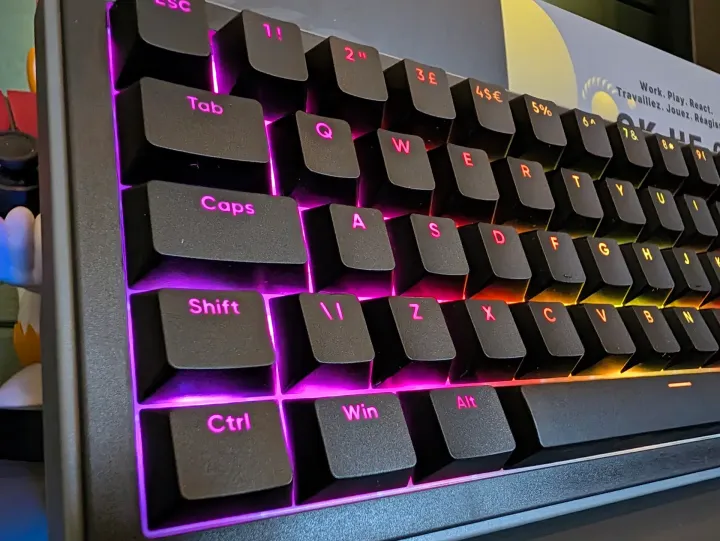
The Ducky OK-HE 65 points the other way, toward pure competitive focus. It's a 65% keyboard and one of the first to offer 8,000 Hz wired polling. Haimu magnetic Hall Effect switches actuate from 0.1 to 3.35 mm, with rapid trigger support and hot-swappable sockets. eTeknix handed it a top-tier recommendation, calling the build "flawless." You get a five-layer gasket mount, double-shot PBT caps, and a rotary media knob. Keep in mind there's no wireless variant, and the bundled Type-C cable is forgettable. For anyone chasing an edge in a duel, though, polling speed is the whole game.
eTeknix: Ducky OK-HE 65 Mechanical Gaming Keyboard Review
Ducky is one of the biggest names in the keyboard business, always pushing the limits of keyboard technology and innovation, while still maintaining the core features we all desire.
Data-Center Toys
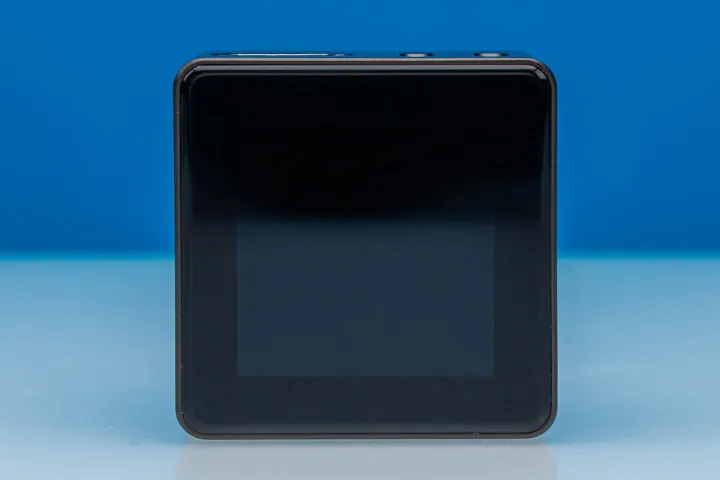
The JetKVM Mini W costs $42 and barely fills your palm. ServeTheHome measured the aluminum chassis at roughly 1.7 by 1.7 by 0.9 inches and confirmed it doesn't feel cheap. You connect it to WiFi through a local browser, then run a machine remotely from any browser. A small non-touchscreen display shows the setup PIN and IP address, toggled through two side buttons.
The genuine standout is OCR text extraction. Highlight a portion of the screen, BIOS entries mostly, and the text copies straight to your clipboard. Sounds like a party trick until you need it constantly. Add in Tailscale for remote access and MQTT for Home Assistant automation, and it covers a lot of ground. A TF card slot for virtual media runs about half the unit's cost. STH lines it up against the GL.iNet Comet Q, noting this one costs less than half while the Comet only trades you a bigger touchscreen and more VPN options. Great for any setup with stable WiFi.
ServeTheHome: JetKVM Mini W Review A Simple and Small Wireless External KVM Device
We take the JetKVM Mini W for a spin. This is a WiFi remote KVM device with lots of great features, a small size, and a low cost
JetKVM Mini W Review A Simple and Small Wireless External KVM Device
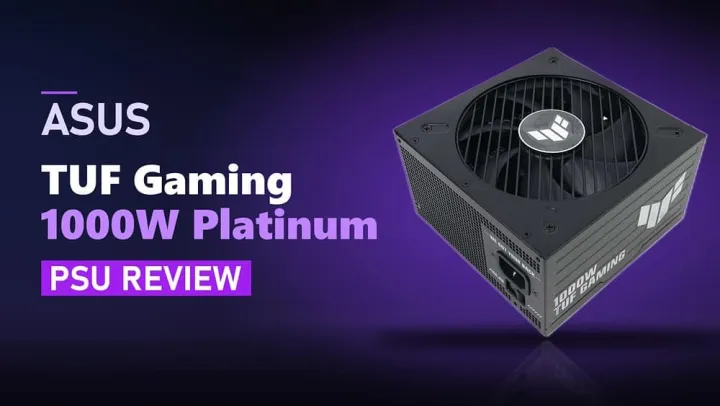
Two power supplies close out the roundup. The ASUS TUF Gaming 1000W Platinum is built by Great Wall, with a GaN APFC stage as the headline feature. Hardware Busters threw it against 28 units at 115V and 27 at 230V. Efficiency sits at Cybenetics Platinum, at 90.5% at 115V and 92.3% at 230V, with noise barely registering at 16.5 dB(A). That's an A+ rating, and nearly silent. Still, $199.99 undercuts the appeal, and a short hold-up time plus a misconfigured 3.3V overcurrent setting drag it down. Hardware Busters gave it 7.5 out of 10. It's arguably competing with better values in this price range.
Hardware Busters: ASUS TUF Gaming 1000W Platinum ATX v3.1 PSU Review
ASUS TUF Gaming 1000W Platinum review: an ATX 3.1 PSU with a GaN APFC stage and Cybenetics Platinum efficiency, tested against 27 other 1000W units.
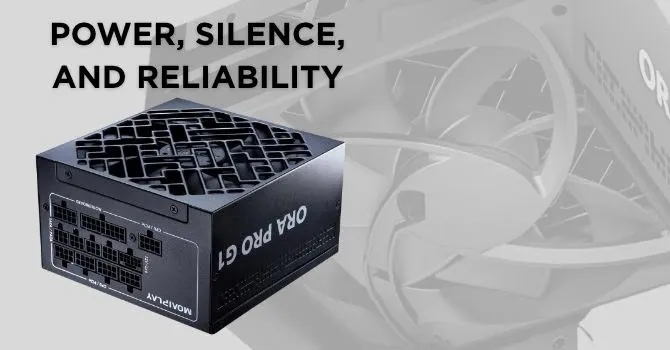
Moaiplay Ora Pro G1 850 is the quieter bet. Moaiplay entered the market mid-2026 as a SANR OEM, and this 850W unit shares its flagship platform. The draw is a 148mm fan. TechPowerUp calls it the largest fan in any ATX power supply, and whisper-quiet output follows naturally. Cybenetics Gold efficiency joins an A++ noise grade, Japanese capacitors, and a 10-year warranty. At roughly $120, it's a strong buy. TechPowerUp does flag one annoyance: the fan eco-mode switch is reversed, so you flip it to OFF for semi-passive mode. The bundled cables also feel mediocre. But acoustic performance is the whole point, and it edges out be quiet! and Cooler Master at the same wattage.
TechPowerUp: Moaiplay Ora Pro G1 850 Review
Moaiplay Ora Pro G1 850 stands out with a huge 148 mm FDB fan, whisper-quiet operation, and strong Gold-level efficiency in a compact ATX 3.1 design. Backed by Japanese capacitors, PCIe 5.1 support, and a ten-year warranty, it seems purpose-built for modern gaming rigs.