Hardware Roundup: Montech’s $70 Case, HP’s Slim Gaming Laptop, and a $699 Board Halved in Price
From a compact microATX chassis to a $4,299 UV laser, today’s reviews cover the full build spectrum.
If you have been waiting for a good excuse to finally sort out your workstation, you might want to look at what landed on review sites this week. TechPowerUp, HotHardware, APH Networks, Tom’s Hardware, TweakTown, and Hardware Busters published a fresh batch of coverage today, and the spread is unusually wide. You have a $70 microATX case that somehow fits a 425mm GPU, HP merging HyperX into its Omen line, a pair of cooling reviews that ask very different questions, and an ASUS motherboard that has quietly dropped to nearly half its launch price.
It is the kind of late-August lineup that usually signals the industry is clearing deck space before the real autumn refreshes arrive. Whether you are hunting for a compact chassis, a new laptop, or a last-call Z890 board before Nova Lake shows up, there is something here worth a look.
The Reviews
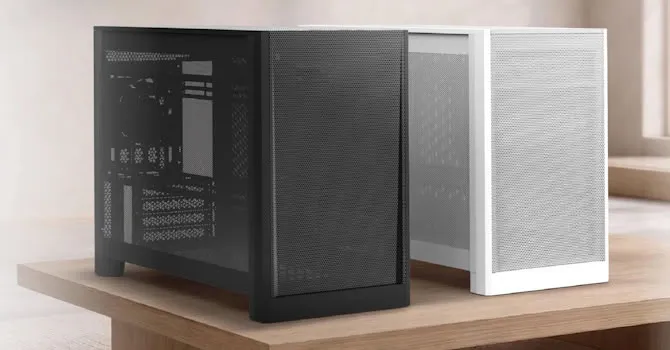
TechPowerUp just wrapped its review of the Montech TEN, and the build specs for a sixty-dollar box feel almost unfair. You get support for 425mm GPUs horizontally, 360mm radiators, and three distinct layout modes depending on whether you are running air cooling, AIO liquid cooling, or pushing a Mini-ITX build in a tighter footprint. The I/O panel hands you USB 3.2 Gen 2x2 Type-C alongside two USB 3.0 ports and a combo audio jack. Tool-free panels keep the actual assembly from feeling like a puzzle, though reviewers did note that some of the compact layouts leave just enough clearance to make cable routing an exercise in patience. For $70, it punches well above its weight class.
TechPowerUp: Montech TEN Review
Montech TEN is a $70 microATX case that punches above its size, supporting huge GPUs, 360 mm radiators, and vertical layouts. The build can be tricky, but tool-free panels, good construction, and clever extras make it an easy case to like.
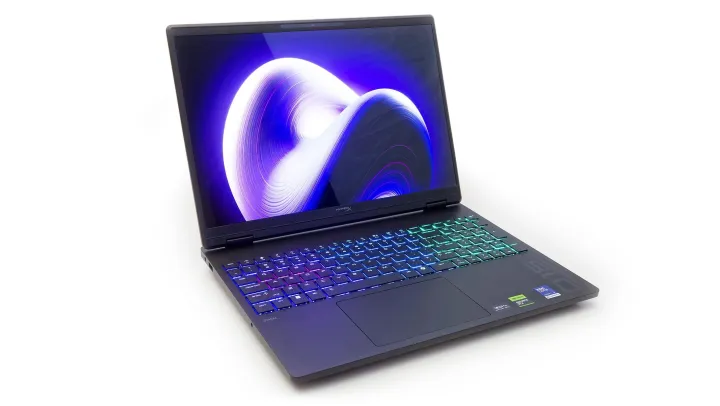
HotHardware dove into the newly rebranded HP HyperX Omen 15, and it is one of the leanest gaming laptops I have seen under five pounds. The tested model runs at $2,099, starting at $1,029 for the base spec. Inside you will find Intel’s Panther Lake Core Ultra X9 388H, which stacks four Cougar Cove performance cores, eight Darkmont efficiency cores, plus four low-power E-cores, paired with a higher-TDP mobile RTX 5070. The 15-inch OLED panel hits 5MP resolution, 120Hz, and true 1000-nit HDR with VRR. Performance at 1440p is solid, thermals are surprisingly tame for a chassis under an inch thick, and the external I/O actually makes sense. There are gripes, of course. The included NVMe drive is sluggish, 8KHz keyboard polling throws off some inputs, and the fans get audibly busy under sustained load. Still, it is a genuinely comfortable form factor.
HotHardware: HP HyperX Omen 15 Review: RTX 5070 Gaming Meets Gorgeous OLED
HP's latest HyperX Omen 15 gaming laptop is svelte, powerful and attractive and it ushers in a new era in terms of branding as well.
HP HyperX Omen 15 Review: RTX 5070 Gaming Meets Gorgeous OLED
Air cooling is not exactly new to tower designs, but APH Networks just spent serious time with the new Dark Rock 6 and keeps coming back to one question: is it actually a product on its own, or just a stepping stone to the flagship Pro 6? Rated for 220W TDP, it weighs just over a kilogram, runs a single 135mm Silent Wings fan, and stays remarkably quiet at 11.9 dBA at half speed. The ceramic-coated fins and CNC-machined base feel premium, and the mounting hardware comes in a proper box with a screwdriver. It will handle mainstream chips without breaking a sweat. However, if you are pushing past 180W of sustained draw, you might find yourself eyeing the Pro 6 anyway.
APH Networks: be quiet! Dark Rock 6 Review
I recently went with my realtor friend to a house that was for sale. I have been looking at homes around the area to get an idea of features in a home that I am looking for. In my research, I noticed this one had been available for quite some time. Given the current housing situation we are in, it is not too surprising. However, when we first entered in, I immediately understood why. It was clear I was duped by the photographer as the inside felt a lot smaller than the photos. There were some positives including the price and the finished basement, but I did not feel comfortable. My friend said this home was in an awkward middle ground where it would be an upgrade, but not big enough for the long term, and I completely agree with his sentiment. While it is true the home would be bigger than what I have, I could not see myself staying here for longer than five or ten years, which means I would want to move again. Sometimes, it is worth getting the full thing rather than picking something in between, especially if the transition, like moving homes, is a major event. On the other hand, there are times when something that is good enough is genuinely good enough. Today, we have the be quiet! Dark Rock 6. From all signs, this is an adequate cooler and sufficient to keep CPU temperatures down. However, it is smaller than its brother, the Dark Rock Pro 6. As such, I must wonder if it falls into the "in between" trap, or if it is indeed a fine option on its own. Hopefully, this review will answer these questions and more!
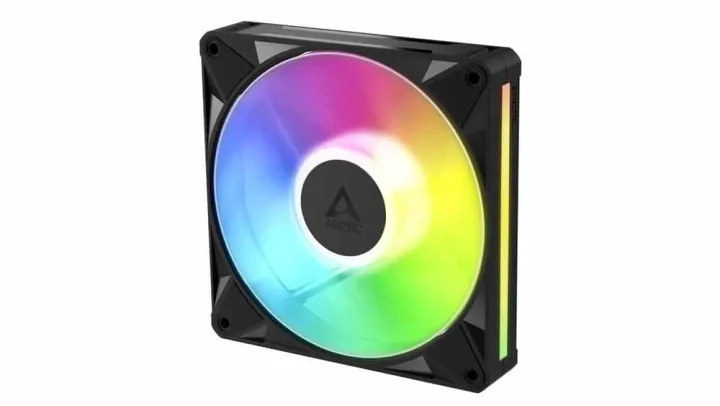
On the flip side of the cooling coin, Hardware Busters put the ARCTIC BioniX P14 A-RGB through its paces and came away impressed by the numbers. The fan hits 2500 RPM max, pulls 110 CFM, and measured 5.73 mmH₂O of static pressure. That pressure rating earned it a Diamond certification on the Cybenetics Phi scale, which is the highest measurement the lab has recorded across the 13 tested 140mm fans in their reference set. You buy them in a three-pack with a daisy-chain controller for roughly $32.49, and the A-RGB LEDs hide behind a translucent side panel if you want to show them off. At 39.5 dBA at full throttle it will draw attention, but at lower speeds it sits comfortably in the background. A six-year warranty seals the deal.
Hardware Busters: ARCTIC BioniX P14 A-RGB 140mm Fan Review
We measure the ARCTIC BioniX P14 A-RGB on a Longwin LW-9266 and in a hemi-anechoic chamber: 5.73 mmAq static pressure, the highest of thirteen 140mm fans, and what it costs in watts.
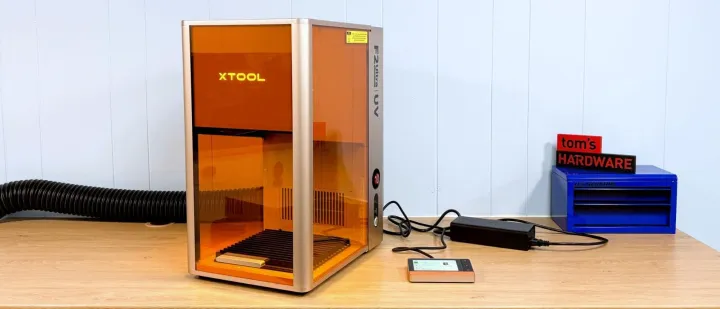
Tom’s Hardware handed the xTool F2 Ultra UV their Editor’s Choice, and for good reason. It is a 5W, 355nm UV galvo system that uses photochemical cold engraving instead of heat. That means you can cut wood without charring it, engrave inside solid glass, and hit plastics, metals, leather, and ceramics in the same session. The dual 48MP cameras preview down to 0.2mm accuracy, the touchscreen interface is surprisingly intuitive, and the integrated fume extraction keeps the shop air breathable. The catch is the price. At $4,299 it belongs firmly in the serious maker category, not the weekend hobbyist drawer. You also get no safety glasses in the box, and no, it will not cut through actual metal. But if you need a single machine that handles fine glass work and clean wood cuts without switching tools, the F2 Ultra UV just might be it.
Tom's Hardware: xTool F2 Ultra UV dual laser engraver review: So cool it’s hot
The power of cold light
xTool F2 Ultra UV dual laser engraver review: So cool it’s hot
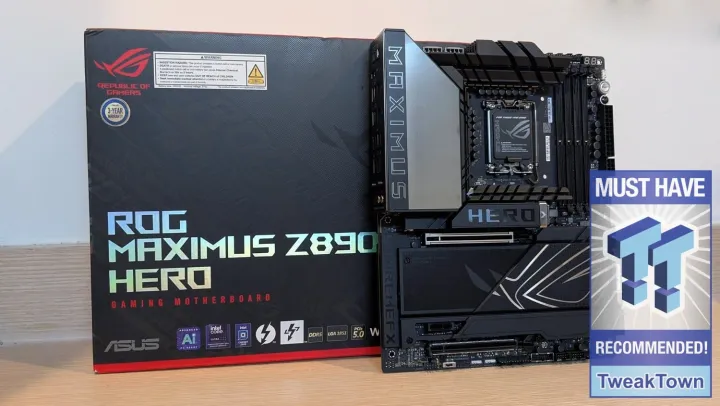
If you are building on LGA 1851 and doing the math right now, this one matters. TweakTown gave the ASUS ROG Maximus Z890 Hero a 94% recommendation, but the real story is the price. The board launched at $699 for the original Arrow Lake wave and is now sitting between $399 and $428 on Amazon and Newegg. You are getting a 22-phase VRM that peaked at a cool 54°C under load, six M.2 slots with actual heatsinks, dual Thunderbolt 4, Wi-Fi 7 with 320 MHz channels, and a 60W USB power delivery port on the front I/O. Performance across rendering and compression workloads is still top tier. The catch is that the Z890 platform is nearing its end, and the socket area can get cramped with massive tower coolers. If you want a flagship Intel build today without paying 2024 launch prices, it is hard to argue with the math.
TweakTown: ASUS ROG Maximus Z890 Hero Review - The Hero Resurrected
The ASUS ROG Maximus Z890 Hero was an excellent but expensive motherboard at launch. Now, after 2 years of price drops, it's become something special.
Finally, TechPowerUp benchmarked Star Wars Zero Company across the usual handheld rotation, including the Steam Deck OLED, Xbox Ally X, and the ROG Ally X Claw 8 EX. Developed by former Firaxis veterans at Bit Reactor, the Clone Wars era tactics game runs on Unreal Engine 5 with Nanite, Lumen, DLSS, FSR, and XeSS. Turn-based play is forgiving on mobile silicon, but the heavy lighting and geometry push harder than most tactical games have a right to. If you are running a handheld and want to know how it handles a modern squad-based shooter before dropping full price, the benchmark breakdown runs the usual gauntlet of resolutions and upscaling settings.
TechPowerUp: Star Wars Zero Company Handheld Performance Review
Bit Reactor, a game studio founded by former Firaxis XCOM developers, has finally finished its first game: the Unreal Engine 5-based Star Wars Zero Company, with EA handling publishing. Check out how the game performs on some of the most popular handheld PCs around in TechPowerUp's handheld performance review.

The full reviews are live at their respective sites if you want to dig into thermals, benchmarks, or actual build photos. Prices shift daily, especially on the Z890 Hero and the HyperX Omen, so keep an eye on sales if you are chasing the lowest rung on the ladder.


