Six freshly reviewed products from early November 2026 all share an uncomfortable theme: the RAM and storage crunch has pushed memory to five times last year's price and SSDs to roughly double or triple. The ASUS ROG Xbox Ally X20 OLED at $1,299 wins on its OLED screen rather than raw speed, yet reviewers still call the $300 bump justified given the market. Other standouts include the $99.99 Sudokoo SK700V MACH cooler with a live display, the four-foot-tall Bambu Lab H3C tool-changer printer at $2,499, the Beelink ME Pro 4 NAS with a buggy App Center, and the $175 Patriot VP4300 Lite budget SSD. With raw specs no longer justifying climbing prices, vendors are now differentiating through clever features like screens, tool-changers, and custom operating systems instead.
Six new reviews from early November, and a parts shortage shadows nearly all of them
From a $99 cooler with a live display to a $1,299 OLED handheld, six early-November reviews reveal how a memory and storage crunch is reshaping what's worth buying.
New reviews arrive each day, and this batch lands in the shadow of a parts shortage. The memory and storage crunch has pushed RAM prices past five times last year's levels and driven SSD costs to roughly double or triple, which quietly changes how you should judge everything from a $99 CPU cooler to a $1,299 gaming handheld. Six products got reviewed in the first days of November 2026, and here's how they stack up.
They span cooling, gaming handhelds, 3D printing, and storage. Each review came out between November 3 and November 4, 2026.
Features over raw specs
The standout is the ASUS ROG Xbox Ally X20 OLED, the top variant of ASUS' Xbox-branded handheld line. It reuses last year's Ally X chassis and swaps in what HotHardware calls "the best screen we've seen in a handheld." You get an HDR OLED panel, an AMD Ryzen Z2 Extreme chip, 1TB of storage, and a $1,299 price. That's a $300 bump over last year's $999 model.
Gaming performance barely wins out, though. The Z2 Extreme stays power-limited on the same process node, so real-world gains are small. The reviewer says the OLED screen is "a bigger upgrade than an extra 20 FPS" in many titles. Thermals are genuinely good: it never crossed 85°C in a 20-plus-minute torture test, and fan noise maxed near 42.4 dB, most of it coming from the reviewer shifting in the chair rather than the fans. Battery still clocks just over 20 hours on a video test.
HotHardware: ASUS ROG XBOX Ally X20 OLED Review: Peak Handheld PC Gaming
The ultimate version of ASUS' Ally handheld gaming PC series brings the best screen we've seen in a handheld to the familiar Xbox Ally X hardware.
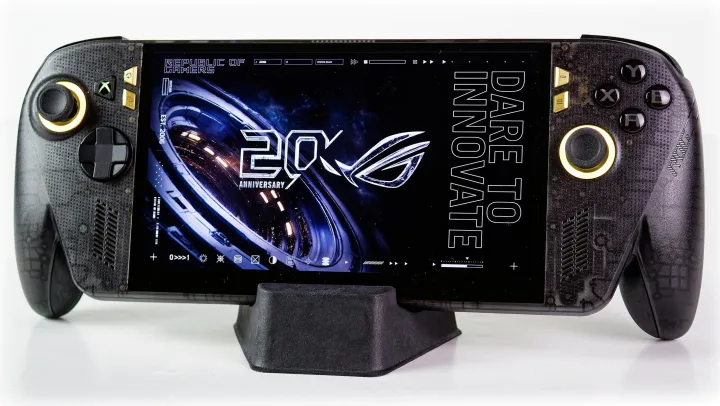
So why does a $300 jump feel justified at all? Because with RAM now five times the price and SSDs doubled or tripled, a $1,299 machine this polished is arguably a relative bargain. Caveats remain. Integrated graphics top out around 40 to 50 FPS in most games, and there's no room to expand internal storage.
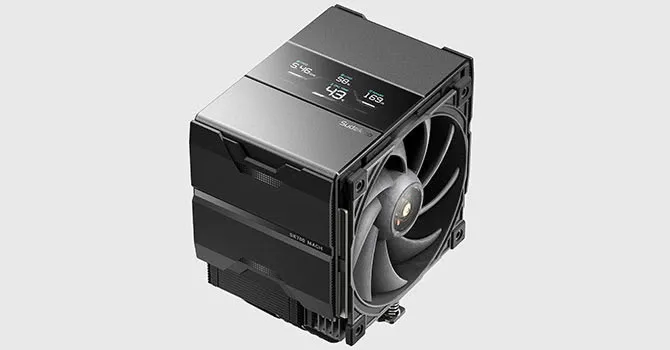
Sudokoo is a newer cooling name trying to stand out without chasing top-line specs. The $99.99 SK700V MACH is a single-tower cooler that adds a top-mounted digital display for live monitoring, an all-metal L-Rail design where the fan and display slide onto the tower, seven heat pipes, and a thin 30mm MACH120 LCP fan with a 0 RPM mode. TechPowerUp calls the cooling "impressive for a single-tower design," and the transparent fan window reveals the LCP motor for anyone who likes that sort of thing. The five-year warranty keeps the value case solid.
TechPowerUp: Sudokoo SK700V MACH Review
The Sudokoo SK700V-MACH delivers impressive cooling for a single-tower design. It features seven heat pipes, a zero-RPM capable 30 mm-thick LCP fan, and an integrated digital display with real-time monitoring, alongside a five-year warranty. This combination makes for an intriguing option, should your budget allow it.
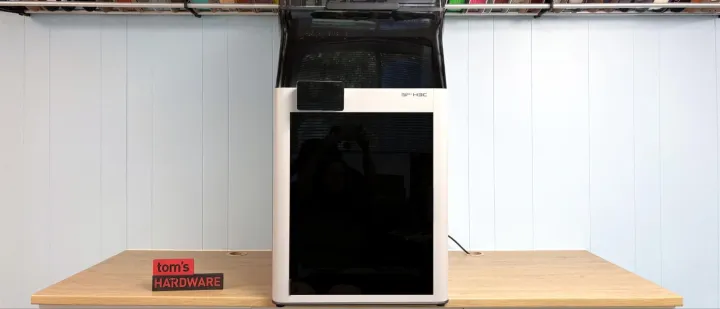
The Bambu Lab H3C takes yet another path to standing out. Tom's Hardware calls it "a nine-tool monster," and it earned that nickname: nine "Swaptek" tools let it mix materials, colors, and nozzle sizes in a single print, and it even supports old-school 2.85mm filament through a dedicated tool and a super-soft 75A TPU. Tom's Hardware found it printed everything it could throw at it, handing out an Editor's Choice at $2,499. The catch is physical, not technical, and the unit stands over four feet tall, a real clearance problem before you buy. It's "the only printer you'll ever need," then, only if your ceilings allow it.
Tom's Hardware: Bambu Lab H3C 3D printer review: A nine-tool monster
Finally, a Bambu built for TPU and everything else, too.
Storage under pressure
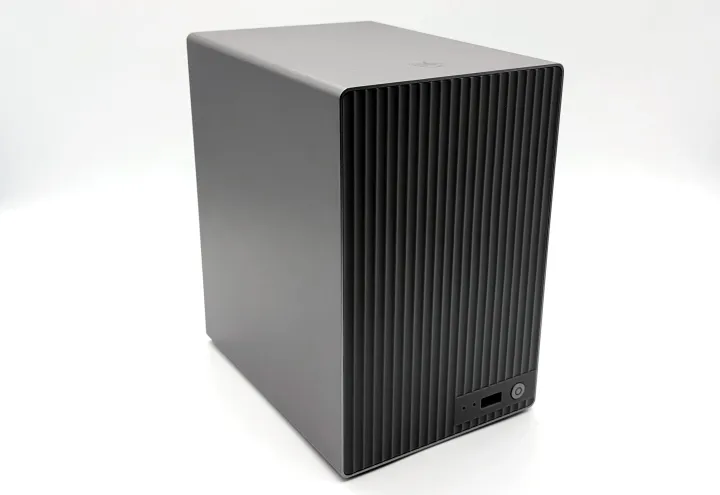
The Beelink ME Pro 4 is the four-bay expansion of the company's ME Pro line, whose two-bay version arrived earlier this year, packing four 3.5" drive bays around an Intel Core i5-13500H and 32GB of RAM. New this generation is FygoOS, a Debian-based OS, and igor'sLAB measured near-10 Gbit symmetric throughput at 9.49 Gbit/s with idle power sitting at just 15W. The hardware earns its keep, but the software has loose ends: the App Center repeatedly failed to connect, there was no app catalog before purchase, and photo management lags rivals. A beta AI search tool drew praise instead, correctly identifying the contents of an underwater photo, though prices landed higher than expected at €349 to €737 and FygoOS still feels unproven.
IgorsLAB: Beelink ME Pro 4 NAS Review: 4 Bays and FygoOS
The Beelink ME Pro 4 offers space for four hard drives, multiple M.2 SSDs, fast network connections and preinstalled FygoOS.
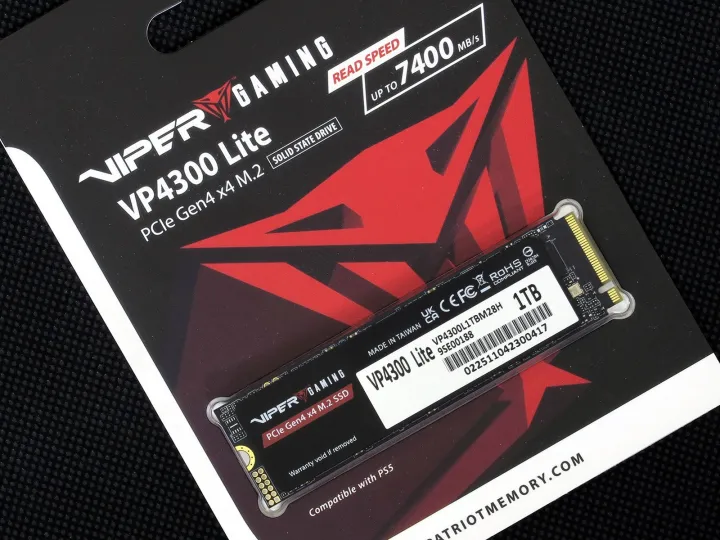
Patriot's VP4300 Lite gets a specific kind of scrutiny this time. The 2026 units ship with different internal parts than the earlier review samples, so PC Inquisitor essentially asked whether the budget drive still holds up. The 1TB PCIe 4.0 drive uses a Maxio controller, a DRAM-less design, and 800 TBW endurance for $175, and it ran cool at 56°C under load. Tested against comparators including a five-year-old MSI Spatium M470 and the DRAM-cached Adata Legend 960, it posts exceptional read latency yet finishes second overall once heavy application multitasking kicks in. There's no pricing edge left, but as the reviewer puts it, the VP4300 Lite becomes "the surviving choice" once the Legend 960 finally disappears.
PC Inquisitor: Patriot Viper VP4300 Lite Gen4 NVMe (2026) SSD Review
The competitive price still looks like performance-value, but do 2026-production VP4300 Lite drives still hold up the performance side?
That shortage is the thread tying these six reviews together. If you're keeping score, RAM alone is now roughly five times what it was last year, and the Ally reviewer flagged it while both the Beelink and the Patriot carry higher prices than a year ago would have allowed. So differentiation has become the only real escape: a cooler with a screen, a printer that swaps nine tools, a NAS running its own operating system. Vendors are selling features because raw specs no longer justify the price climb.


