Devolutions ships UniGetUI v2026.3.4 with an AI agent-skills manager, an Xcode extension, and installer-hash checks
The latest patch for the open-source package-manager front end reaches into AI coding tools and adds supply-chain hardening.
Devolutions published UniGetUI v2026.3.4 today. It's a patch, but not a small one. This build rolls up 66 commits from 13 contributors across 588 changed files, and it follows a five-week push through the 2026.3 release wave.
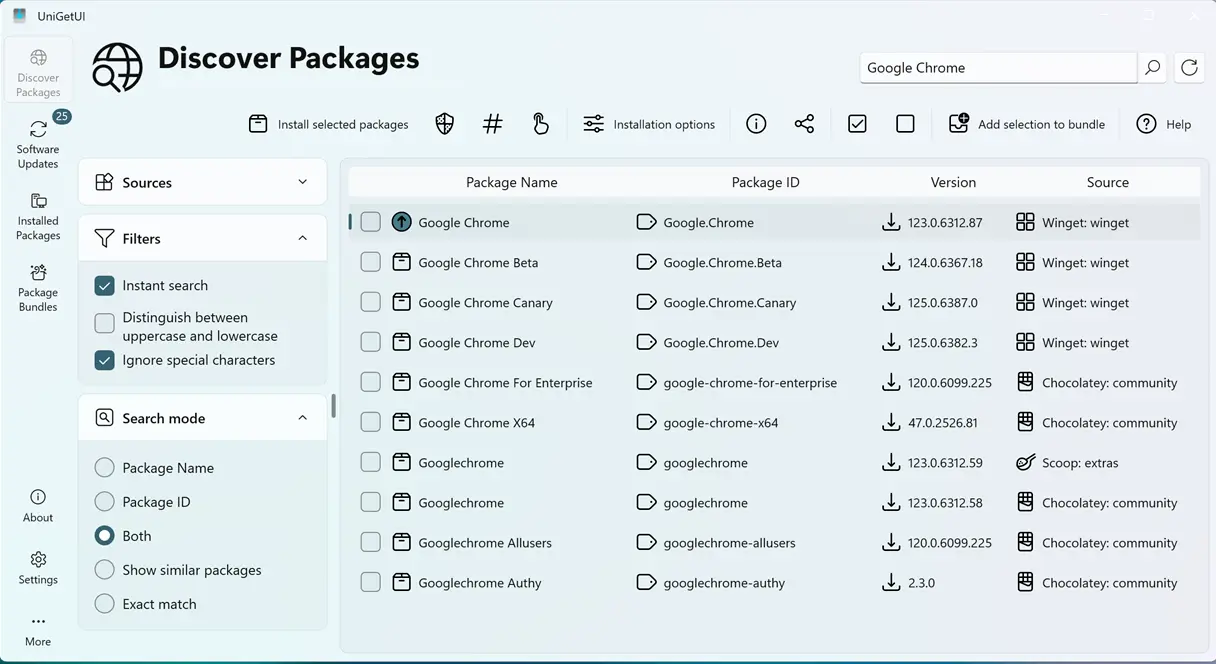
The release lands right where a lot of developers are spending their time: inside AI coding assistants. A new "Agent Skills" extension lets UniGetUI find, install, and update skills and plugins for Claude Code, Codex, GitHub Copilot, and Cursor. It's a genuine novelty, treating an AI agent's plugins as just another package to update. It's not cheap to call this a game-changer, but it's among the first mainstream package front ends to do so. The extension ships off by default.
There's another brand-new extension too, and it targets Apple's side of the fence. The Xcode manager works on macOS 13 and later, downloading and updating Xcode, switching between versions, and managing Simulator runtimes after you sign in with an Apple ID. Also off by default.
A cleaner interface, then some automation
The interface work is the quieter half of this release. A new docked package-details panel stays open beside the installed list, auto-following whatever package you select. Toggle it with Ctrl+Shift+D (or Cmd+Shift+I on macOS), or right-click and pick it. A Manager Health page joins the mix as well, showing when each underlying package manager last succeeded or failed and linking a setup guide whenever a tool turns up missing.
If you're the type to set things and forget them, there's plenty here. You can skip major updates while still getting patches, force an uninstall-and-reinstall for finicky packages, and, on Windows, tell UniGetUI to shut the PC down once a batch of installs finishes, complete with a cancelable 60-second countdown. The app also now lets you read release notes before applying a self-update, then pick update-now, update-on-quit, or skip.
Security is probably the more durable win here. Downloaded installers are now checked against published hashes, and the installer's signer is displayed. UniGetUI installs and updates other software, so it carries a lot of system trust by design. Verifying integrity before that handoff matters more than the spec sheet would suggest.
For long-running users, the operation history file had been ballooning into the hundreds of megabytes while the running process chewed through gigabytes of RAM. That's a fix years in the making, and honestly one a lot of us have complained about. It's gone now.
On top of that, indeterminate progress bars use considerably less GPU, and Pip will stop poking at Python environments that belong to other apps. A handful of misleading WinGet update reports are corrected, including false positives where the app claimed a newer version was available when it wasn't.
UniGetUI has been climbing. Devolutions now reports over 300,000 monthly active users and more than 23,000 GitHub stars. The project started in 2021 under Martí Climent as "WingetUI," a simple GUI for Microsoft's text-only WinGet. Devolutions, a Montreal security firm, acquired it in March 2026 and kept it open source under the MIT license.
That acquisition shaped this release's enterprise flavor. Private NuGet feeds, Artifactory update detection, and policy-driven updates all point at IT admins managing fleets rather than folks tweaking a single machine.
Head here to grab it. Windows ships run about 36.6 MB for the installer, 55 MB for the portable zip, plus arm64 builds. macOS and Linux are covered across the 25 release assets, which is useful since this build now ships SHA-256 checksums so you can cross-check everything yourself. Install via winget install --id Devolutions.UniGetUI or the Microsoft Store.


