Microsoft has shipped Visual Studio Code 1.136.1 as a hotfix release. The update addresses updated default prompts identified during the release candidate phase.
VS Code 1.136.1 Ships Agent Host, Open Protocol, and a Quick Hotfix
Microsoft has released VS Code 1.136 as a stable build. The release marks a major shift in how the editor handles AI coding agents. Now, agents run in a dedicated process called the Agent Host. This separation is critical. Agents no longer get blocked by busy extensions, and sessions survive even after you close the editor window. The follow-up patch, 1.136.1, dropped shortly after to update default prompts.
This isn't just another feature drop. It's an architectural reset. Microsoft introduced the Agent Host Protocol (AHP) alongside the release. AHP is an open, agent-agnostic protocol built on JSON-RPC. If you're building a custom agent client, you can now hook into VS Code's orchestration layer without reverse-engineering the extension host.
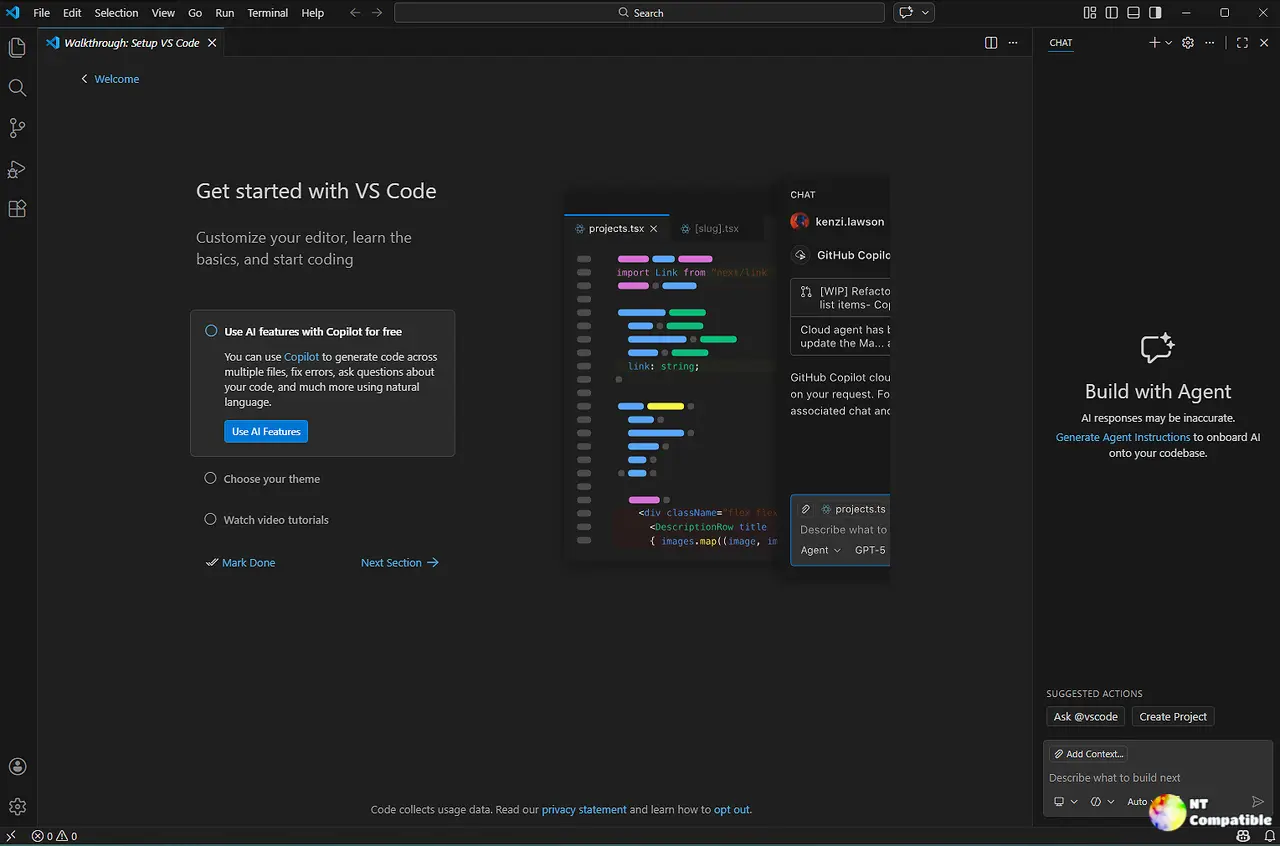
Agent Host and the Open Protocol
The Agent Host runs AI agents in a separate process from the extension host. That sounds like a minor detail until you see what it unlocks. Sessions now persist independently of editor windows. Close the folder. Close the window. The agent keeps chugging away. You can reconnect later.
Multiple VS Code windows can now connect to a single Agent Host. They observe and control the same session in real time. Remote execution is also supported. Run the host on another machine and connect via SSH or dev tunnels. The host is harness agnostic. Copilot SDK and Anthropic's Claude Agent SDK both plug into the same interface.
AHP is the glue holding this together. The protocol uses a state-first design with immutable Redux-like state trees. Every session, chat, terminal, and changeset is a URI-addressable channel. Clients apply actions optimistically and reconcile when the server echoes them back.
Microsoft has published client libraries for Rust, TypeScript, Kotlin, Go, and Swift. You can spin up a standalone host yourself with code agent host. The protocol docs and source repo are public.
This is a platform play. MCP created an ecosystem around tool calling. AHP is trying to do the same for agent orchestration. It keeps the ecosystem locked into VS Code's workflow while letting third parties build on top.
Features and the 1.136.1 Hotfix
Agent Merge is now in preview. It automates pulling a pull request to the finish line. The agent addresses review feedback, fixes merge conflicts, and reruns workflows. It repeats this cycle until the PR is ready to merge. Enable it with chat.agentMerge.enabled.
Multi-root workspaces are now supported for agent sessions. Agents can work across all folders in a multi-root workspace, though hooks remain scoped to a single folder. If the agent detects multiple workspaces, VS Code prompts you to pick the primary one.
Chat sessions now appear as a hierarchy. Related chats show up as children of their parent session. Each row displays the title, status, and any pending approvals. The new input field unifies the prompt, model selection, and workspace controls.
Experimenters can try chat backgrounds. There are 11 layouts with Codicons patterns or custom images. Dark and light themes are supported.
The 1.136.1 hotfix is a small but telling detail. Microsoft spotted an issue with default prompts during the release candidate phase and cherry-picked a fix. Pull request #334117 by Dileep Yavanmandha landed with labels candidate and release-cherry-pick. That's a clean process.
Keep in mind that the model ecosystem is shifting just as fast. GitHub announced the deprecation of four Copilot models one day after the release. Gemini 3.5 Flash, Gemini 3.6 Flash, Kimi K2.7 Code, and Claude Opus 4.7 all go away on October 2, 2026. Microsoft is pushing Gemini 3.8 Flash, Kimi K3, and Claude Opus 5 as replacements.
The pace of change here is relentless. VS Code stabilizes its architecture with AHP and Agent Host, while the underlying models churn through replacements every few months. It's a strange time to be building AI coding tools.
Microsoft also shipped MAI-Code-1-Flash, a lightweight coding model built for fast iterative tasks. It claims to outperform Claude Haiku 4.5 and GPT-5.4 Mini on quality metrics while using fewer tokens. Copilot Business and Enterprise customer data won't be used for training.
Head here to download the release from the VS Code website.


