Microsoft has announced Windows Server 2028 to public preview at Ignite 2026, positioning it as a major LTSC release that runs AI inference on customers' own servers through what it calls "token factories." The mature, testable pieces land in storage and management: native NVMe is on by default, ReFS boot is ready, and Windows Admin Center Virtualization Mode is now GA with a VMware migration path coming. The AI ambitions, though, lag months behind, since AMD's MI350P and NVIDIA's GB300 hardware don't ship until later, and no GA date for the OS itself has been announced. Until official release notes arrive, many of the security and AI features remain reported rather than confirmed.
Windows Server 2028 enters public preview, betting the datacenter on on-premises AI
Microsoft has officially opened Windows Server 2028 to public preview, confirmed at Ignite 2026 and posted by the Windows Server team's Neil Hinnant. This is a major LTSC release, not the kind of tidy incremental upgrade you can drift through. The headline bet is bigger than that: run AI inference on your own servers, next to your data, in what Microsoft is calling "token factories."
Here's the bit that matters. A "token factory" is just Microsoft's word for a datacenter server that processes AI inference locally instead of forwarding every request to the cloud. Hinnant frames it plainly. "Now customers are asking where AI should run when it needs to work with those applications and data. The cloud is part of the answer, but so is the local infrastructure they operate themselves."
The pitch is that you shouldn't have to stand up a separate AI stack at every location. Windows Server 2028 is Microsoft planting a flag there, extending Foundry straight down into the datacenter. Early access runs through the Technology Adoption Program at aka.ms/WSTAP.
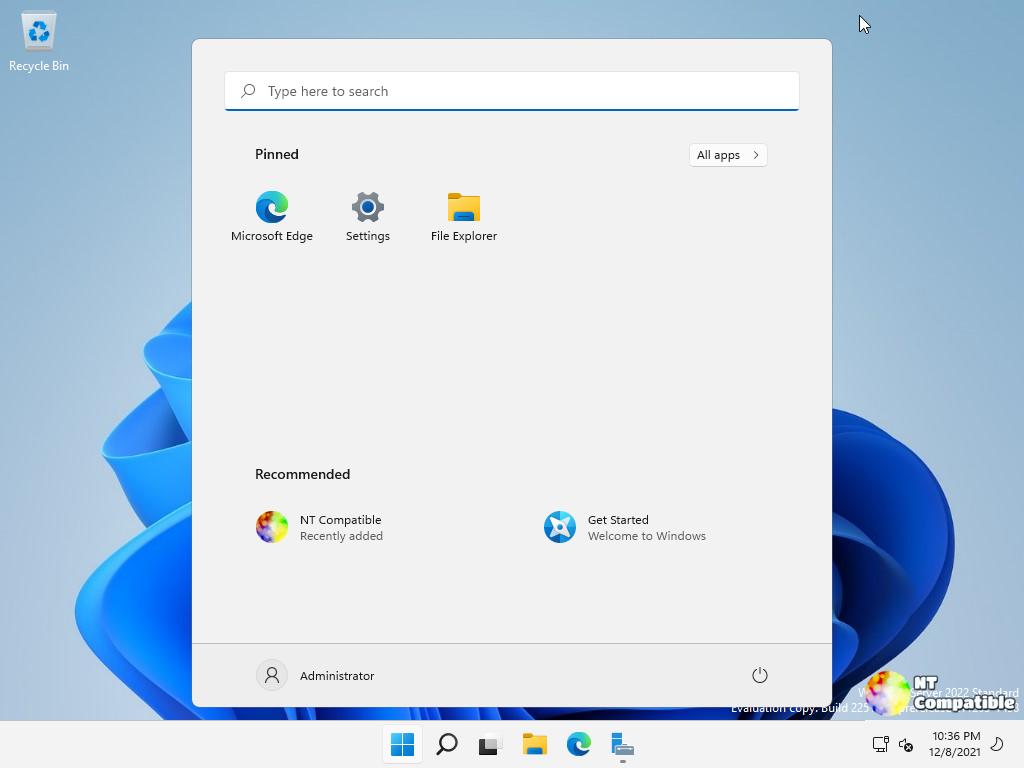
A few caveats before you get excited
Let me be straight with you about the reporting. Microsoft's own blog names Trusted Launch VMs, post-quantum crypto, and a hardened Server Core baseline. But Confidential VM support, the Server Core-first default, and automatic certificate management are coming via third-party reports, not the primary announcement. Treat those as unconfirmed until release notes actually land. Same for the build number: 29706 is floating around from reporters since Microsoft doesn't cite one itself.
The storage work, though, is real and mature. Native NVMe first shipped in Windows Server 2025 as an opt-in checkbox, meaning you needed the October 2025 cumulative update, a registry override, or a Group Policy toggle to turn it on. In 2028 it's simply on by default. The performance case is decent. In Microsoft's own DiskSpd testing, 2025 with native NVMe delivered up to 80% more IOPS and roughly 45% fewer CPU cycles per I/O on 4K random reads versus 2022. Only it shows up on drives using the in-box StorNVMe.sys driver. Vendor-supplied drivers won't make the difference. Watch for that.
The management side is where some of this is actually testable today. Windows Admin Center Virtualization Mode is generally available as of 2611, announced November 16, and a single instance can cover up to 1,000 Hyper-V hosts and 25,000 VMs. There's bulk Azure Arc onboarding, encrypted backup and restore of the management database, and cert management through AD Certificate Services. Intune for Windows Server is in preview too, folding the configuration, compliance, app, and update workflows you already know onto "eligible, persistent servers." Less painful than you'd bet, honestly.
And here's the part worth leaning into. Microsoft is candid about why it built vMode, since licensing churn and renewal uncertainty have pushed a lot of teams toward alternatives. VMware ESXi-to-Hyper-V conversion is coming to vMode in private preview. That reads as a direct dig at anyone currently weighing a migration out of VMware.
The silicon problem
Now for the catch, because there's always a catch. The accelerators are months out. AMD's Instinct MI350P enters preview in the first half of 2027, and NVIDIA's GB300 Grace Blackwell Ultra is slated for general availability with up to around 748 GB of coherent memory. AI early access is gated behind both hardware requirements and a limited program.
So here's the short version: no inference without silicon, and the silicon isn't here yet. General availability for Windows Server 2028 itself also hasn't been announced. Follow Microsoft's rough 2-to-3 year LTSC release schedule and you'd guess the second half of 2027, but that's inference from history, not a stated date. The partner lineup rounds out the story, with AMD, Dell, HPE, Intel, and Lenovo all firing off quotes on security, post-quantum crypto, and hybrid AI. Intel's Srini Krishna calls the Xeon plus Windows Server 2028 combo a "strong PQC-capable foundation," and Microsoft's Quantum Safe Program targets transitioning to post-quantum cryptography by 2029. Windows code-signing is set to move to post-quantum signing in 2027, with TLS 1.3 required for PQ key establishment. If you're sketching a PQC compliance plan today, that timeline is the only anchor you've got.
Don't put the preview into production. Stand up a lab on spare UEFI hardware or a Generation 2 Hyper-V VM instead. Benchmark native NVMe against your Server 2025 baseline, and confirm your drives are on the in-box driver. Try ReFS boot on something non-critical first, since third-party backup and imaging agents sometimes assume an NTFS system drive. ReFS itself is no slacker, offering online integrity checks without chkdsk, metadata checksums, volumes up to 35 PB, and block cloning for faster VHDX creation.
If Hyper-V consolidation or a VMware exit is on the roadmap, take a real look at vMode, which is GA now. And if you want direct time with Microsoft engineers on AI workloads, the Technology Adoption Program is the door, though it's gated and hardware-dependent.
Head here to join the Windows Server Insider Program and test the security, storage, and management features. Keep in mind that Windows Server 2028 is a preview. The storage is solid, the management wins are real, and the AI vision is genuinely compelling. But the AI is months behind the rest, and a lot of the buzzier claims haven't been confirmed in Microsoft's own words yet. Wait for release notes before you commit anything to a procurement plan.


