Six reviews today keep landing on the same uncomfortable truth about premium pricing
A $2,774 gaming laptop with a stunning OLED screen can't make it through a workday on battery alone. That's the joke at the heart of Tom's Hardware's take on the Acer Predator Helios Neo 16S AI, and it turns out to be a joke that repeats itself all week.
Here is a roundup of today's reviews, spanning laptops, gaming chairs, audiophile earbuds, mechanical keyboards, motherboards, and power supplies. If you wanted a clean "buy everything" recommendation, that's not coming. What you get instead is a pattern. Six very different products, one recurring message: you almost always get asked to justify a premium you don't actually need.
You usually don't have to pay more
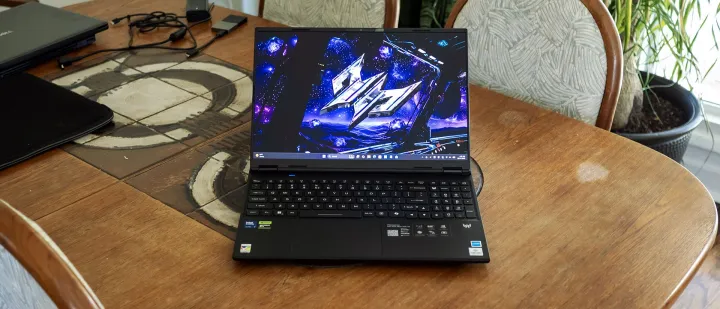
The Helios Neo 16S AI is close to the ideal portable gaming machine. A sub-five-pound body, an Intel Core Ultra 9 290HX Plus, an RTX 5070 Ti, and a 240 Hz OLED that reviewers simply can't stop praising. It types comfortably, tracks well, and packs a genuinely useful port list. There's just one catch. Tom's Hardware's verdict lands entirely on battery life, which barely outlasts the portability story this laptop is selling. It's a rather expensive machine at $2,774.99 for a system that wants you plugged in. Though the thin chassis and that OLED do make it a real grab if you game mobile. Mind the Wi-Fi 6E-only connection and the mountain of preloaded bloatware too. For what it's worth, that $2,774 tag feels especially steep right now, given the memory and storage price crunch that's been squeezing component costs for months. If all-day untethered use matters more than a perfect screen, keep shopping.
Tom's Hardware: Acer Predator Helios Neo 16S AI Review: Slim OLED gaming that doesn't last long
A slim gaming laptop with a gorgeous OLED display and solid RTX 5070 Ti performance, but short battery life.
Acer Predator Helios Neo 16S AI Review: Slim OLED gaming that doesn't last long
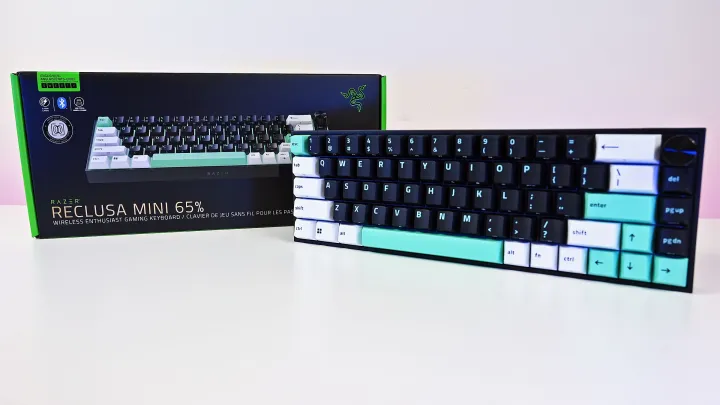
Razer's Reclusa Mini 65% makes the same point even louder. Editor-in-Chief Daniel Rubino calls it his favorite Razer keyboard to type on, which is a bold claim coming from a guy who owns every Huntsman in the lineup. You get Hall Effect magnetic switches, Rapid Trigger, 8,000Hz wired polling, tri-mode wireless, and a media dial. "I own all the Huntsmans, but I keep coming back to this $129 keyboard." All of it for $129.99. Is it worth the upcharge over the $49.99 Reclusa X? Rubino's answer is "love it or save the money." A competitive gamer who'll actually use those features will love it. Everyone else should pocket the difference and buy the cheaper board.
Windows Central: I own Razer’s premium Huntsman keyboards, but this $129 Reclusa Mini keeps ending up on my desk
Razer turns its brilliant budget Reclusa into a premium Hall Effect keyboard with superb typing, wireless flexibility, 8KHz polling, and enthusiast-grade customization.
I own Razer’s premium Huntsman keyboards, but this $129 Reclusa Mini keeps ending up on my desk
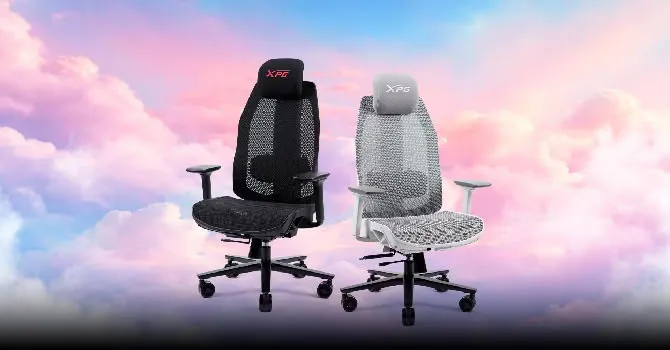
The XPG NIMBUS PLUS is a gentler version of the same lesson. TechPowerUp calls it a breathable, well-adjusting mid-range chair with a seat that stays cool and casters that roll quietly. But the reviewer can't recommend it. Standing 6'2", he can't get the headrest to work, the build leans heavily on plastic, and the weight cap tops out at 265 lbs. At €290 / $319 it sits shoulder-to-shoulder with the Cougar Terminator Air, ThunderX3 FLEX Pro, and Arozzi Vernazza, all of which offer more. So the call comes down to either a price cut or a rival. Not bad hardware. Just overpriced for what it brings.
TechPowerUp: XPG NIMBUS PLUS Review - Mid-range Chair With Strong Competitors
The XPG NIMBUS PLUS gaming chair stands out with a breathable mesh build and smooth, precise controls, making it easy to dial in a comfortable fit. Its firm seat, adjustability, and solid ergonomics impress, though the armrests and headrest are less refined. Is it worth buying despite strong competition?
XPG NIMBUS PLUS Review - Mid-range Chair With Strong Competitors
Bigger numbers don't mean a better buy
The SIVGA M260 flips the script entirely. For roughly $38 to $43, APH Networks hands it a 6.7 out of 10 and mostly gushes. The tuning is vocal-forward and smooth enough that APH tested it over 20-plus hours without fatigue. Layering holds up against dense tracks, the mic filters out sirens and a running kitchen fan in field tests, and the CNC-aluminum body feels far more expensive than its tag. The open fit costs you a bass seal and any noise cancellation, but at $38 you're not buying isolation, you're buying character. It's arguably the best-behaved $40 earbud on the market.
APH Networks: SIVGA M260 Review
When I was in middle school, my dad gifted me his Sony Walkman NW-E394 8GB, and it was probably the biggest reason why I came to love listening to music. I am by no means a music buff, but I would spend hours after school pirating MP3 music files of classical, jazz, J-pop, and video game soundtracks. However, my relationship with wired earphones is a whole different story. Despite my best efforts, my earphones would always get tangled, the audio jack would have a loose wire, and would end up being discarded within half a year. For these reasons, I have always stuck with dirt-cheap, $2 to $10 earphones that you can probably find at your local convenience store. Eventually, I switched to entry-level Bluetooth headphones for my musical needs. It is not that I do not care about the quality of my earphones -- I can certainly notice the difference -- it is really a matter of budget. However, once I took on the opportunity to review the SIVGA M260, you can imagine my genuine surprise when I realized that $40 can take you this far. The M260 positions itself as budget-friendly, retro-inspired flat-head earbuds that deliver high-quality performance. Could the M260 single-handedly restore my broken relationship with wired earbuds? Read on to find out!
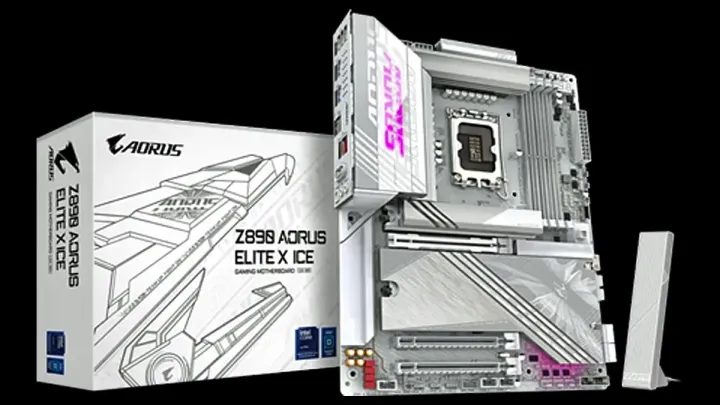
On motherboards, value still exists if you look. The GIGABYTE Z890 AORUS ELITE X ICE scored an 8.9 from The FPS Review at a cut $299 (regularly $329.99), jamming five M.2 slots, an 16+1+2 power stage, and a five-year warranty into one white board. The real draw is connectivity: five drives, an EZ-Release PCIe latch, Wi-Fi 7, and 2.5Gb Ethernet. Keep in mind the fitment quirks, though. Tall DIMM heatsinks can clash with big air coolers in the first slot, and the chipset M.2 can choke behind a thick triple-slot GPU. Even with Nova Lake on the horizon, this is a sensible LGA1851 pick for builders who want headroom without the top-tier tax.
The FPS review: GIGABYTE Z890 AORUS ELITE X ICE Motherboard Review
In this article, we examine the GIGABYTE Z890 AORUS ELITE X ICE. When the Intel Core Ultra series of CPUs was released in late 2024, we reviewed the AORUS ELITE WiFi. Today we will look at what the “X” and “ICE” bring to the table.
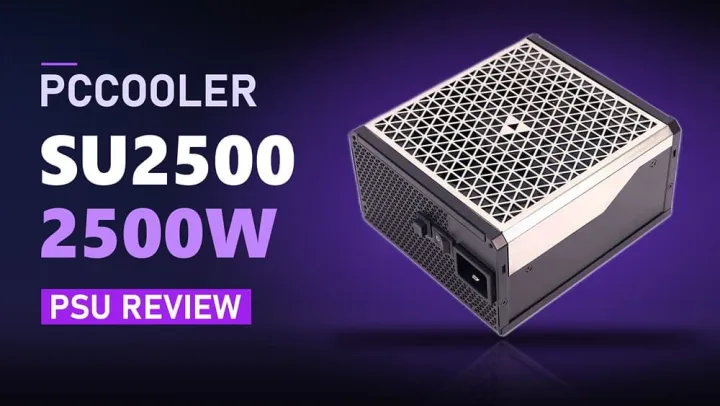
Then there's the PCCooler SU2500, the loudest warning in the whole batch, and I mean that literally. It's a 2,500W supply with Cybenetics Titanium efficiency at 93.297% and a single 12V rail pushing past 208 amps. On paper it's a heavyweight and ranks sixth of 17 high-capacity PSUs on Hardware Busters' index. But paper is where the good story stops. Hardware Busters found both samples failed conducted EMI tests, running past limits by up to 15 dB. The fan thunders at 47 dB(A), there's no fan-failure protection, and the 5V/3.3V over-current guard actually gets worse in hot mode. It also takes 200-240V only, which bars it from 115V regions entirely without a switcher. So it earns an 8/10, but treat that number as a caution, not a stamp of approval. Not exactly easy to buy yet, since it isn't sold in the US.
Hardware Busters: PCCooler SU2500 2500W ATX v3.1 PSU Review
PCCooler SU2500 review: a 2500W ATX 3.1 PSU with Cybenetics Titanium efficiency and fast 12V response, tested against 16 other high-capacity PSUs.
PCCooler SU2500 2500W ATX v3.1 PSU Review - Hardware Busters