The GMKtec Evo-X3 is the standout of today's reviews roundup, packing a Strix Halo chip and 128GB of unified memory into a mini PC that Tom's Hardware crowned its best AI machine, though $3,799.99 doubles its predecessor's price amid a market-wide RAM shortage. ASRock is making value headlines on two fronts: the X870E Challenger Wi-Fi White earns an Editors' Choice at $229 with flagship features, while the older X870 Challenger WiFi drops to just $170 at the cost of shared M.2 and USB4 lanes. On keyboards, the EPOMAKER HE75 V2 TMR takes Funky Kit's Editors' Choice at $129.99 with a versatile magnetic-mechanical hybrid design, beating out the faster but overpriced Razer Huntsman V3 Pro Low-Profile at €259.99. Meanwhile the MSI PRO B550M-P (2026) refreshes AM4 at $74.99 for budget rebuilders, and TechPowerUp's 35-GPU benchmark reveals Silent Hill: Townfall's lack of Intel XeSS and frame generation leaves AMD/Intel users needing DLSS or FSR.
Strix Halo mini PC nearly doubles its price; ASRock keeps the value war going
A roundup of today's reviews spans a $3,800 AI mini PC, two 8KHz keyboards, $170 motherboards, and a Silent Hill benchmark, where value and price collide.
The GMKtec Evo-X3 is the kind of mini PC that makes you reconsider what a mini PC is even for. Tom's Hardware just sent one out for testing, and it's an AI workstation wearing the body of something that fits in a backpack.
Inside sits AMD's Ryzen AI Max+ 395, a 16-core, 32-thread chip clocked up to 5.1 GHz. It's paired with 128GB of soldered LPDDR5X-8000 memory, and up to 96GB of that can be handed to the Radeon Strix Halo iGPU as VRAM. That's not a typo. A desktop-class GPU usually gobbles gigabytes of your system RAM as a crutch, and here it gets a different kind of gigabyte entirely.
In Tom's Hardware's mini-PC suite, the Evo-X3 didn't just win. It wandered off and started a second race. Its Geekbench 6 single-core score of 50,008 trounced the GMKtec's own Evo-T2 at 28,125 and the Beelink SER10 MAX at 16,066. The OpenCL result doubled the Evo-T2 and roughly tripled the Beelink. RAM and memory prices have climbed hard over the past year, a shortage that also cost Valve its Steam Machine launch window. We spent hours with that hardware in late 2025 walking away impressed, only to watch the pricing and shipping plans get revisited in February. This machine is built for that same memory-rich world.
That memory has a price tag, though. The Evo-X3 costs $3,799.99 with 128GB of RAM and a 2TB Crucial P310 installed, roughly double the Evo-X2's launch price. For the money you get USB4, OCuLink, Wi-Fi 7, and a genuinely metal chassis that stays quiet under load. It's also large and heavy for something claiming to be a mini PC, with a power brick about as compact as a brick, one USB4 port, and too few video outputs for a serious multi-monitor rig.
Tom's Hardware: GMKtec Evo-X3 review: Strix Halo in a brand new suit
The Evo-X2's successor got a big makeover and a $3,799 starting price.
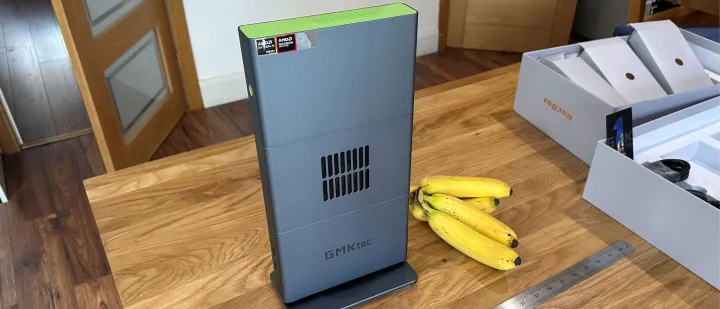
It's arguably the strongest AI mini PC you can buy right now. It's also arguably twice as expensive as it should be. Keep in mind that a good chunk of that comes down to a market-wide RAM and NAND crunch rather than anything GMKtec did differently.
Two extremes: a $3,800 mini PC versus a $170 motherboard
If the Evo-X3 is the high end, ASRock is hammering away at the low end, and it's been doing so with both hands.
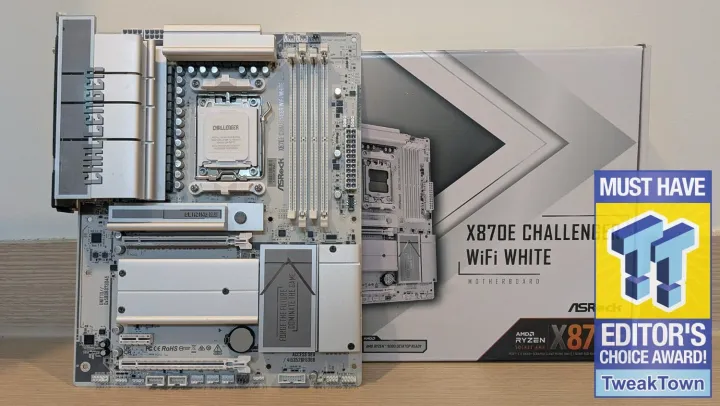
The ASRock X870E Challenger Wi-Fi White landed with a TweakTown Editors' Choice badge and a 95% score. Its headline feature is the price tag: $229 for what is nominally a flagship X870E chipset. Two boards at this tier tend to ask for more, and the white finish doesn't hurt. The VRM hit 57°C under a 20-minute Cinebench loop, while its primary SSD topped out at 54°C during a 3DMark storage test, both comfortably beating boards that cost twice as much thanks to a big heatsink with a retention mechanism that actually holds.
The catch is a BIOS that TweakTown's reviewer felt needed an overhaul, plus memory latency that lagged peers by roughly three percent. On top of that, the board barely moves the needle in GPU-bound gaming, since those CPU and RAM gaps vanish once the GPU hits its ceiling.
TweakTown: ASRock X870E Challenger Wi-Fi White Review - X870E with a B850 price
ASRock's X870E Challenger Wi-Fi White delivers strong motherboard features, including Wi-Fi 7, USB4, and four M.2 slots, for $229.
ASRock X870E Challenger Wi-Fi White Review - X870E with a B850 price
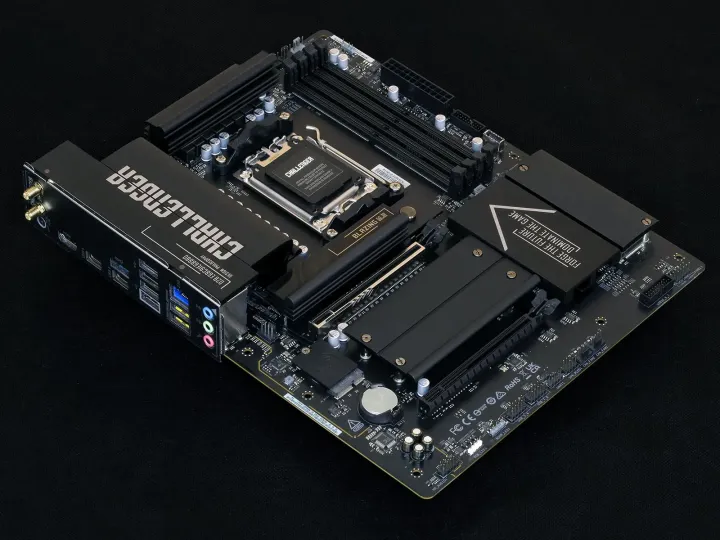
The ASRock X870 Challenger WiFi is even cheaper. PC Inquisitor tested one at $170, and it ships with USB4, a fifth NVMe slot, and a 16-phase VRM. The trick is knowing what you give up. Slot M.2_2 shares its lanes with USB4, halving bandwidth for whichever you pick, and there's a BIOS toggle that forces M.2_2 to full speed by killing USB4 outright. The front USB Type-C port gets throttled to a quarter of its native speed, running at 5 Gbps instead of 20. It's a genuine bargain on paper. Those compromises are still real on the desk.
Here's the part that makes buyers second-guess. PC Inquisitor pointed out that the older X870 Pro RS WiFi recently dropped to just under $180, only about ten dollars more, with no lane sharing, a faster second PCIe slot, and four SATA ports. For ten bucks you can frequently dodge the trade-offs entirely.
PC Inquisitor: ASRock X870 Challenger WiFi ATX Motherboard Review
Pushing mainstream prices toward value-seeking enthusiast, can the X870 Challenger deliver value on that proposal?
ASRock X870 Challenger WiFi ATX Motherboard Review, Performance Computing Inquisitor
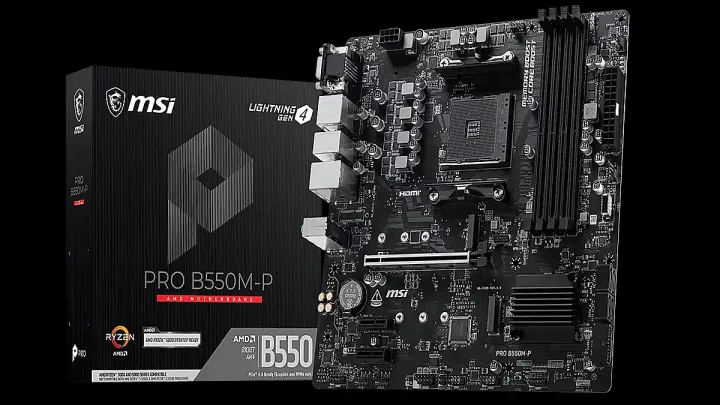
MSI's slice of the budget pie is sparser. The PRO B550M-P (2026) refreshes the stubborn but tenurable AM4 platform with one real upgrade: a PCIe Gen4 M.2 on the CPU-derived slot. The original ran Gen3. At $74.99, it's a no-frills mATX board with DDR4, an 8+2 power stage setup, and rear I/O that still includes VGA and PS/2. No heatsinks, no Wi-Fi, no power buttons, LED diagnostics only. It's the sort of board you buy when you're reviving older AM4 parts and want to save money without going full retro.
The FPS Review: MSI PRO B550M-P (2026) Motherboard Review
With this article, we close out our review set of three MSI socket AM4 2026 refreshed motherboards. This review will evaluate the PRO B550M-P. Recall that thus far we have examined the MSI B550 GAMING WiFi6E and the MSI PRO B550M-P WiFi6E. In each of these three motherboards, MSI has upgraded functionality and leveraged the AMD socket AM4 Ryzen CPUs and B550 chipset support over what was originally released. In most cases, these boards were released in some form as far back as 2021. Specifically, in the case of the PRO B550M-P, MSI has upgraded the PCIe to Gen4x16 as well as the primary M.2 to Gen4.
Keyboards, polling rates, and a Silent Hill curveball
Keyboards tell a similar story this week, except the tension runs between speed and feel.
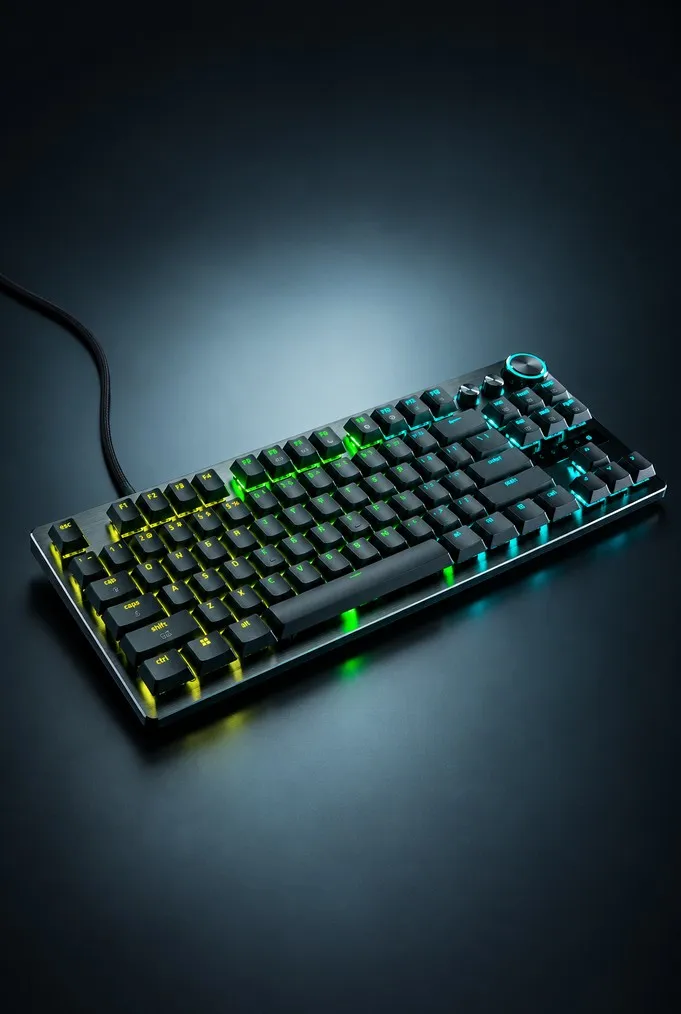
The Razer Huntsman V3 Pro Low-Profile 8KHz is a competitive gamer's dream on paper. igor'sLAB measured 6.7 ms of end-to-end latency, a 19.5 mm front height, and adjustable actuation from 0.1 to 2.8 mm. It's flat, optical, and configurable through a browser, Synapse, or onboard memory. Razer will happily tell you its switch-to-USB latency is 0.39 ms, but that's only the first half of the path. What you actually feel is full end-to-end latency, and 8,000 Hz doesn't magically collapse to 0.125 ms.
The problem is the price and the plastic. At €259.99 with an ABS plastic lower housing, igor'sLAB handed it only a qualified purchase recommendation. Very low actuation settings risk false inputs, and there are no spare keycaps or switches in the box.
IgorsLAB: Razer Huntsman V3 Pro Low-Profile 8KHz Review
Razer Huntsman V3 Pro Low-Profile 8KHz review: 6.7 ms latency, flexible analog functions and a flat TKL design, but expensive at 259.99 euros.
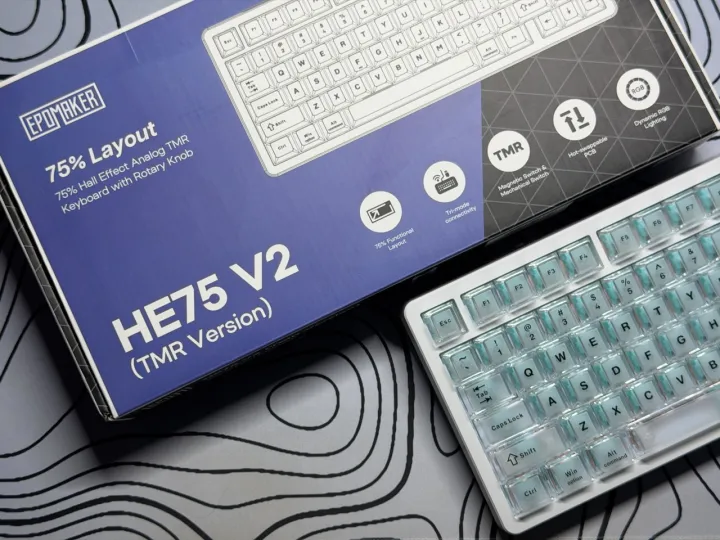
EPOMAKER's HE75 V2 TMR takes the opposite path. Funky Kit gave it an Editors' Choice at 9.0 out of 10, and the reason is plain flexibility. Its TMR magnetic switches ride on a hybrid hot-swap PCB that also accepts conventional 3- and 5-pin mechanical switches, which most magnetic boards won't do. The gasket-mounted build gives it a soft, cushioned typing sound, an 8,000mAh battery, and tri-mode connectivity. At $129.99 it costs about half of the Razer. Funky Kit did flag a software learning curve, but the typing feel and Rapid Trigger speed hold up regardless.
Funky Kit: EPOMAKER HE75 V2 TMR Magnetic Keyboard Review
The EPOMAKER HE75 V2 TMR is a keyboard that aims to bring together the features enthusiasts have come to expect from a modern gaming keyboard with the customisation and feel of a more traditional mechanical board. Its 75% layout keeps the important keys you need for everyday use while cutting down on unnecessary desk space, and underneath the clean design is a TMR magnetic sensing system designed to give gamers much more control over how their keys respond. With features such as adjustable actuation, rapid trigger, an 8000Hz polling rate and tri-mode connectivity, the HE75 V2 TMR certainly has the specifications to compete with some of the more established gaming-focused keyboards on the market.
Silent Hill: Townfall is a return to first-person horror for the franchise, and TechPowerUp's benchmark across 35 GPUs is the resource you'll want before opening your wallet. It runs on Unreal Engine 5 with Lumen lighting, drops you into the boots of an amnesitic safety inspector in a fog-bound town, and leans on handheld CRT stealth rather than firefights. The snag for AMD and Intel users is that it offers DLSS and FSR but no Intel XeSS, and there's no frame generation of any kind. Ray tracing is a single checkbox with no presets. That upscaling gap bites hard once you're trying to push a heavy Engine 5 title at 4K, and it's exactly the sort of thing that quietly decides whether your GPU survives.
TechPowerUp: Silent Hill: Townfall Performance Benchmark Review - 35 GPUs Tested
Silent Hill: Townfall is the first game in the series to focus on a first-person perspective and stealth. Powered by Unreal Engine 5, it looks good, but is missing an important ingredient. In our performance review, we examine graphics quality, VRAM usage, upscaling options, and how it performs across a wide range of modern GPUs.
Silent Hill: Townfall Performance Benchmark Review - 35 GPUs Tested

Today's reviews keep landing on one question: what you actually get for your money. The Evo-X3 shows what memory-rich hardware can cost. ASRock shows how far a value-focused board can stretch before it starts cutting. The keyboards split the difference between speed and feel. And a new Silent Hill title proves that feature availability can shape a hardware purchase more than megahertz ever did.


