Six hardware reviews landed today, spanning Apple's M5 Ultra Mac Studio and M6 Mac mini, ROG audio and motherboards, a Lian Li power supply, and a Vantrue thermal camera. The day's central story is Apple's Mac mini, which jumped $300 to $899 as Tom's Hardware points to AI-driven demand spiking RAM and component costs. Performance keeps climbing across the board, with the M5 Ultra's local AI beating Nvidia's DGX Spark and the M6 delivering a 2nm generational leap. Value, though, is getting thinner, so price-conscious shoppers should hold for end-of-year sales especially on winding platforms like the Z890-I.
Six hardware reviews land today, and the subtext is getting louder
Today's review pileup is surprisingly broad. Tom's Hardware delivered two Apple desktops. ThinkComputers, TweakTown, Hardware Busters, and NikKTech added a pair of gaming earbuds, a motherboard, a power supply, and a thermal camera.
The loudest product is the Mac Studio with the M5 Ultra. It's back as Apple's flagship desktop after the company quietly killed the Mac Pro two years ago. Andrew E. Freedman at Tom's Hardware puts it right there.
The M5 Ultra is Apple's first quad-die chip. It takes a pair of M5 Max dies and joins them via UltraFusion, which Apple says pushes inter-die bandwidth past 4.4 TB/s. Your tested unit packs 256GB of unified memory, 36 CPU cores, and an 80-core GPU.
The benchmarks back it up. Geekbench 7 shows 3,770 single-core and 52,293 multi-core, beating higher-core-count Threadripper and Xeon systems. HandBrake finished a 4K-to-1080p conversion in 1:04. Blender CPU rendering is where it stumbles, though. The ARM architecture loses ground under heavy multi-threaded load.
The part reviewers keep circling is local AI. Prompt processing on the M5 Ultra beats Nvidia's DGX Spark. Token throughput runs roughly double the M4 Max and nearly four times the DGX Spark. With 256GB of unified memory, large models run comfortably on a single node. That's arguably the strongest local-AI desktop you can buy short of an MLX cluster.
Tom's Hardware: Apple Mac Studio (M5 Ultra) review: Local model citizen outpaces DGX Spark and Threadripper
Taking on the Mac Pro's mantle
Apple Mac Studio (M5 Ultra) review: Local model citizen outpaces DGX Spark and Threadripper
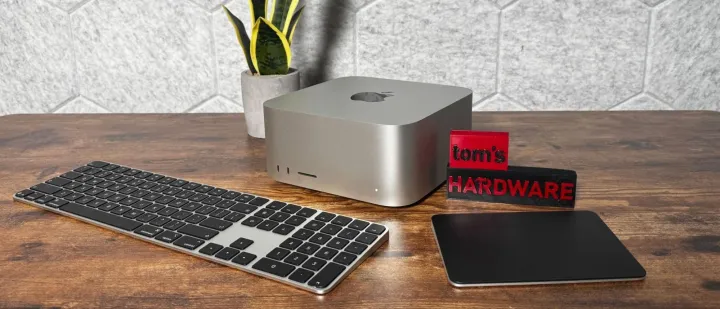
It's not cheap. Tom's Hardware's unit cost $12,299. The cheapest M5 Max Mac Studio still starts at $2,499. And you can't touch memory or SSD after purchase. RAM is soldered. Apple doesn't sell replacement SSDs.
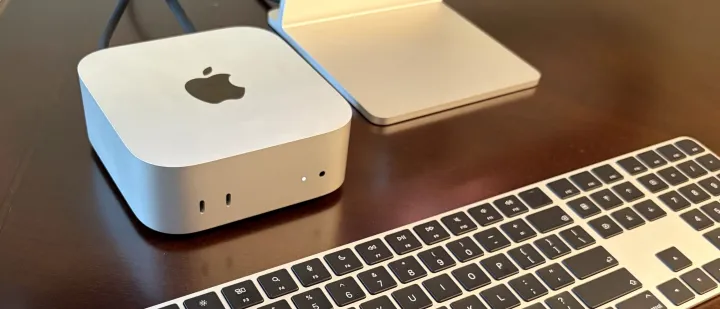
The smaller Mac mini makes the price problem sharper. The late-2026 M6 model starts at $899. Compare that to the M4 base at $599 in late 2024. That's a $300 hike in under two years. Tom's Hardware, via Brandon Hill, points directly at AI-driven demand spiking RAM and component costs.
The M6 chip is genuinely nice, though. It's Apple's first 2nm system tested, a 12-core design 21% faster than the M4 Pro in single-core work. Storage write performance roughly doubled. It ships with macOS 27, code-named Golden Gate, plus Apple's in-house N1 chip for Wi-Fi 7.
Tom's Hardware: Apple Mac mini (Late 2026) Review: Strong performance, but losing its grip on value
The Mac mini’s value proposition has evaporated.
Apple Mac mini (Late 2026) Review: Strong performance, but losing its grip on value
At this point "best value" feels like a wish more than a claim.
The rest of the pile
Not everything here screams about pricing, and that's a relief.
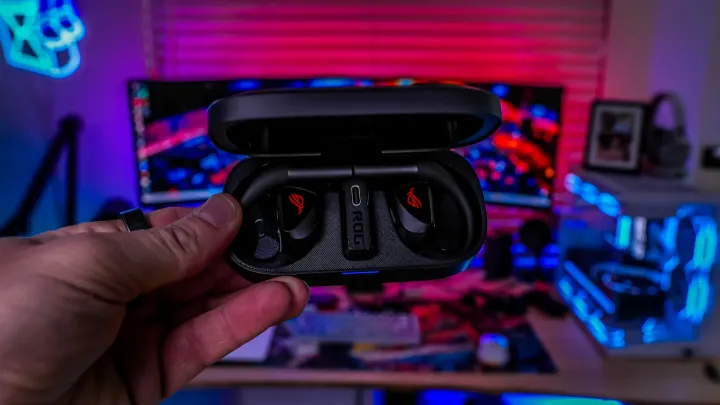
The ASUS ROG Cetra Open Wireless earbuds from ThinkComputers are open-ear gaming buds, a smaller club than you'd think. They pair Bluetooth with a low-latency 2.4 GHz dongle. That dongle offers 60W power passthrough, so it can charge your phone while you play. Four mics, AI noise cancellation, IPX5, up to 16 hours per charge. A solid pick if you want game audio without sealing out the room.
ThinkComputers.org: ASUS ROG Cetra Open Wireless Gaming Earbuds Review
The ROG Cetra Open Wireless features 14.2 mm diamond-like carbon drivers positioned outside the ear canal, allowing you to hear your game audio while remaining aware of your surroundings. It supports both Bluetooth and low-latency 2.4 GHz ROG SpeedNova wireless connectivity, while the included USB-C dongle features 60-watt power passthrough so you can charge a compatible device while using the earbuds.
ASUS ROG Cetra Open Wireless Gaming Earbuds Review | ThinkComputers.org
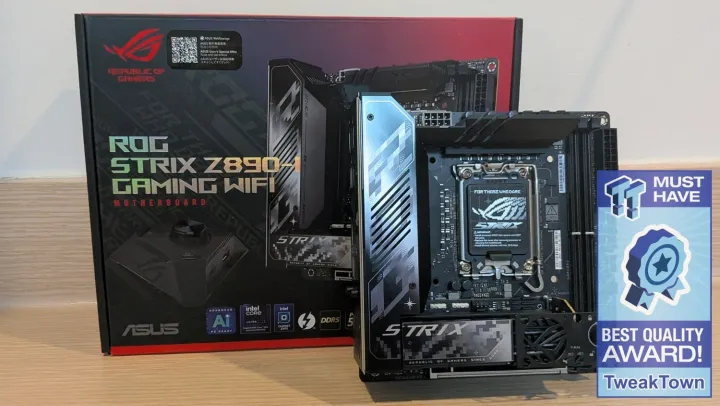
The ROG Strix Z890-I motherboard is TweakTown's pick at 89%. It's Mini-ITX for Intel's Z890 platform, which is winding down. That adds urgency, since there's no upgrade path and discounts show up anyway. At $405 MSRP it runs about $120 over rivals like the MSI Z890I Edge Ti. The ROG Hive II external hub and the FPS II daughterboard make up for much of the ITX space you lose. Two M.2 slots that share lanes with the GPU is a real compromise, though.
TweakTown: ASUS ROG Strix Z890-I Gaming Wi-Fi Review - Innovative Mini-ITX
The ASUS ROG Strix Z890-I is a feature-packed Mini-ITX option, perfect for a compact Arrow Lake system, though it could use a price drop.
ASUS ROG Strix Z890-I Gaming Wi-Fi Review - Innovative Mini-ITX
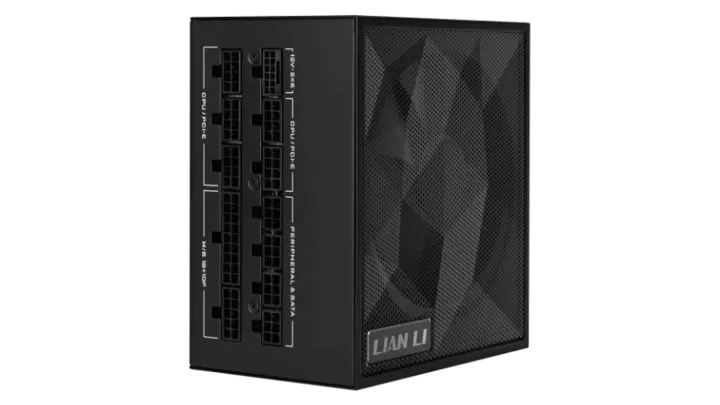
The Lian Li SX1200P 1200W power supply from Hardware Busters hits Platinum efficiency on a single 12V rail. The reviewer flags noise and minor-rail behavior before fully endorsing it. The SX name is misleading too: despite sounding compact, it's actually a full ATX unit, not the SFX the label implies.
Hardware Busters: Lian Li SX1200P 1200W ATX v3.1 PSU Review
We test the Lian Li SX1200P 1200W PSU for efficiency, noise, ripple, transient response, and protection behavior against 24 competitors.
And the Vantrue Power TS2 thermal camera drops professional imaging down to phone and PC size. The 256x192 sensor super-resolves to 512x384, and the temperature range spans -20°C to 550°C. I remember when a decent thermal camera cost more than a car. This one makes spotting an overheating component inside a build feel almost trivial.
NikKTech: Vantrue Power TS2 Thermal Imaging Camera Review
Thermal imaging is becoming increasingly accessible, and the Vantrue TS2 aims to put this technology in the palm of your hand through a compact design compatible with smartphones and Windows PCs alike.
Performance is still clearly advancing. The M6 is 2nm. Local AI on the M5 Ultra beats purpose-built cards. Even a 120mm power supply can hit Platinum efficiency.
But September 2026 carries a caution. The Mac mini's $300 jump, the winding Z890 platform, and a rising baseline of component demand all tell the same story. AI is reshaping what you pay each generation. Performance climbs regardless. Value isn't as sure.


